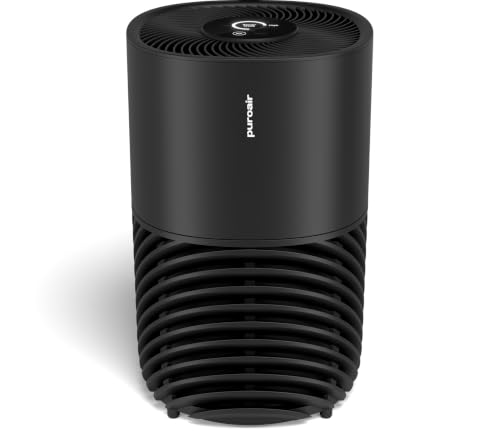
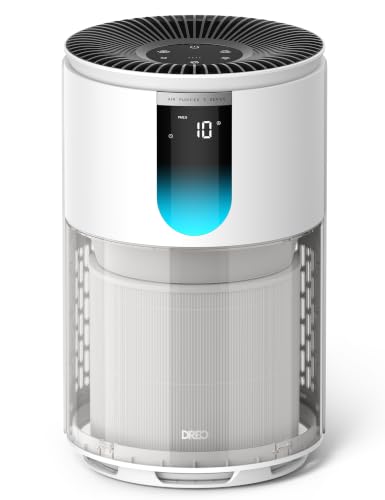
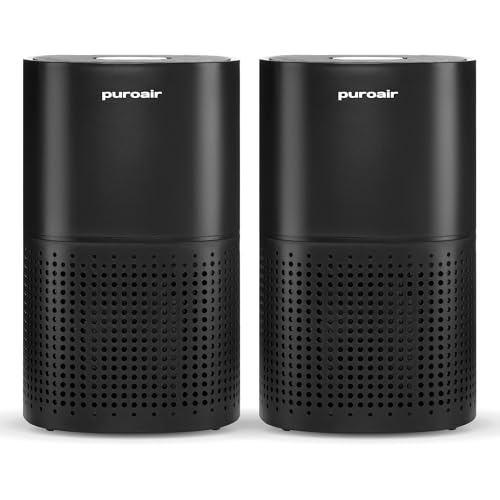
PuroAir Powerful Air Purifiers 2 Pack
Covers large areas up to 1,115 sq ft.
Filters 99% of common household pollutants.
Operates automatically for continuous air cleaning.
We compared the top Air Purifier For Smoke products so you can quickly spot the strongest options for value, features, and everyday performance.
Covers large areas up to 1,115 sq ft.
Filters 99% of common household pollutants.
Operates automatically for continuous air cleaning.
Captures 99.97% of airborne particles.
Whisper-quiet operation for peaceful environments.
Compact design fits small spaces perfectly.
Covers large areas quickly and efficiently.
HEPASilent technology ensures quiet operation.
Smart features enhance air quality monitoring.
Covers large rooms up to 1110 square feet.
Smart WiFi control with air quality sensors.
Washable filters and HEPA for cleaner air.
Covers large rooms up to 1076 sq ft.
H13 True HEPA filter for superior air cleaning.
Effective odor elimination and night light feature.
Covers large 2000 Ft² area efficiently.
Equipped with a washable filter for convenience.
Includes fragrance sponge for added freshness.
Covers large rooms up to 1800 sq ft efficiently.
Features washable filters for easy maintenance.
Smart WiFi control for convenient operation.
Covers large rooms up to 3,500 sq. ft.
Features a washable pre-filter for easy maintenance.
Includes specific modes for pets and eco-friendly use.
Effective for large rooms up to 1076 sq ft.
True HEPA filter removes allergens and pollutants.
Quiet operation at just 22dB noise level.
Covers large areas up to 2200 sqft.
Quiet operation at just 15 decibels.
Includes a washable filter cover.
A portable air purifier can effectively reduce airborne smoke particles in a closed room, but it does not eliminate all smoke-related pollutants. The most important feature during wildfire or cigarette smoke events is particle filtration. Look at the Clean Air Delivery Rate (CADR) for smoke, which indicates how quickly a purifier supplies filtered air. When choosing a model, compare the CADR number with your room’s size, ceiling height, and the desired air change rate. Be cautious of headlines claiming coverage for large areas, as they may only represent one air exchange per hour, which might be too slow for rapid smoke reduction, or may omit details about testing conditions and assumptions about ceiling height.
Inspect the smoke CADR specific to each model in reliable sources such as the AHAM Verifide directory, ENERGY STAR records, or independent laboratory reports. Reviews demonstrate why this is important: independently verified smoke CADRs typically range from 75 to 283 CFM, whereas advertised coverage claims can vary wildly—from small rooms to up to 3,500 square feet. A coverage number is only meaningful if it’s based on a recognized test method, actual airflow, and a realistic air change rate. Additionally, quiet-mode operation usually produces much lower airflow than maximum speed, so a low noise level does not necessarily mean the purifier can effectively clear smoke while you sleep.
For occupied spaces, choose fan-and-filter models that do not generate ozone intentionally. Look for CARB (California Air Resources Board) certification as proof of ozone compliance, and check ENERGY STAR records, which may report ozone emissions—some products show 0 ppb, others 2 ppb. Remember, certifications such as CARB, UL, or ETL should be verified against the current registry; claims without verification should not be trusted automatically. Electrical safety is distinct from filtration performance, and ENERGY STAR certification does not replace the need for a certified appliance safety listing.
While activated carbon can help reduce some odors and gases, a thin or unspecified layer offers limited protection against smoke gases. Seek products that disclose the type and amount of sorbent media, have realistic pollutant removal limits, and have been tested specifically for gases and odors. Note that particle CADR does not address volatile organic compounds (VOCs), combustion gases, carbon monoxide, radon, or lingering smoke odors. No portable purifier should be relied upon as a carbon monoxide detector or as protection against ongoing chemical or combustion hazards.
Proper maintenance is crucial for sustained particle removal. Choose units with sealed, replaceable filters, clear instructions, a filter indicator, and model-specific replacement filters readily available. While washable prefilters can trap hair and large dust particles and extend the main filter’s lifespan, the main particle filter is generally disposable. Replacement frequency varies from about three months to a year; however, smoke presence can shorten this interval. Operating the purifier with a clogged or loaded filter reduces its effectiveness and creates unnecessary waste.
Review assessments highlight significant safety considerations. Avoid relying solely on headline claims instead of verified smoke CADR ratings, especially for large open-plan or high-ceiling spaces. Do not assume that unspecified carbon layers can effectively remove smoke gases, VOCs, chemical fumes, carbon monoxide, or persistent odors. Individuals with asthma, COPD, heart conditions, pregnant women, children, older adults, or those particularly sensitive to smoke should select equipment based on verified performance and appropriate sizing rather than marketing claims. Fragrance and aromatherapy features may be unsuitable for scent-sensitive individuals. Remember, a purifier is a supplement; it does not replace other safety measures like sealed windows, source control, ventilation, or carbon monoxide alarms.

The scores presented below evaluate the reviewed products based on their health, ecological impact, and evidence support. A higher score signifies more robust supporting data and better practical performance, while a lower score typically indicates a lack of independent verification, exaggerated claims about room features, limited carbon footprint evidence, or weaker maintenance documentation.
This metric assesses the independently verified smoke CADR in relation to the actual room volume. It is the most crucial measurement because smoke particles are the main focus of the purifier. Products with high scores include independently tested outputs like 283 CFM, 242 CFM, and 158 CFM. In contrast, lower-scoring models depend on manufacturer claims or lack specific smoke CADR data, making it difficult to determine appropriate room sizes for them.
This assesses whether the product actively prevents the release of intentional ozone and whether there is credible evidence of byproducts from ionization, plasma, UV, or similar processes. Products that score highly are either recognized as mechanical cleaners by CARB or demonstrate zero ozone emissions according to ENERGY STAR. Lower scores are assigned when certification is merely claimed without verification, the specific model cannot be identified, or electronic filtration is used without clear evidence of associated byproducts.
This evaluation determines if carbon and other sorbent media effectively support the product’s claims regarding odor, VOCs, and smoke gases. Higher scores indicate clearer, more defined limits and more trustworthy media information, although even top-tier products usually do not provide pollutant-specific gas testing. Lower scores suggest the presence of an unspecified thin carbon layer, undisclosed amounts of carbon, or a lack of gas-phase testing results. It's important to note that particle CADR alone does not confirm gas removal capabilities.
This assesses whether appliances have an exact-model safety listing and show no unresolved recalls, overheating, electric shock, or fire hazards. Products with higher scores have more robust regulatory or certification documentation and no known recalls. Lower-scoring products often lack an exact match in UL or ETL directories, indicating a documentation gap rather than a defect. Note that ENERGY STAR or CARB certifications do not substitute for official appliance safety certification.
This assesses a sealed, replaceable filter pathway, including service instructions, filter reminders, and the availability of the appropriate replacement filter. Products with high scores typically offer model-specific filters, straightforward replacement procedures, washable prefilters, or longer maintenance intervals. Lower-scoring products often require frequent disposable filter replacements, have uncertain availability, provide inconsistent service guidance, or lack clear evidence that the filtration system can be properly maintained.
This assesses whether effective smoke-cleaning performance is achievable at an acceptable noise level, including for overnight use. High scores indicate a combination of effective output with independent verification of quiet operation, such as Quiet Mark certification or measurements taken at lower speeds. Lower scores are based solely on manufacturer-reported decibel levels or demonstrate that quiet settings provide significantly less airflow for particle removal compared to maximum speed.
This metric evaluates the amount of clean air delivered per watt and considers standby or partial-on power consumption. Products that score highly typically have ENERGY STAR ratings indicating a high smoke CADR (clean air delivery rate) per watt, low annual energy consumption, or minimal standby power draw. For example, a product with a score of 9.59 CFM per watt and a standby power of 0.93 watts demonstrates efficient performance. Conversely, lower-scoring products lack independent energy consumption data, making it difficult to reliably compare their electricity use with their smoke cleaning effectiveness.
This evaluates the burden of disposable materials, the presence of washable prefilters, transparent replacement schedules, and availability of take-back or recycling programs. High ratings are usually associated with the use of washable prefilters and clearly communicated, longer main-filter lifespans. Lower scores are given to units with all-in-one filters that need replacement every three to six months, lack recycling initiatives, or have vague or inconsistent replacement intervals. Heavy smoke usage can also reduce the effective service life of the filters.
This assesses whether claims related to coverage, HEPA filtration, smoke, odor, germs, allergies, and health are aligned with the testing methods, fan speed, and actual limitations. Products that score highly clearly differentiate verified smoke-room ratings from marketing figures based on slower air change rates per hour. Conversely, lower-rated products often make exaggerated coverage claims that are only certified for small rooms or suggest odor and health benefits that cannot be substantiated through available testing.
This indicates the extent to which independent records reliably and comprehensively verify the specific product and its configuration. Products with high scores can be linked to multiple authoritative sources, such as ENERGY STAR, AHAM, CARB, or other recognized certification listings. In contrast, lower-scoring products mainly rely on seller or manufacturer badges and lack precise entries in records from AHAM, ENERGY STAR, CARB, UL, or ETL.
For particle safety, the most reliable verified evidence comes from the Energy Star certification. This confirms the use of fan-and-filter technology, a smoke CADR of 183 CFM, and no reported ozone emissions. These factors are important during smoke events because fine particles are the primary target for portable air cleaners. Although the manufacturer claims CARB certification, the current CARB registry does not confirm this specific model (240), so that certification should not be considered independently verified here. Additionally, no relevant CPSC recall was found during the recall search. The product features a disposable, three-stage filter consisting of a prefilter, HEPA-grade particle media, and carbon pellets. The manufacturer recommends replacing the filter approximately every 90 days, though heavy use or smoke conditions may necessitate more frequent changes. Following these guidelines helps maintain airflow but results in significant recurring filter waste, especially with a two-unit setup. The device’s energy use is favorable, with a verified smoke CADR of 4.4 per watt and a partial on-mode power consumption of 0.34 watts according to Energy Star data. The carbon media may help reduce some odors, but its effectiveness and specific gas removal performance have not been independently documented.
This package is ideal for individuals establishing two separate small clean-air spaces, such as bedrooms, a home office, or a nursery, instead of using a single unit for a larger open area. It is best suited for moderate-sized rooms where doors and windows can stay closed during smoke events, and where the units can operate at higher speeds when particle levels increase. Customers should anticipate replacing the filters approximately four times annually for each unit and understand that the carbon layer offers limited assistance with typical odors, not for dedicated gas removal.
This device is not suitable for a 1,000-square-foot living space, high-ceiling open-plan areas, or households expecting a single unit to quickly control wildfire smoke across multiple rooms. Individuals with asthma, COPD, heart conditions, pregnancy-related smoke concerns, young children, or older adults should choose air purifiers that are appropriately sized for each specific room and have verified smoke CADR ratings, rather than relying solely on the advertised maximum coverage. Additionally, it is not appropriate for environments with heavy chemical fumes, persistent tobacco odors, combustion gases, carbon monoxide, or radon, as its ability to remove gases has not been demonstrated for these types of exposures.
This device, designed for fine smoke particles, is a documented fan-and-filter air cleaner rather than an ionizer, plasma device, or ozone generator. According to ENERGY STAR, it produces zero ozone emissions, and California CARB certifies it as a mechanical air cleaning device. These records provide reliable safety evidence for use in occupied rooms. However, they do not indicate that the unit can treat health conditions such as asthma, allergies, or sleep issues. While proper use of the purifier can reduce exposure to particles, it cannot eliminate settled allergens unless they become airborne. The device has a favorable energy profile for a compact unit, with ENERGY STAR reporting annual energy consumption of 98 kWh and an energy efficiency of 4.4 cubic feet per watt. The main environmental concern is filter disposal. The manufacturer recommends replacing the combined particle-and-carbon filter approximately every 90 days, which could total up to four filters per year. There is no specific recycling or take-back program for the filters. Additionally, periods of heavy smoke may reduce filter lifespan further.
This product is ideal for individuals aiming to establish a cleaner-air environment during smoke events in small spaces such as a compact bedroom, nursery, dorm room, or home office covering approximately 110 square feet with an 8-foot ceiling. It is suitable for users who prioritize verified low ozone emissions, minimal annual electricity consumption, app-controlled operation, and easily accessible replacement filters from the manufacturer. Users should be comfortable replacing the disposable filter approximately every three months and operating the unit at higher fan settings when quick reduction of particles is needed.
This device is not ideal for a 600-square-foot living space, open-plan areas, rooms with high ceilings, or rooms with a continuous source of smoke. Its independently certified smoke CADR is 75 CFM, whereas EPA guidelines recommend a tobacco-smoke CADR of at least two-thirds of the room's size. Those requiring effective protection against wildfire smoke, lingering tobacco odors, or elevated VOC levels should not assume that a thin, unspecified activated-carbon layer provides complete gas filtration. Additionally, individuals sensitive to noise should note that there is no independently verified high-speed noise data available.
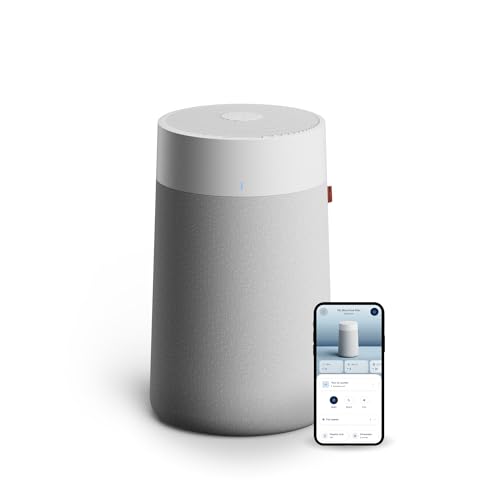
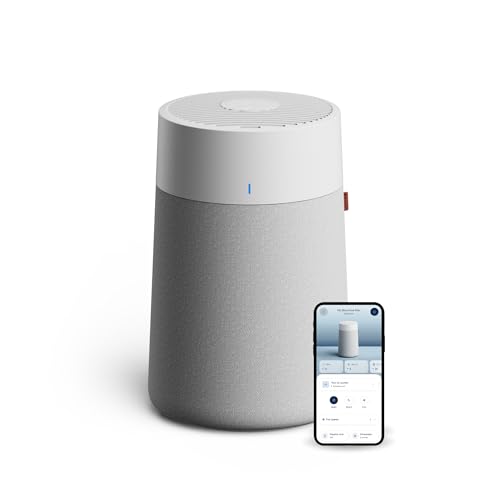
Regarding smoke exposure, the key health benefit of this air purifier is its independently verified particle removal capability, rather than the general health claims often associated with air purifiers. ENERGY STAR reports a smoke CADR of 283 cfm and a PM2.5 CADR of 298 cfm for this model. EPA guidelines recommend using a sufficiently powerful, low-ozone portable air cleaner to effectively reduce indoor smoke particles. The same ENERGY STAR data shows ozone emissions of only 2 ppb, which is safe for occupied rooms despite the purifier’s electrostatic filtration feature. The device features a washable fabric pre-filter that helps prevent the main disposable filter from clogging prematurely. According to Blueair’s manual, the main filter should typically be replaced every 6 to 9 months, depending on usage and air quality, though this interval may be shorter in environments with heavy smoke. While the product boasts strong energy efficiency, its main filter is disposable and there is no indication of a specific filter recycling or take-back program. The manual advises owners to recycle the entire appliance as electronic waste when it reaches the end of its life.
This product is ideal for households requiring portable smoke particle reduction in a single enclosed space, such as a bedroom, nursery, home office, or small living room. Its independently certified 283 CFM smoke CADR supports a coverage area of up to 439 square feet at standard ceiling heights. It is well-suited for users who plan to run the purifier for extended periods, thanks to features like auto and night modes, app control, a washable pre-filter, and efficient clean-air delivery per watt. For optimal performance during outdoor smoke events, it is recommended to keep windows closed.
This product is not a comprehensive solution for large open-plan homes, rooms significantly bigger than 439 square feet, or spaces with high ceilings, as the larger coverage claims suggest fewer air exchanges. It is also not intended to address carbon monoxide exposure, intense wildfire smoke gases, or persistent strong chemical odors using the standard filter. Individuals with severe smoke sensitivity should avoid relying solely on the standard thin carbon stage for gas filtration. Homes that cannot replace filters quickly during extended smoke events should consider the faster filter loading and increased waste generated during such periods.
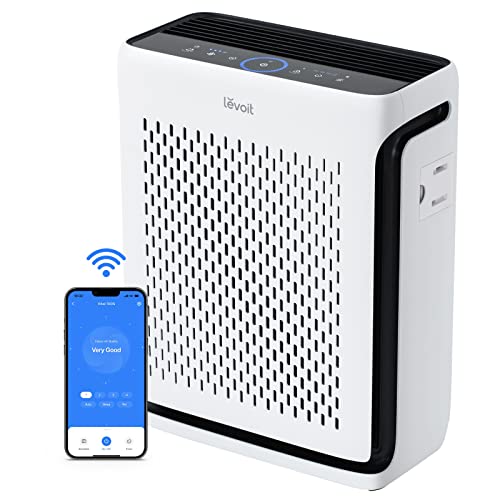
Regarding particle exposure, the most significant evidence comes from the independently documented 143 CFM smoke CADR and the ENERGY STAR record indicating zero ppb ozone emissions. The device employs a fan-and-filter system for cleaning rather than using an ionizer, plasma device, or UV treatment. This approach avoids intentionally producing ozone, but it does not guarantee the removal of all pollutants in smoke. According to EPA guidance, particle removal is different from gas removal, and activated carbon filters can only reduce certain gases and odors for a limited duration. Levoit states that the prefilter is washable and that the main combined particle and carbon filter lasts approximately nine months, which helps reduce some disposable waste compared to replacing each layer separately. However, there is no verified take-back or recycling program for the used filters. Additionally, the manufacturer displays a California Proposition 65 warning regarding lead. This warning does not specify a safe exposure level or indicate the product’s risk under normal use, but California consumers should be aware of it.
This product is ideal for safeguarding a bedroom, nursery, office, or other enclosed space approximately 222 square feet with an 8-foot ceiling. It is especially effective in areas where pet hair and everyday airborne particles would quickly clog a filter. Its verified smoke CADR size is suitable for this room scale, and the washable prefilter offers convenience for households with shedding pets. Additionally, it is suitable for users who prefer automatic fan control and app-based scheduling, as long as they regularly clean the prefilter and replace the main filter according to the schedule.
This device is not ideal as a standalone solution for large open-concept spaces, entire homes, or rooms around 1,000 square feet that require rapid wildfire smoke protection. Its large coverage capacity is based on just one air exchange per hour. Additionally, it is not suitable for households needing verified removal of smoke odors, formaldehyde, VOCs, or combustion gases, as the carbon-media quantity and gas-phase test data are not publicly available. Those who require an officially certified model with NRTL safety listing or CARB registry documentation should request proof before relying on this product.
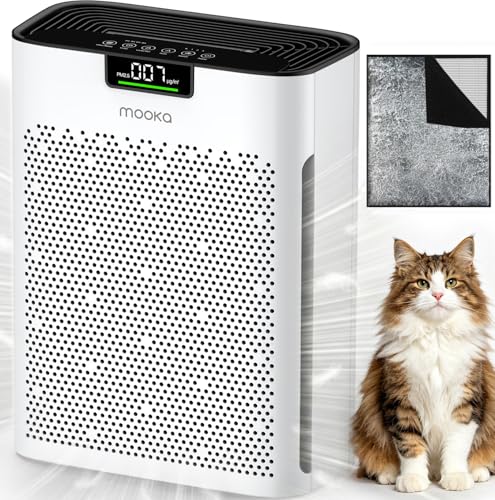
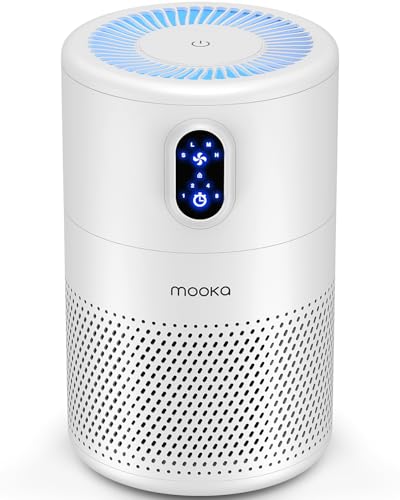
The product is described as a mechanical fan-and-filter air purifier that does not include any ionizer, plasma, UV, or ozone-generating functions. This design intentionally excludes ozone production. However, there is no record of official CARB certification for this specific product, so third-party verification of low ozone emissions is unavailable. Additionally, no CPSC recall notices for this product were found in the search records. The user manual provides standard electrical safety precautions, but an independent safety certification or listing for the appliance could not be located. Regarding smoke removal, the primary missing evidence is a verified smoke CADR (Clean Air Delivery Rate). The EPA states that smoke CADR is the key metric for assessing small-particle filtration and emphasizes the importance of regular filter replacement. MOOKA offers the designated replacement filters and recommends changing them every 3 to 6 months. The product employs disposable combination filters, but there is no indication of a filter recycling or take-back program. Although activated carbon is included, MOOKA does not disclose sufficient media volume or gas testing data to confirm effective control of smoke gases or odors.
This product is ideal for individuals looking for a compact, straightforward mechanical filter purifier suitable for a bedroom, nursery, office, or other small enclosed space. It is particularly effective in environments where quiet, low-speed operation during nighttime and easy access for filter replacement are important. When used regularly and maintained properly, it can serve as a practical additional device for controlling airborne particles. The manufacturer's stated coverage of six air changes per hour is based on a 215-square-foot area, making this figure more relevant for smaller rooms than treating its maximum coverage claim as a high-capacity smoke protection solution.
This device is not ideal for individuals who require independently verified protection against wildfire smoke, such as households managing asthma, COPD, severe particle sensitivities, or frequent smoke infiltration. These users need a purifier with an independently confirmed smoke CADR that is appropriately sized for the room’s volume. Additionally, it is not recommended for persistent smoke odors, VOCs, combustion gases, or carbon monoxide, as details about the carbon-media quantity and gas testing are not provided. Portable filters should not be considered a substitute for source control measures, proper ventilation, or carbon monoxide alarms.
California CARB independently recognizes this product as a certified mechanical air cleaner. This is significant because CARB certification pertains to ozone emissions, and the product does not advertise itself as an ionizer, plasma device, or UV air purifier. The manufacturer has also stated that it contains no UV light. A review of CPSC recall records did not reveal any recalls for this specific product; however, the claimed ETL listing could not be independently verified in publicly available records. The washable prefilter helps reduce disposable waste by capturing hair and large dust particles, but the main filtration media is not washable. MOOKA indicates that the internal HEPA and carbon cartridge need to be replaced, usually more frequently in rooms with heavy smoke. The manufacturer offers replacement filters that match the model, but there is no indication of a take-back or filter-recycling program. While activated carbon can be effective for odors, its effectiveness depends on the amount of media present; this product does not specify the quantity of carbon or provide gas-removal test results.
This product is ideal for buyers looking for a compact, particle-focused air purifier suitable for bedrooms, pet areas, or small enclosed rooms, particularly where washable prefilters are beneficial. It works best when used continuously, with regular checks of the prefilter and replacement of the internal filter when airflow decreases or the reminder indicator activates. Its CARB mechanical-air-cleaner certification is important for households aiming to avoid ozone-generating mechanisms. The quiet sleep mode may also be suitable for light-sensitive sleeping environments, although its cleaning performance at this setting has not been specified.
This device is not ideal for sizing equipment to filter wildfire smoke in large open-plan spaces, entire homes, or rooms near the approximate maximum of 2,200 square feet. Such applications require a verified smoke CADR that corresponds to the actual room size and the desired air exchange rate. Additionally, it is not a reliable choice for eliminating serious chemical odors, VOCs, tobacco smoke gases, or fire-restoration odors, as the amount and performance of its carbon media are not disclosed. Individuals with fragrance-triggered asthma or scent sensitivities should avoid using the device's fragrance feature.
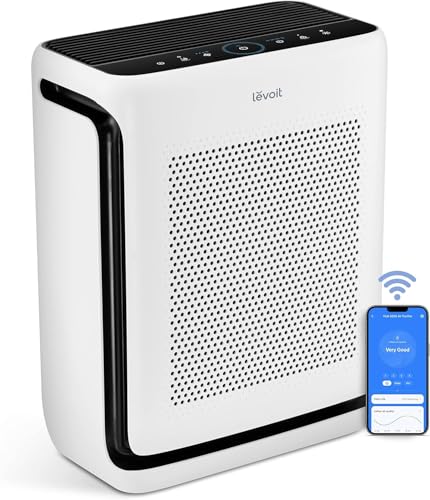
The strongest evidence supports the effectiveness of airborne particles. The specific U.S. model listed by ENERGY STAR features a smoke CADR of 242 cfm and zero ozone emissions (0 ppb). Its technology primarily involves a fan and filter, making it a safer choice for occupied rooms compared to air cleaners that intentionally produce ozone. The manual indicates that the device includes a mechanical pre-filter, a particle filter, and an activated-carbon filter. It does not mention the use of ionization, plasma, or UV treatments. Regarding smoke gases and odors, the carbon filter may provide some assistance, but its capacity has not been independently verified. EPA guidance differentiates between particle removal and gas removal, emphasizing that activated carbon is necessary for eliminating gases. From an ecological perspective, the washable pre-filter helps reduce waste and protects the main filter. However, the main filter is a disposable item, with a manufacturer's recommended replacement every 12 months. No information was found about a specific filter take-back program or official UL or ETL listing for the exact models reviewed.
This product is ideal for individuals looking to create a cleaner-air environment in a medium-sized bedroom, home office, nursery, or living room covering approximately 375 square feet with standard ceiling heights. It is especially suitable for households that plan to operate it continuously at lower speeds, regularly clean the washable pre-filter, and increase fan speed during smoke events, cooking, or high pollen seasons. Additionally, it is suitable for pet owners who need a removable hair-catching pre-filter and app-controlled scheduling, but do not require specialized odor elimination features.
This product is not suitable for treating an entire 1,875 square foot home as if it can quickly provide smoke protection throughout the entire space. During wildfire smoke events, larger open areas, high ceilings, open doors, and significant outdoor air infiltration demand more clean-air delivery than its listed 242 CFM smoke CADR can offer promptly. Additionally, it is not the ideal primary device for addressing carbon monoxide, strong chemical vapors, or persistent smoke odors, as it does not provide detailed information on carbon-media capacity or pollutant-specific gas testing.
The product features a mechanical filtration system that includes washable prefilters, high-efficiency particle media, and activated carbon. KNKA does not indicate any intentional ozone-generating capability. Although CARB lists a similar mechanical KNKA model, the APH4000WF, as certified for low ozone emissions, this is not the exact product being reviewed. The EPA recommends selecting smoke air cleaners that do not produce ozone and sizing them based on smoke CADR ratings. Washable prefilters help lower waste from hair and coarse dust, making maintenance easier. The official two-pack replacement filters are designed for continued use and convenience. However, these replacements contain materials such as fiberglass, paper, and polyester, and there is no known program for recycling or returning used filters. Replacement timing suggested by KNKA varies—ranging from 3 to 6 months on the product page and 6 to 8 months on the filter page. During this review, no specific U.S. recalls or regulatory warnings for this product were found, but safety and performance certifications could not be independently verified.
This product is ideal for individuals cleaning particles in a bedroom, office, or other enclosed space of approximately 350 square feet or less, especially if they can increase the fan speed during periods of higher smoke levels. The most relevant sizing metric is its claimed 226 CFM smoke CADR, rather than the larger advertised coverage area. It is also suitable for households that prefer a washable first-stage filter for pet hair and visible dust, with the ability to replace the original filters every 6 to 8 months.
This product is not appropriate for someone relying on a single unit to provide one air change per hour in a 3,500-square-foot home or a large open floor plan. The coverage claim does not align with the specified smoke CADR. Additionally, it is not suitable for households that require documented removal of wildfire smoke gases, lingering smoke odors, or VOCs, as the amount of carbon and gas-phase testing details are not provided. Those seeking independently verifiable AHAM, ETL, and energy-efficiency certifications for the exact product should look for more comprehensive documentation.
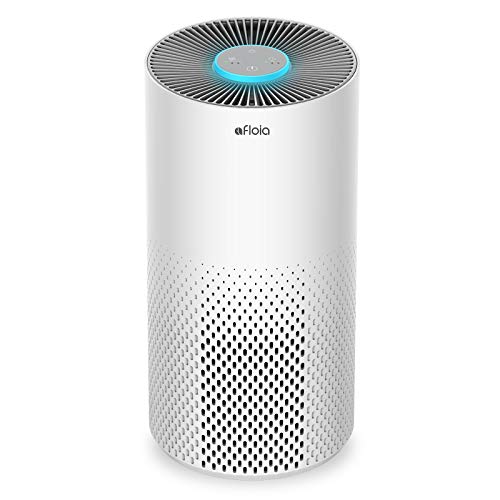
Regarding particle exposure, the key evidence is the ENERGY STAR certification record, not general marketing claims about room size. The product is a fan-and-filter unit with a smoke CADR of 79 cfm, a PM2.5 CADR of 86 cfm, and no reported ozone emissions. EPA guidance endorses the use of appropriately sized portable air cleaners to reduce airborne particles, emphasizing that CADR is a measure of particle removal efficiency and that higher fan speeds increase airflow and filtration effectiveness. This product utilizes a disposable composite filter that includes an activated-carbon layer. Afloia recommends replacing the filter every three to six months; however, smoke conditions may reduce the filter’s lifespan. This results in ongoing filter waste, but there is no information provided about a filter take-back or recycling program. ENERGY STAR reports an annual energy consumption of 86.6 kWh and an integrated energy factor of 5.7 cfm per watt, indicating good efficiency. However, details on the amount of carbon or pollutant-specific gas removal tested or verified are not available, so claims regarding odor and gas filtration should be considered limited and unverified.
This product is ideal for individuals using it continuously in a small, enclosed space such as a bedroom, nursery, office, or similar room approximately 122 square feet with an 8-foot ceiling. Its independently certified smoke CADR effectively reduces particles within this size of space, and its energy efficiency certification makes it suitable for extended operation. Additionally, it is suitable for users prepared to replace the disposable filter every three to six months, or more frequently during periods of heavy smoke or dust exposure.
This product is not suitable for buyers aiming to clean a 1,076-square-foot open area, a large living space, or rooms with high ceilings. Its independently certified smoke output is significantly lower than what the advertised coverage suggests. Additionally, it is not ideal for households needing proven removal of wildfire smoke gases, stubborn chemical odors, or VOCs, as it does not disclose carbon content or gas-phase test results. Those seeking a device with a publicly traceable electrical safety listing should choose one that provides such documentation.
The manufacturer describes this device as a mechanical three-stage filter incorporating H13 HEPA media and activated carbon, rather than advertising ionization, plasma, or UV treatment. This is significant because ozone-generating technologies pose health risks in occupied spaces. However, the claimed CARB certification has not been verified through official records for this specific product, so it should not be assumed to produce low ozone levels based solely on that claim. Regarding smoke removal, the HEPA stage is likely effective against airborne particles, but there are no published CADR ratings for smoke or independent room testing data. The activated carbon stage may help reduce some odors, but details about the amount of carbon used or its gas-removal performance are not provided. The manual recommends replacing filters every 3 to 6 months, and the manufacturer offers compatible replacement filters. While this facilitates maintenance, it also results in ongoing disposable filter waste. The product lacks a filter recycling or take-back program, has no ENERGY STAR certification, and no energy consumption data is available. Additionally, there are no records of an CPSC recall for this specific air purifier.
This product is suitable for individuals looking for a compact, basic air purifier with particle filtering, ideal for a bedroom, office, or other small enclosed space. It is designed for users comfortable with regular filter replacements. Features such as auto mode, a timer, and a filter reminder, as specified by the manufacturer, can help simplify everyday operation. The device's 2,200 square foot coverage claim should be considered as a marketing figure rather than a confirmed measure of smoke removal ability. It is best suited for users who can access and store the manufacturer’s specific replacement filters.
This product is not suitable for households requiring a documented smoke-control plan for wildfires, or for those dealing with asthma, serious heart or lung conditions, or operating large open-plan spaces. These applications demand a purifier with a published tobacco-smoke CADR appropriate for the specific room size, along with independently verified ozone and performance data. Additionally, it is not recommended for buyers seeking proven removal of odors, VOCs, or combustion gases, as the product does not disclose the amount of carbon media used nor provide pollutant-specific gas testing results.