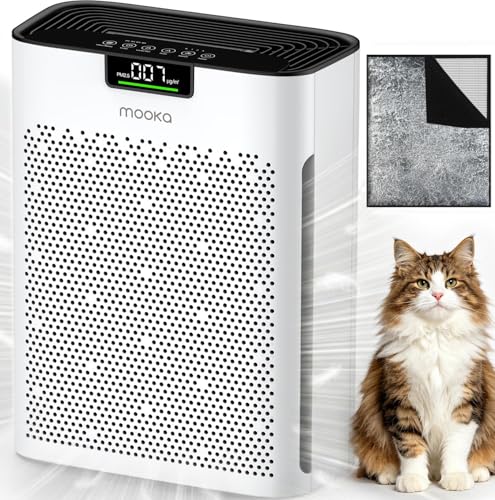
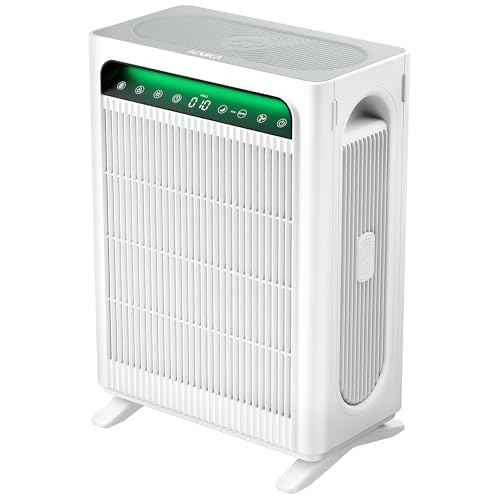
MOOKA H13 Air Purifier for Large Rooms
Covers large 2000 Ft² area efficiently.
Equipped with a washable filter for convenience.
Includes fragrance sponge for added freshness.
We compared the top Air Purifier Washable Filter products so you can quickly spot the strongest options for value, features, and everyday performance.
Covers large 2000 Ft² area efficiently.
Equipped with a washable filter for convenience.
Includes fragrance sponge for added freshness.
Covers large rooms up to 1800 sq ft efficiently.
Features washable filters for easy maintenance.
Smart WiFi control for convenient operation.
Covers large spaces up to 1200 sq.ft.
Includes H13 HEPA washable filter.
Features convenient aromatherapy option.
Covers large rooms up to 1076 sq ft.
H13 True HEPA filter for superior air cleaning.
Effective odor elimination and night light feature.
Covers large areas up to 1,115 sq ft.
Filters 99% of common household pollutants.
Operates automatically for continuous air cleaning.
Covers large areas up to 3000 sq. ft.
Includes washable pre-filter for easy maintenance.
Features aromatherapy for enhanced ambiance.
Covers large rooms up to 1110 square feet.
Smart WiFi control with air quality sensors.
Washable filters and HEPA for cleaner air.
Covers large rooms up to 1395 sq ft.
Includes washable filters for easy maintenance.
Equipped with air quality sensors for efficiency.
Effective at removing smoke, pollen, and odors.
Compact design fits easily in any room.
Quiet sleep mode ensures restful nights.
Covers large rooms up to 3,500 sq. ft.
Features a washable pre-filter for easy maintenance.
Includes specific modes for pets and eco-friendly use.
A washable-filter air purifier typically features a reusable outer screen or pre-filter combined with finer particle media and often activated carbon. The washable layer mainly captures hair, lint, and larger dust particles before they reach the primary filter. However, in most products, the HEPA or fine particle filter and carbon components remain disposable. Therefore, “washable” does not automatically mean the entire filter can be rinsed or that disposal waste is eliminated.
The most reliable measure of a purifier’s particle removal efficiency is the Smoke CADR (Clean Air Delivery Rate), indicating how much cleaned air is provided for fine particles. When evaluating room-sized claims, always compare CADR figures against an 8-foot ceiling height; do not accept manufacturer claims at face value. Many reviews demonstrate that large figures, such as 1,000, 2,200, or 3,000 square feet, often represent only a single air change per hour, while independent ratings tend to be much lower. For example, a verified 250 CFM smoke CADR suggests suitability for approximately 385 square feet according to EPA sizing charts; a 443 CFM rating corresponds to about 687 square feet. Always look for specific model listings in the AHAM Verifide directory, ENERGY STAR’s room air-cleaner dataset, or other accredited tests that specify smoke, dust, or pollen CADR under defined conditions.
Ozone emissions are a separate safety concern. Mechanical filters avoid ozone generation altogether, while electronic, electrostatic, ionizing, plasma, or similar designs should have credible emission data. A current listing in the California Air Resources Board (CARB) certified device registry is helpful, but it does not confirm the device’s particle cleaning efficacy. ENERGY STAR records can also provide information on ozone emissions in parts per billion. Ensure that certifications or seller claims specify the exact model, not just a product line or similar name.
For products with washable filters, carefully review the manual. Confirm which layers are washable, whether they should be vacuumed or rinsed, and how long they need to dry before reassembly. The main particle filters and carbon media require realistic replacement schedules, and it’s important to verify the availability of replacement filters. Washing a HEPA or carbon cartridge that isn’t designed to be washable can damage it, impair performance, or trap moisture inside the device.
Pay close attention to the carbon component. A thin or unspecified carbon layer should not be regarded as comprehensive protection against formaldehyde, VOCs, smoke gases, or strong odors. Stronger claims require disclosed quantities of carbon or well-designed sorbent systems, supported by pollutant-specific gas tests under real airflow, exposure duration, and breakthrough conditions. Fragrance pads and aromatherapy trays do not function as cleaning features; they simply release fragrances and may introduce scent chemicals, which are not ideal for sensitive individuals.
While no single safety concern applies universally across all models, several limitations are common. Claims of large-room or whole-home coverage often lack verified CADR figures, making these products unsuitable for effectively clearing wildfire smoke, high allergy or asthma-triggering particles, reducing infection risks, or serving large open-plan areas unless documented room-specific clean-air delivery is provided. These units should not be viewed as medical devices, mold remediation tools, ventilation substitutes, or solutions that eliminate source pollution. Buyers should exercise caution with fragrance accessories, especially when sensitive to asthma, migraines, chemicals, or caring for children or pets. Claims about carbon filters and odor removal are frequently unsubstantiated, and electrical certification for specific models may not be consistently traceable, even if the product is listed as CARB-certified.

A: An air purifier equipped with a washable filter effectively captures larger particles like dust and pet hair and is more environmentally friendly and cost-saving over time. However, it may not filter very fine particles as efficiently as high-grade disposable filters. This makes it ideal for those prioritizing sustainability and easier maintenance.
A: Yes, an air purifier with a washable filter can reduce allergens such as dust, pet dander, and pollen in your home. Regularly washing the filter ensures it stays effective at trapping these allergens, offering relief for allergy sufferers.
A: Typically, an air purifier with a washable filter has a longer lifespan than units with disposable filters, provided the filter is cleaned regularly. This extends the device's overall durability and reduces ongoing costs, since replacement filters are not needed as frequently.
A: Many air purifiers with washable filters are designed for low energy consumption while still providing effective air purification. Keeping the filter clean ensures optimal airflow and efficiency, which helps maintain low energy use.
A: While they need regular cleaning to stay effective, this maintenance is straightforward and advantageous. It eliminates the need to buy new filters frequently, making it a cost-effective and convenient way to keep your indoor air clean.
A washable pre-filter can simplify regular upkeep, but on its own, it does not guarantee efficient particle removal, low emissions, or minimal environmental impact. The following distinctions highlight what sets better-supported products apart from those that primarily rely on general claims such as broad coverage, HEPA filtration, odor elimination, or washable filters.
This assessment determines whether supported particle cleaning is effective in reducing fine-particle exposure, while avoiding unsupported claims related to allergies, asthma, infections, mold, or disease treatment. Higher-rated products combined precise health-related language with verified particle data, whereas lower-rated products depended on unverified claims or general health implications. A purifier is meant to complement source control and ventilation efforts, not replace medical treatment or remediation.
This assessment independently verifies the smoke or PM2.5 CADR and checks if the room size aligns with the 8-foot ceiling sizing method. This is important because washable-filter products often promote large coverage areas without providing airflow data. Higher scores are awarded to models with precise ENERGY STAR or AHAM-listed CADR ratings, such as 250 or 443 CFM for smoke; lower scores are given to products without publicly available CADR figures or those relying solely on manufacturer claims.
This assessment evaluates whether the product intentionally avoids ozone production and whether its electronic features have credible emission data. It is important because particle cleaning should not introduce lung irritants. Higher scores were linked to CARB mechanical listings or specific ENERGY STAR ozone measurements for the exact model, such as 0, 2.0, or 2.3 ppb. Lower scores indicated issues like unresolved model matching or less reliable verification.
This assesses whether aromatherapy pads, fragrance sponges, oils, or deodorizing accessories are absent or clearly optional. The importance lies in the fact that a purifier should not promote the addition of volatile fragrance chemicals to the air. Products with higher scores either lacked a scent feature or explicitly did not include aromatherapy options. In contrast, lower-scoring products actively promoted the use of essential oils, which could pose a concern for occupants who are sensitive to fragrances or have scent-triggered issues.
This evaluates whether claims regarding odor, smoke gases, VOCs, and formaldehyde are backed by adequate, clearly specified sorbent media and appropriate gas testing. It is important because a minimal or unspecified amount of carbon may only offer limited odor absorption and cannot reliably guarantee long-term protection against various gases. Overall, scores tend to be lower when information about carbon quantity, media depth, pollutant challenges, testing duration, and breakthrough standards is missing.
This assessment evaluates whether the washable layer is clearly labeled, whether the cleaning and drying instructions are safe, and if replacement intervals are provided for non-washable media. This is important because many products are listed as washable, even when only the pre-filter can be rinsed. Higher scores are awarded for precise instructions and maintenance schedules, while lower scores are given when care guidance is inconsistent, such as contradictory claims of a “washable HEPA,” or unclear instructions.
This evaluates whether effective particle delivery is feasible at typical room sound levels, based on the disclosed sound and airflow measurements at different speeds. A rating for quiet sleep alone does not necessarily indicate strong cleaning performance. Higher-rated products combined verified Clean Air Delivery Rate (CADR) with practical operation or provided clearer information about sound levels. In contrast, lower-rated products lacked detailed speed-by-speed data or needed to operate at loud maximum settings to achieve their expected effectiveness.
This assesses third-party electrical certification according to exact model specifications and confirms there are no unresolved recalls or serious incident alerts. It is important because washable components, power supplies, and electronic collection systems need to be safe for use in occupied spaces. Devices with higher scores typically have CARB compliance or identifiable safety documentation and no known recalls. Conversely, lower-scoring products often lack publicly available UL or ETL certification, despite claims made by the seller.
This assessment evaluates the amount of clean air produced per watt, the durability of the construction, and the quantity and replacement frequency of filter materials. A washable pre-filter helps minimize hair and lint buildup, although most products still need disposable particle or carbon filters. Higher ratings are based on ENERGY STAR efficiency data or the use of reusable filter systems, while lower ratings indicate frequent replacements—such as every 90 days—or lack of verified energy performance records.
This evaluates whether the statements regarding HEPA, H13, percentage, micron size, coverage, auto-mode, odor removal, and washable filters clearly describe what was tested and under what conditions. It is important because phrases like "up to" room figures can indicate just one air change per hour, and a quiet rating may only be relevant in sleep mode. Higher scores reflect more realistic claims, while lower scores include conflicting or overly broad statements.
This evaluates whether key performance and safety claims can be verified against current public registries and traceable reports for the specific product. Higher scores are awarded when ENERGY STAR, AHAM, or CARB records are linked to the model and include verified test data. Lower scores are assigned when claims rely on seller-created badges, similar model numbers, generic certificates, or manufacturer assertions that cannot be independently verified.
The most significant health safety feature of this product is its independently verified low-ozone level. California recognizes both relevant versions of this product as certified mechanical air cleaners. This is important because the product does not utilize ionizers, plasma devices, or UV features—technologies that can potentially produce ozone concerns in some designs. While particle filtration can help reduce airborne particles, portable air cleaners do not eliminate all indoor pollutants, and the health benefits of HEPA filters are generally limited rather than guaranteed. The washable component is only the outer pre-filter; the HEPA and activated carbon media are not washable. The pre-filter should be thoroughly dried before reinstallation, while the inner particle and carbon filters need to be replaced at the recommended intervals. Reusing the outer pre-filter can help reduce some waste from replacements, but the manufacturer does not provide publicly available data on clean-air-per-watt efficiency or disposal instructions for the filters. The optional essential-oil aroma tray adds fragrance, but using it introduces additional exposure. No specific product recall from the Consumer Product Safety Commission (CPSC) was found during the review.
This product is ideal for buyers using it as an additional particle filter in bedrooms, pet rooms, or small enclosed spaces. It is especially suitable for those willing to regularly clean hair and lint from the removable pre-filter. The unit is best suited for customers who prioritize California's independently verified low-ozone certification, desire basic automatic fan control, and are comfortable with the manufacturer's specified performance figures. It works best when used in conjunction with source control and ventilation, rather than as a replacement for either.
This product is not appropriate for individuals requiring a verified smoke CADR for wildfire smoke, severe allergies, asthma management, infection control, or large open-plan areas. Such applications demand independently tested airflow and particle removal performance, which are not provided here. It is also not suitable for households sensitive to fragrances, people with scent-triggered symptoms, or anyone who wishes to avoid an essential oil diffusion feature in an air purifier. Additionally, do not rely on it to address active mold or moisture issues.
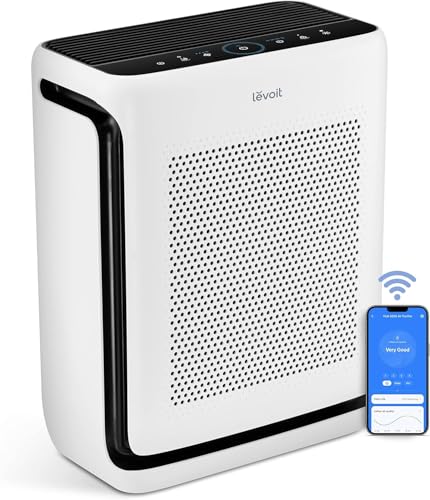
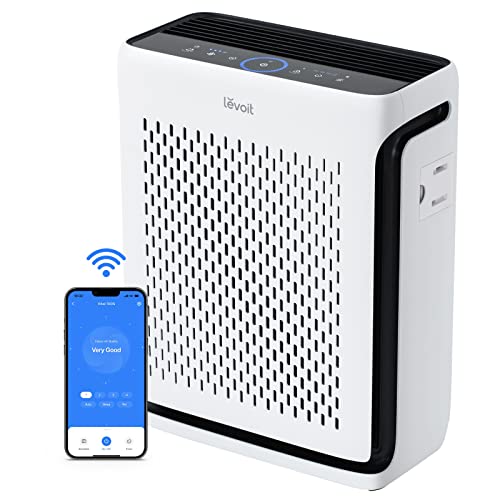
The specific model is well-documented by ENERGY STAR for its third-party testing on particles and ozone. It features fan-and-filter technology, a smoke CADR of 242 CFM, and zero ozone emissions (0 ppb). This is important because portable air purifiers can effectively reduce fine-particle exposure when appropriately sized for a room, while ozone-producing devices can cause respiratory irritation. Air cleaning serves as a supplementary measure alongside source control and proper ventilation, but it does not cure asthma, prevent all infections, or resolve mold and moisture issues. The only washable part is the pre-filter, which Levoit recommends vacuuming or washing every 2 to 4 weeks and then allowing it to dry completely. The main particle and carbon filters are not washable and should be replaced annually, resulting in ongoing filter waste. ENERGY STAR data indicates a smoke CADR of 5.3 per watt and an estimated annual energy consumption of 268.2 kWh. The manufacturer also issues a Proposition 65 warning for lead; however, specific details about the source or level of exposure are not publicly disclosed.
This product is ideal for use in a bedroom, office, or other enclosed spaces of approximately 375 square feet with an 8-foot ceiling. It is particularly effective in environments where dust, smoke particles, pollen, or pet dander are common concerns. It is well-suited for households that can operate it regularly, clean the pre-filter every 2 to 4 weeks, and budget for a full filter replacement once a year. The accompanying app, air quality display, and filter reminder features can assist users in maintaining a consistent maintenance routine instead of treating filtration as an occasional task.
This is not a replacement for addressing issues related to mold, moisture, combustion, or ventilation problems. Individuals seeking significant particle reduction over a large open space should not interpret the single-air-change coverage claim as equivalent to high-rate cleaning. Additionally, this product is not a proven solution for continuous exposure to VOCs, formaldehyde, or strong odors, as the amount of carbon and its long-term gas removal effectiveness are not publicly detailed. Buyers who need a product with a verifiable UL or ETL certification for a specific unit should look for a product that has that documented certification.
The most significant verified health credential for this product is its certification from California as a mechanical air-cleaning device. This is positive because the EPA recommends avoiding air cleaners that intentionally produce ozone, which can irritate the lungs. Mechanical filtration effectively reduces airborne particles, including fine particles, but the actual health benefits depend on factors such as clean-air delivery, room conditions, operating time, and source control. No public CADR (Clean Air Delivery Rate) data was found to verify these conditions for this product. The product features an optional essential-oil tray. While adding fragrance can be pleasing, it may cause symptoms in sensitive individuals and introduce VOCs (volatile organic compounds) into indoor air. The washable pre-filter can help reduce waste from replacement filters, but the main filter typically needs replacing every three to six months, as indicated by the replacement filter instructions. Additionally, no specific ENERGY STAR or public electrical safety certifications were found in the registries checked, and there are no known CPSC recalls related to this product.
This product is ideal for individuals seeking two compact mechanical air purifiers for separate bedrooms, a home office, or other small enclosed areas. It is particularly suitable for those primarily aiming to reduce routine particles such as dust, pollen, or outdoor smoke infiltration, and who can operate each unit close to their frequently occupied spaces. The CARB listing for mechanical devices is helpful for households aiming to avoid intentional ozone production. Buyers should consider the listed room coverage as a manufacturer estimate rather than an independently verified measurement. Additionally, the aromatherapy feature should only be used if the scents are well tolerated.
This product is not ideal for individuals who require independently verified CADR ratings to select an air purifier for wildfire smoke, severe allergies, asthma management, or large open-concept spaces. These applications demand documented smoke CADR and noise data at practical fan speeds. It is also not suitable for households sensitive to fragrances, or for those with scent-triggered asthma or migraines, or anyone seeking a purifier that emits no fragrances. Do not depend on this device to address mold growth, eliminate combustion gases, or effectively remove a wide range of VOCs.
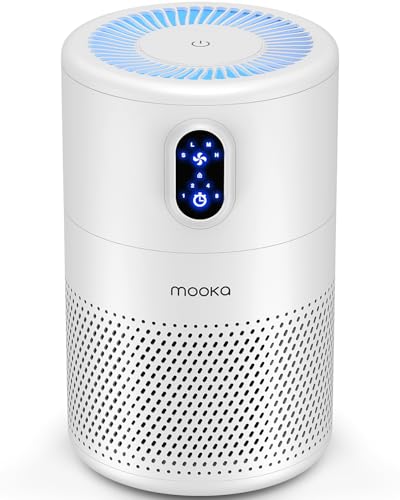
The key health-related feature is a designated mechanical filtration path that includes a pre-filter, an H13 particle filter, and an activated carbon layer, without any aromatherapy function to promote fragrance exposure. Mechanical filtration effectively reduces airborne particles when the device is appropriately sized and operated; however, its actual health benefit depends on how well it delivers clean air. The manufacturer has not provided independently verified CADR data for this product, so claims of suitability for larger rooms should not be considered proof of quick particle removal. The user manual correctly advises against washing the main filter and recommends replacing it every 3 to 6 months. While this helps maintain filter effectiveness, it results in ongoing disposable filter waste. The manufacturer offers a replacement filter, facilitating continued maintenance. The rated power consumption is listed as 13 to 16 watts, but without verified CADR figures, the device’s efficiency cannot be accurately assessed. No related CPSC recall was identified during this review, and there are no publicly available records of electrical safety or ozone certification for this exact product.
This product is ideal for budget-conscious users seeking a compact, straightforward mechanical-filter device suitable for a bedroom, nursery, office, or similarly sized enclosed space. The recommended six air changes per hour in a 215-square-foot area is a more relevant sizing guideline than the larger one-air-change estimate. It also appeals to those who prefer features such as a switchable light, timer, child lock, and do not require an aromatherapy tray. Users should be prepared to replace the filter every 3 to 6 months and utilize the higher fan settings when quicker purification is desired.
This product is not ideal for buyers who require independently verified PM2.5 or smoke removal capabilities for wildfire smoke, asthma, allergy relief, or infection risk reduction. For these purposes, a CADR that is properly rated for the specific room size is essential, particularly in spaces with ceilings taller than 8 feet or open floor plans. Additionally, it is not intended to serve as a primary solution for gas or VOC control, as the amount of activated carbon and gas testing details are not disclosed. Households seeking verified ozone safety and electrical safety certifications should choose a product with documented model-specific public registry listings.
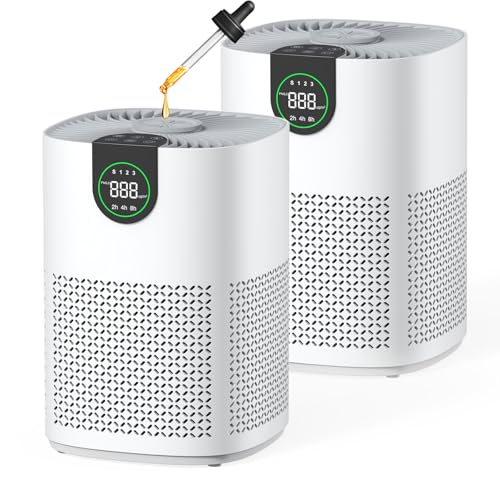
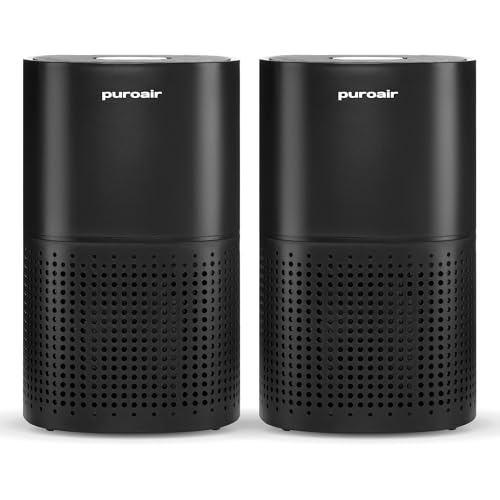
The primary health benefit of this product is its mechanical particle filtration without any measured ozone emissions. ENERGY STAR identifies the exact model as utilizing fan-and-filter technology that emits zero ozone (0.0 ppb). Its independently verified smoke CADR of 183 cfm per unit demonstrates effective removal of airborne particles when each purifier is appropriately sized for the room. While this can help reduce particle exposure, it does not imply that the device treats or prevents allergies, asthma, respiratory infections, or mold-related illnesses. PuroAir describes its filtration system as consisting of a pre-filter, a HEPA filter layer, and activated carbon. However, it does not provide data on carbon weight or gas breakthrough to assess its long-term effectiveness in controlling VOCs or odors. The filter assembly is a single, non-washable cartridge containing all layers and is recommended to be replaced every 90 days. This prevents damage from washing but results in ongoing waste, especially when using two units. ENERGY STAR certification confirms the product's energy performance, with an annual energy consumption of 243.9 kWh per purifier. No product-specific CPSC recalls were found in public recall records.
This product is ideal for households that require two separate mechanical purifiers placed independently in different bedrooms, offices, or small living areas, rather than a single purifier for an open-concept space. Its independently rated smoke CADR ensures effective removal of fine particles in rooms of the specified size. It is also suitable for users who prefer no ionizer, no scent system, straightforward button controls, an automatic mode, and an easy-to-replace filter routine. It is most practical for those willing to budget for two replacement filters approximately every three months.
This product is not ideal for someone expecting a single unit to quickly clean a 1,000-square-foot open space with high air exchange rates. Each purifier is independently rated for a room size of 284 square feet, so even using two units requires careful placement and does not replace source control or proper ventilation. It is also not suitable for buyers looking for washable filters, as the entire filter must not be washed. Additionally, individuals seeking documented effectiveness against VOCs, formaldehyde, wildfire gases, mold, or medical-grade benefits should be cautious about relying on its broad carbon and health claims without specific evidence for those pollutants.
California's public registry lists this product as a certified mechanical air cleaner, which is significant because it does not depend on ionization or ozone generation as its cleaning method. Mechanical particle filtration can help reduce airborne particle exposure when the unit is properly sized and operated, but it does not eliminate all indoor pollutants, prevent disease, address moisture or mold issues, or replace source control and ventilation strategies. The only washable component is the coarse prefilter. The HEPA and carbon filters still need to be replaced every three to six months, according to the manufacturer, resulting in ongoing filter waste and costs. The product also includes an aroma pad for optional use with essential oils, allowing it to add fragrance chemicals to indoor air. Claims about the carbon media are not supported by disclosed carbon quantity or public gas-removal testing. While no specific product recall was identified in the CPSC records, the claimed ETL certification could not be independently verified through a public listing for this exact model.
This product is ideal for individuals using it as a supplementary particle filter in a modest bedroom, office, or other enclosed space, particularly where pet hair and visible dust make a washable coarse pre-filter beneficial. It also suits users who appreciate features such as an auto mode, a display monitoring PM2.5 levels, a timer, and a low-light sleep setting. However, the stated CADR should be considered a manufacturer estimate rather than an indication that the unit can effectively clean an entire 3,000 square foot room.
This product is not suitable for buyers who require certified protection in very large open-plan spaces, during wildfire smoke events, in classrooms, or in environments with medically significant allergies or asthma. Such applications demand independently verified smoke CADR ratings tailored to the specific room size and ceiling height. Additionally, it is not ideal for individuals sensitive to fragrances, those with scent-triggered respiratory issues, or households that avoid essential oil diffusion. Buyers needing certified electrical compliance should select a product that has an exact model with publicly available NRTL certification records.
The primary health benefit of the product is its ability to control airborne particles, rather than treating illnesses directly. A smoke CADR of 143 CFM is effective for reducing fine particle exposure in a properly sized room. According to EPA guidelines, portable air purifiers can supplement source control and ventilation but cannot eliminate all pollutants, address moisture-related mold issues, or consistently produce significant symptom relief for every individual. This device utilizes mechanical filtration, featuring a washable pre-filter and a combined particle and activated carbon replacement filter. Levoit claims that its replacement filter contains FSC-certified wood carbon, although it does not specify the amount of carbon or how long the gas-removal capability lasts. The product’s ENERGY STAR certification indicates it operates efficiently, and the washable outer layer can help prevent premature clogging. Both the product listing and the replacement filter page include a California Proposition 65 warning regarding lead. Additionally, no specific UL or ETL certification for this exact model was identified during this review.
This product is ideal for individuals seeking independently verifiable particle-cleaning performance for a standard bedroom, office, or pet area of approximately 222 square feet with an 8-foot ceiling. It is particularly convenient in environments where pet hair may clog the intake, as the outer pre-filter can be vacuumed or washed every two to four weeks. It is suitable for users who plan to run the purifier continuously, are comfortable replacing the main filter about once a year, and appreciate features such as app control, a sensor-driven Auto Mode, and a quiet operation at the manufacturer’s recommended low setting.
This product is not ideal for buyers who require quick and efficient particle removal over a large 1,000-square-foot open space, particularly in areas with high ceilings, wildfire smoke, or significant indoor particle sources. The claim of large-area coverage is based on just one air change per hour. It is also not suitable as a standalone solution for mold control, infection prevention, severe chemical or formaldehyde exposure, or ongoing smoke gases. Addressing these issues typically requires source control, proper ventilation, and, in the case of gases, proven high-capacity sorbent media or specialized filtration systems.
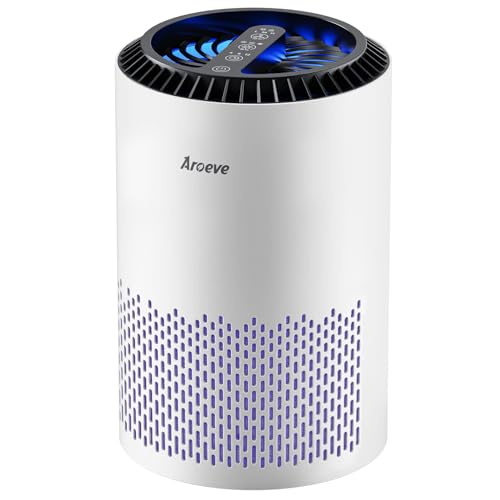
The most robust health-related evidence pertains to particle removal. According to public ENERGY STAR records, the product has a smoke CADR of 148 cfm, which can help decrease airborne particle exposure when used in appropriately sized rooms. However, this does not imply prevention or treatment of conditions such as asthma, allergies, infections, mold illnesses, or other diseases. The EPA also points out that particle filtration and gas removal are separate functions. The product’s carbon media has not been publicly measured or independently tested for gas removal effectiveness. CARB certifies this specific model as an electronic air cleaner that complies with its 50 ppb ozone-emission limit. This provides meaningful safety evidence, though it does not guarantee zero ozone emissions or serve as a broad health endorsement. The 35-watt model range also holds publicly available ENERGY STAR efficiency records. However, filter waste is an ongoing issue, as the primary filter is non-washable and the manufacturer recommends replacing it every 4 to 8 months. Additionally, a CPSC recall on February 9, 2026, involved a different AROEVE model, the MK04, due to overheating and fire risks. There is no evidence linking that recall to this particular product.
This product is ideal for individuals using a single enclosed space such as a bedroom, office, nursery, or similar room of approximately 229 square feet or smaller, who require independently verified particle-cleaning performance. It is also suitable for households dealing with common airborne particles like dust, pollen, pet dander, or smoke, as long as it is operated at an appropriate fan setting and filters are regularly replaced. The washable intake layer can be beneficial in situations where pet hair or lint might otherwise quickly clog the main filter. Please note, this is not a whole-house ventilation system.
This product is not suitable for buyers who require certified cleaning for a 1,504-square-foot open space, a room with high ceilings, or multiple interconnected rooms. In such cases, the size should be determined based on the verified smoke CADR rather than an unverified maximum coverage claim. Additionally, it should not be used as a replacement for medical treatment, infection control measures, mold removal, source control, ventilation, or evacuation during intense smoke episodes. Individuals who are highly sensitive to ozone or looking for a zero-emission device should be aware that this is an electronic device equipped with UV technology, not a purely mechanical air cleaner.
For particle exposure, a portable air purifier can enhance source control and ventilation when its Clean Air Delivery Rate (CADR) matches the room size. This device has independently certified particle CADRs; however, its capacity is limited. Its most notable health and safety endorsement is the official ENERGY STAR listing, which verifies its fan-and-filter technology and confirms zero ozone emissions at 0.0 parts per billion (ppb). The California registry lists the same MK01A model as a mechanical device under related brand names but does not include AROEVE. Therefore, this registry does not independently verify the AROEVE branding claims. The oil tray presents a material health consideration. Although essential oils are not included, the manufacturer advises users to add them. Fragrances can affect sensitive individuals, including some people with asthma. Environmental impact is mixed: ENERGY STAR reports low annual electricity consumption of 33 kWh, but since the non-washable filter needs replacement every three to six months, this creates ongoing filter waste. A recall issued by the CPSC on February 9, 2026, involved the AROEVE MK04 units—due to overheating and fire hazards—but did not include this specific product model. No recalls for this exact model have been found.
This product is ideal for individuals who need additional particle filtration in a small, enclosed space near where they sleep or work, approximately 48 square feet, as indicated by its ENERGY STAR room-size certification. It is also suitable for users who prefer a compact design weighing about three pounds, feature a timer, have low estimated annual electricity consumption, and appreciate a clear indicator for replacing the non-washable filter. It is best used continuously to target airborne particles such as smoke, pollen, and pet dander, rather than as a solution for an entire room or whole home.
This device is not appropriate for standard bedrooms, larger offices, open-plan spaces, or for anyone relying on the advertised 287 square foot coverage for effective fine-particle removal. The independently tested smoke CADR is only 31 cfm, which is significantly below EPA guidelines for rooms of that size. Additionally, it is not suitable for individuals sensitive to fragrances, those with scent-triggered asthma, or households seeking an air purifier without an oil-diffusion function. It should not be considered a replacement for source control measures, proper ventilation, mold remediation, or medical treatment.
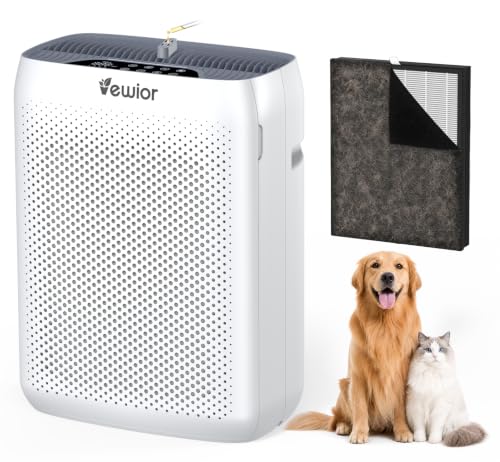
Regarding particle exposure, a high clean-air delivery rate can enhance source control and ventilation when properly matched to the room size. KNKA specifies a flow rate of 226 CFM for testing related to small particles and provides a washable pre-filter that can help reduce visible dust and pet hair accumulation on the disposable media. It is important to fully air-dry this pre-filter before reinstallation to ensure safe maintenance. The specific product's certification claims could not be fully verified through public issuer databases. A CARB listing was found for the APH4000WF model as a mechanical device, but not for this exact version. No recalls or government warnings specific to this product were identified in the CPSC records searched. The unit utilizes two disposable HEPA and activated carbon cartridges, which the manufacturer recommends replacing every 3 to 6 months. Its power consumption is moderate at 45 watts; however, frequent replacement of dual filters can generate additional waste. If reducing indoor fragrances and VOCs is a priority, it is advisable to avoid using the optional aroma feature.
This air purifier is ideal for buyers seeking a freestanding particle cleaner for a bedroom, nursery, pet space, or medium-sized living area, and who are willing to replace two filters every 3 to 6 months. Its rated airflow of 226 CFM is particularly effective for filtering smoke particles, dust, pollen, and pet dander in rooms of similar size, especially when operated continuously. Additionally, it is suitable for households that prefer a washable outer pre-filter for regular removal of pet hair and dust, but do not require a feature for fragrance diffusion.
This product is not suitable for individuals with fragrance sensitivity, scent-triggered asthma, migraines, or chemical sensitivities, as it contains an aroma pad and an oil-diffusion feature. It is also not recommended for addressing mold growth, moisture issues, combustion gases, or significant levels of formaldehyde and VOCs. Customers looking for independently verified certifications for specific models, published sound levels and airflow measurements at all settings, or quantified gas filtration capabilities should opt for a product with those documented standards. Additionally, spaces larger than approximately 3,500 square feet in open-plan layouts exceed the airflow capacity provided at standard ceiling heights.