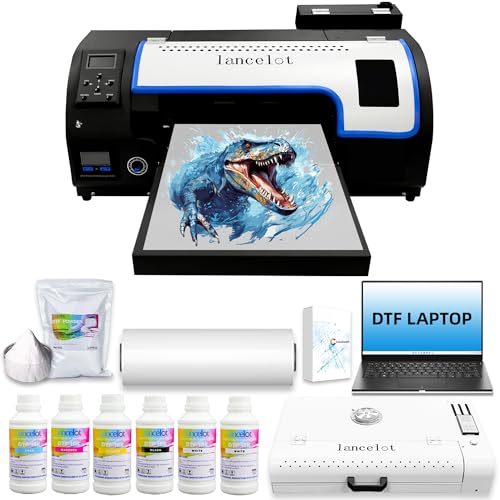
Lancelot M1630 Pro DTF Printing Bundle
Doubled printing speed enhances productivity.
White ink circulation prevents clogs efficiently.
Comprehensive bundle includes all necessary tools.
We compared the top Dtf Printer products so you can quickly spot the strongest options for value, features, and everyday performance.
Doubled printing speed enhances productivity.
White ink circulation prevents clogs efficiently.
Comprehensive bundle includes all necessary tools.
Efficient roll feeder for continuous printing.
High-quality prints with vibrant color output.
Compact design ideal for space-saving needs.
Comprehensive bundle with essential accessories included.
User-friendly touch screen interface simplifies operation.
Automatic cutter enhances printing efficiency.
Compact design fits small workspaces easily.
High-quality prints ensure vibrant, detailed images.
Includes curing oven for efficient process.
Integrated laptop and oven for seamless printing.
Automatic maintenance ensures consistent print quality.
Vacation mode minimizes downtime and extends lifespan.
Integrated auto-cleaning system enhances print quality.
Supports white ink for vibrant, detailed prints.
User-friendly software simplifies the printing process.
High-quality prints with vibrant colors.
Efficient and fast printing process.
User-friendly interface for easy operation.
A direct-to-film (DTF) printer applies both colored and white textile inks onto a coated transfer film. This film is then coated with adhesive powder, cured using heat, and transferred onto fabric with a heat press. It’s important to note that the printer is just one component of the process; additional equipment such as powder handling systems, shakers or ovens, ventilation setups, specialized software, maintenance supplies, and a separate heat press are typically required.
The practical performance of a DTF system depends on factors beyond its advertised resolution or speed. Buyers should verify key specifications including the maximum usable film width, supported film formats, print modes, number of passes, RIP software compatibility, operating system requirements, curing temperature and duration, and the entire print-to-transfer workflow. Claims like “twice as fast” lack meaning without details on test conditions, artwork coverage, number of passes, curing times, and overall cycle duration. Resolution figures can vary between listings, and pages-per-minute ratings often omit essential steps such as white ink printing, powdering, curing, cleaning, and pressing.
White ink printing often presents maintenance challenges. A reputable product should address aspects such as ink circulation, stirring, humidification or moisturizing, nozzle checks, cleaning routines, waste ink management, downtime procedures, and parts replacement. Claims like “clog-free” or “maintenance-free” should not substitute for a detailed, model-specific maintenance schedule or independent endurance testing, which should include factors like ink type, ambient conditions, downtime, cleaning cycles, and nozzle check results.
Safety considerations are critical, as the workflow involves electricity, moving film and shaker components, hot surfaces, adhesive powders, inks, cleaning agents, and curing emissions. Look for a traceable U.S. Nationally Recognized Testing Laboratory (NRTL) listing for the specific printer, shaker, dryer, oven, power supply, and cords supplied—not just component certifications or general marks like CE, FCC, or RoHS. Valid certification sources include UL Solutions Product iQ, Intertek’s ETL directory, and CSA Group’s database, where the listing should specify the product and relevant safety standards.
Regarding emissions from powders and curing processes, a credible system should include an enclosure or local exhaust system, specify airflow rates, filtration details, installation guidelines, and a filter replacement schedule. The best evidence would come from independent testing by an ISO/IEC 17025-accredited laboratory, with accreditation traceable through organizations like A2LA or ANAB. Simply having an included “purifier” or exhaust pipe does not demonstrate effective exposure control if airflow, filtration media, capture efficiency, and maintenance procedures are not specified.
Before operating, obtain up-to-date Safety Data Sheets (SDS) and hazard labels for all included or required materials such as inks, powders, cleaners, and moisturizers. These documents should detail ingredients, exposure controls, first aid measures, fire hazards, storage, and disposal instructions. It is also essential to confirm the contents of the delivery package—including whether the oven or shaker is included, supported widths and resolutions, and the terms regarding laptop or software components—in writing.
Safety warnings are common across these products: many do not have a complete U.S. NRTL listing; matching SDS documents are frequently unavailable; evidence of proper airflow, filtration, and emission controls is often lacking; and independent testing for speed, durability, emissions, energy consumption, and color quality is uncommon. These systems are not suitable for use in bedrooms, shared living spaces, classrooms, or poorly ventilated areas. Due to frequent white-ink maintenance needs, powders, hot curing, cleaning agents, waste ink, film, and electronic waste should be managed in dedicated workspaces with formal handling and disposal procedures.

The reviews provided reveal a consistent trend: while DTF printers typically offer beneficial circulation and cleaning functions, the most prominent marketing claims are frequently not supported by comprehensive system certifications, chemical safety documentation, ventilation details, or independent testing results. The scores below highlight these discrepancies, rather than factors such as price, overall ratings, or catalog positioning.
This measures whether the specific combination of printer and heating components has an identifiable U.S. NRTL certification that covers electrical shock, overheating, and fire hazards. This is important because DTF systems include powered printers along with ovens, shakers, dryers, and cords. Among DTF products, scores typically range from 68 to 70; higher scores indicate more robust supporting evidence. However, no comprehensive system listing was found for these products.
This assesses the documented controls related to hot surfaces, heaters, thermal cutoffs, guards, emergency stops, moving film, and shaker pinch points. These hazards are particular to processes involving powdering, curing, and film transport. The majority of supplied DTF products received scores ranging from 68 to 72, reflecting limited or incomplete documentation. Achieving a high score requires detailed, model-specific instructions and system-level evidence, rather than generic warnings.
This assessment evaluates whether adhesive powder and curing emissions are contained or extracted via a designated local exhaust system. Buyers should anticipate information regarding airflow, filtration, installation, and maintenance. DTF scores generally ranged from 68 to 70; the higher-rated Epson model is not a DTF printer and does not utilize this workflow. For DTF products, claims related to purifiers or exhaust systems were often unsubstantiated when no capture tests or detailed specifications were provided.
This assesses whether each ink, powder, cleaner, and moisturizing fluid is accompanied by a current, formulation-specific 16-section SDS and hazard label. These documents are important during spills, cleaning, storage, exposure, and disposal. Most DTF products received scores between 68 and 70 because publicly available, matched SDS sets were not found. Epson scored 88 after product-specific ink documentation was discovered; however, it does not utilize DTF consumables.
This measures the waste generated from film, powder, ink, purge fluids, cleaning residues, filters, printheads, and electronic equipment, as well as providing guidance on take-back or disposal. DTF workflows produce various recurring waste streams, particularly during white-ink cleaning and failed prints. The supplied DTF scores varied from 62 to 72; higher scores indicated more detailed and clearer waste or service information, rather than indicating lower waste levels.
This evaluates parameters such as power consumption, standby performance, heating duration, printable area, material efficiency, purge volume, and rejected outputs. These factors are important because curing often consumes a significant portion of the workflow’s energy, and failed transfers lead to wasted film, ink, and powder. Most direct-to-film (DTF) products received scores between 68 and 70 due to the lack of independent watt-hour measurements and yield testing. Epson achieved a score of 84 based on published power data, but it is not classified as a DTF printer.
This assesses testing that is conducted by a recognized independent accredited laboratory, focusing on safety, emissions, output, or durability. A comprehensive report clearly states the specific model, configuration, testing method, conditions, date, and results. While DTF products typically received scores between 68 and 70, reviews did not find any accredited reports that verify their main claims regarding speed, emissions, electrical performance, durability, or color accuracy.
This assessment evaluates whether procedures for white-ink circulation, agitation, cleaning, humidification, waste management, and recovery are clearly specified and operational. It is important because settled white ink and downtime can lead to clogging issues. The scores ranged from 53 to 78; higher scores were assigned to products that provided detailed schedules and maintenance instructions, while lower scores indicated the presence of unsupported anti-clog claims or warnings that conflicted with recommended maintenance practices.
This assesses whether aspects such as width, resolution, speed, color capability, fabric compatibility, software, curing, and heat-press requirements are specified under consistent, reproducible conditions. DTF scores ranged from 52 to 78. Higher scores reflected clear specifications for width, pass count, or workflow processes, whereas lower scores indicated conflicting details regarding resolution, speed, formats, or claims made without testing parameters.
This metric assesses whether listings clearly differentiate verified specifications from estimates and transparently disclose included equipment, necessary accessories, compatibility, warranty details, and setup requirements. Among DTF products, scores ranged from 48 to 70. Higher scores indicated more detailed and reliable information regarding configuration and warranty, while lower scores often involved unsupported speed multipliers, inconsistent bundle descriptions, vague use of "industrial" terminology, or unclear details about curing and consumable requirements.
This assessment reviews the safety history of the specific product, manufacturer, importer, seller, and the designated U.S. contact. No DTF review indicated any product-specific CPSC recalls or warnings, resulting in scores typically ranging from 70 to 74. However, the absence of such alerts does not constitute a safety certification; consumers should still verify the seller’s credibility, warranty information, recall contacts, and procedures for corrective actions.
The primary health concern centers on process control rather than verified low-exposure design. Lancelot identifies its powder as TPU and describes automated processes for shaking and drying the powder. However, safety data sheets specific to the supplied powder, inks, cleaning fluids, or maintenance fluids could not be found. Similar safety sheets for comparable DTF powders recommend avoiding dust formation and ensuring adequate ventilation or extraction during thermal processing. The available product materials do not specify details about exhaust airflow, filter types, replacement schedules, or independently tested capture efficiency. Additionally, no UL, ETL, or CSA electrical safety listings for the specific model were found in U.S. directories, and no independent testing reports are available. While Lancelot documents procedures for monitoring and cleaning waste inks—important operational controls—these workflows still generate various wastes, including PET film offcuts, adhesive powder loss, ink and cleaning fluid waste, purge waste, filters (if used), and eventual electronic and printhead waste. No product-specific take-back or recycling programs have been identified.
This product is ideal for a small apparel transfer studio with a dedicated, well-ventilated workspace. It requires staff capable of managing daily ink and waste routines, and is designed for producing A3-sized DTF transfers from sheets or roll film. It is best suited for situations where the customer can receive written confirmation of the exact contents of the shipment prior to delivery and can maintain the system during periods of inactivity. The included or preconfigured computer, available with some bundles, may help reduce initial software setup, but it does not eliminate the need for knowledge of the DTF process, curing controls, and a separate heat press workflow.
This product is not appropriate for bedrooms, communal living areas, classrooms, or poorly ventilated home offices. The workflow involves the use of loose adhesive powder, liquid inks, cleaning agents, heated curing equipment, and waste ink. However, product-specific safety data sheets and verified exhaust specifications could not be found. It is also unsuitable for buyers who are unable to keep the printer powered and maintained during periods of inactivity, manage cleaning and waste disposal independently, or require independently verified information regarding electrical safety, emissions, energy consumption, color accuracy, or throughput before operating the equipment.
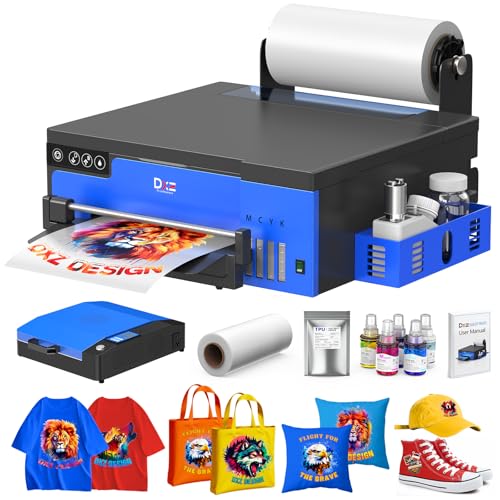
The bundle includes liquid inks, adhesive powder, cleaning supplies, film, and an oven. OSHA highlights labels and product-specific safety data sheets (SDS) as essential information regarding chemical hazards; however, no current SDS matching the consumables provided with the product was found. Additionally, the available documentation lacks information on powder containment, exhaust airflow, filter maintenance, or oven-emissions testing. NIOSH recommends implementing engineering controls such as enclosures and ventilation systems rather than relying solely on work practices or personal protective equipment. A comprehensive U.S. NRTL listing for the entire printer-and-oven system was not identified during certification checks, and there are no CPSC recalls or product safety warnings specific to the DXZ model. The workflow naturally generates used transfer film, residual powder, ink, cleaning fluid waste, purge waste, and eventually electronic waste including printheads. Although DXZ claims that its roller feeder and cutter reduce film waste, it does not provide data on yield, energy consumption, take-back programs, or disposal instructions.
This product is designed for small-scale apparel transfer workflows that require A4-sized graphics, rather than large chest prints or gang sheets. The ideal user has a dedicated workspace, a Windows computer, access to a separate heat press, and the ability to set up proper ventilation and chemical safety procedures before using the powder-and-oven process. It is also suitable for an operator comfortable with performing nozzle checks, cleaning, film-path inspections, and white-ink maintenance, rather than expecting a maintenance-free office printer experience.
This product is not suitable for bedrooms, communal living spaces, classrooms, or other areas where powder handling and heat curing cannot be properly isolated and ventilated. It is also not ideal for buyers who require independently verified electrical certifications, emissions control documentation, chemical SDSs prior to purchase, or confirmed output specifications for production planning. The requirement for Windows excludes users on Mac systems. Additionally, high-volume operations requiring larger transfer capabilities, detailed duty cycle documentation, repair parts information, or validated color and throughput data will need a more comprehensive and thoroughly documented workflow.
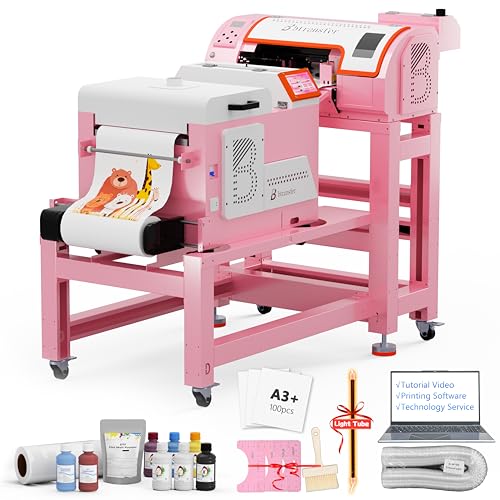
The package includes liquid inks, a one-kilogram bottle of TPU adhesive powder, printhead cleaner, moisturizing fluid, PET transfer film, and a heated powder-processing workflow. These materials and processes may pose exposure risks such as splashes, dust, vapors, hot surfaces, and moving parts. The manufacturer mentions features like an infrared sensor, waste-ink alarm, white-ink circulation, and automatic cleaning; however, they do not provide a comprehensive safety-control specification covering guards, thermal cutoffs, emergency stops, airflow, filtration, or exhaust systems. There is no evidence of an official U.S. NRTL certification for specific models or an independent emissions report. Additionally, a complete set of safety data sheets (SDS) matching all the chemicals supplied was not found. OSHA mandates hazard communication through proper labeling and safety data sheets for workplace chemicals. NIOSH recommends that containment and local exhaust ventilation are more effective for controlling exposure than relying solely on user behavior or personal protective equipment. The package also contains single-use film, powder, ink, cleaning liquids, purge waste, filters, and electronic components, but no take-back or detailed disposal program was identified.
This product is suitable for small business owners or experienced home clothing creators who require an all-in-one 13-inch DTF system and have a designated workspace. Buyers should be ready to handle routine maintenance tasks such as powder management, curing, transfer pressing, cleaning solutions, and replacing consumables. It is ideal for environments where the purchaser can set up effective local exhaust or source control, verify electrical installation requirements, obtain up-to-date SDS documentation from the seller, and understand that the listed output specifications are provided by the manufacturer and have not been independently verified.
This product is not suitable for bedrooms, shared living spaces, classrooms, or other areas lacking a dedicated, well-ventilated work zone. It is also not ideal for buyers who require a certified U.S. electrical safety listing for the entire heating system, verified chemical hazard documentation prior to delivery, or independently tested emissions and production data. Children, individuals with respiratory sensitivities, and anyone who cannot safely handle heated film, adhesive powders, cleaning agents, moving film components, or routine waste should not operate it without proper workplace controls and supervision.
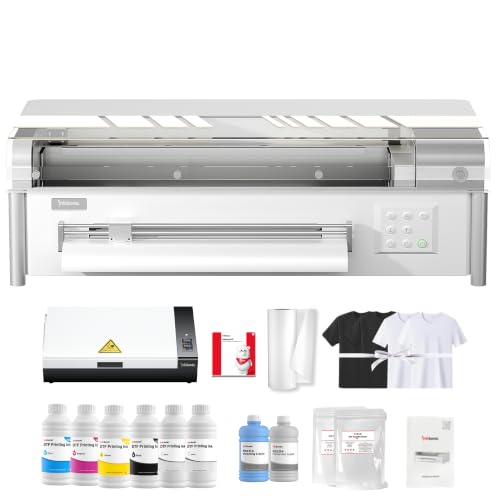
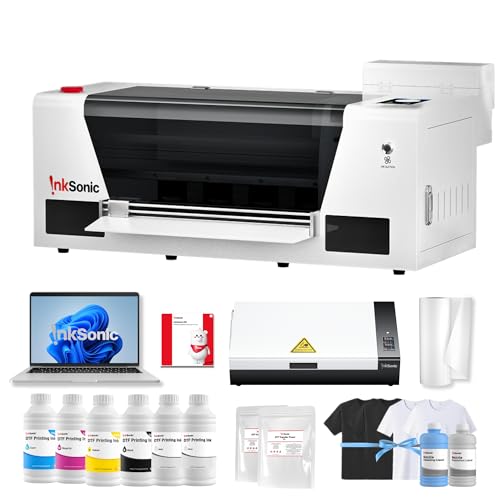
The bundle incorporates pigment ink, PET transfer film, TPU hot-melt adhesive powder, cleaning liquid, and a heated curing stage. InkSonic identifies the powder as TPU, with particle sizes ranging from approximately 80 to 200 micrometers, and provides a curing range. Handling the powder can generate inhalable dust; therefore, federal occupational health guidelines recommend using local capture ventilation and careful work practices during manual powder transfer. There were no reports of product-specific capture airflow, filtration, or emission control measures. The manufacturer provides maintenance instructions for managing waste ink, pads, filters, cartridges, and cleaning processes, which helps make these waste streams identifiable. However, it does not offer publicly accessible, product-specific Safety Data Sheets (SDS) covering all chemicals in a 16-section format, nor does it provide clear disposal, recycling, or take-back procedures for chemical waste, film, filters, printheads, or the device itself. No safety warnings or recalls from the U.S. Consumer Product Safety Commission (CPSC) specific to the product were found in the sources reviewed. Additionally, there is no verified U.S. NRTL safety listing for the entire heated bundle.
This setup is ideal for a small apparel customization studio that already has a compatible heat press, a ventilated workspace for powder handling and curing, and a commitment to routine maintenance. The 11.8-inch film width is suitable for printing graphics on garments, bags, hats, and other small transfer projects. It is best suited for an operator who is comfortable performing nozzle checks, managing white ink, emptying waste ink, replacing filters and pads, and maintaining records of consumables and maintenance activities.
This product is unsuitable for bedrooms, shared living areas, classrooms, or other spaces where powder application and heated curing cannot be isolated from occupants or properly ventilated. It is also not ideal for users who require independently verified electrical certifications, emissions reports, documented thermal safety measures, or comprehensive hazard disclosures prior to installation. Additionally, it is not recommended for those seeking a maintenance-free solution, as the manufacturer’s instructions specify regular cleaning, nozzle inspections, ink monitoring, and periodic replacement of wear parts.
The product employs a workflow that manages liquid inks, adhesive powder, cleaning liquids, protective liquids, PET film, waste ink, and a hot curing process. The manual for the specific model notes that oven baking can produce odors and recommends operating in a well-ventilated area. While this provides basic guidance, there is no documentation of a local exhaust system design. No details were found regarding targeted airflow, capture testing, filter specifications, or maintenance schedules for filters within this package. The manual specifies the use of a waste ink bottle and advises users to empty it before overflow to help manage routine liquid waste. It also details cleaning procedures and the need to replace consumables such as film offcuts, powder losses, purge waste, used liquids, cartridges, dampers, and eventually electronic components, which contribute to the operational workload. Safety data sheets and disposal instructions specific to the product were not publicly available during review. No U.S. safety warnings or recalls were identified, but there was no traceable U.S. NRTL certification or independent emissions testing report found.
This product is designed for an experienced small-scale apparel transfer operator who requires up to 14-inch film output, has a dedicated workspace, and can perform routine printer maintenance. The user should be comfortable conducting nozzle checks, managing white ink circulation, cleaning the capping station, monitoring waste ink levels, and setting up the system using a Windows RIP. It is best suited for a well-ventilated workshop with separate areas for powder handling and hot-cured film, rather than a standard desk or shared living space.
This product is not ideal for apartments, bedrooms, classrooms, child-accessible areas, or any location lacking adequate ventilation for handling adhesive powders and oven curing. Customers requiring independently verified electrical certifications, emissions testing, or comprehensive chemical hazard documentation prior to installation should choose a product that provides these records. Additionally, it is not suitable for users expecting a maintenance-free printer, a Mac-only workflow, or a straightforward paper printing experience, as regular ink system maintenance and Windows software setup are essential parts of its operation.
A traceable U.S. NRTL (Nationally Recognized Testing Laboratory) listing for the entire printer could not be found in the UL and Intertek certification databases consulted. OSHA notes that NRTL marks indicate that a product has been tested and certified to relevant safety standards. However, there was no specific record or electrical rating information available for this particular product. Additionally, no documentation was found regarding safety features such as thermal cutoffs, hot-surface safeguards, guards, or emergency-stop controls. The documented workflow involves the use of ink, hot-melt adhesive powder, film, cleaning supplies, and waste ink. However, no current Safety Data Sheets (SDS), exhaust system details, filtration schedules, or disposal instructions matching this workflow were identified. OSHA highlights that airborne powders and emissions from heated processes may require engineering controls like enclosures and local exhaust systems. The process generates material waste such as single-use film, purge waste, and parts like printheads or electronics replacements. While EPA guidelines emphasize source reduction and reuse, there is no evidence of a take-back, recycling, repair parts, or waste management program associated with this product.
This system is ideal for a small, technically skilled apparel or craft business that requires A3-sized transfer production. It is intended to be used as an initial kit rather than a comprehensive, fully documented production setup. The operator should have a dedicated, appropriate curing and heat-press area, a well-ventilated workspace suitable for handling powders and heated materials, and the capability to obtain up-to-date SDS (Safety Data Sheets) from the supplier before opening consumables. Additionally, it is suitable for users comfortable with regular nozzle inspections, cleaning procedures, and remote software configuration.
This product is not suitable for bedrooms, shared living spaces, classrooms, or other areas where powder handling and heated adhesive curing cannot be properly isolated and ventilated. It is also not ideal for users who require certified U.S. electrical compliance, independently verified emissions data, published power consumption, or full chemical disclosures prior to installation. Buyers looking for a low-maintenance printer should be cautious, as the maintenance instructions provided include procedures for pigment settling, cleaning cycles, waste ink removal, and humidification after more than three days of inactivity.