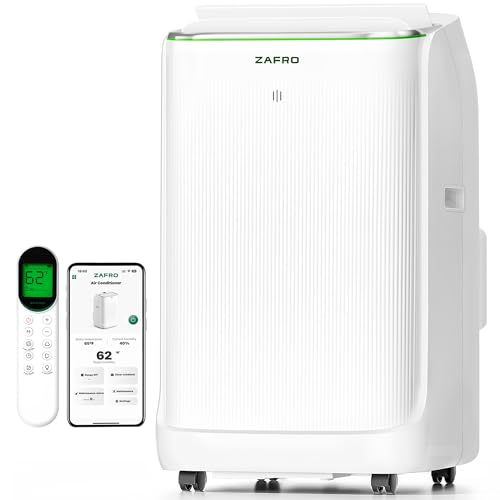
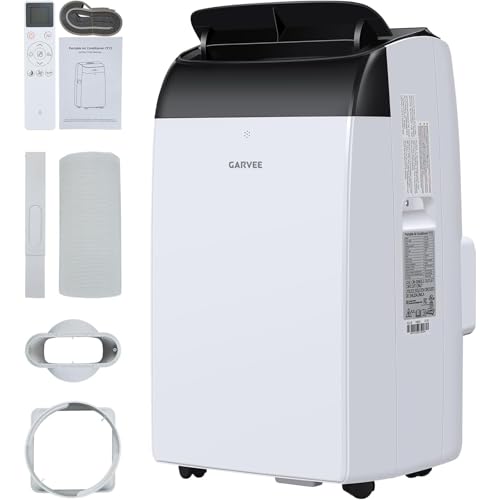
16000 Dual Hose Portable AC
Ultra quiet operation at just 42dB.
Convenient dual hose design improves cooling efficiency.
Smart controls with app and remote options.
We compared the top Quiet Portable Air Conditioner products so you can quickly spot the strongest options for value, features, and everyday performance.
Ultra quiet operation at just 42dB.
Convenient dual hose design improves cooling efficiency.
Smart controls with app and remote options.
Quiet operation ensures peaceful indoor environment.
Convenient app and remote for easy control.
Drainage-free design simplifies maintenance.
Efficient cooling with 12000 BTU power.
Convenient smart controls via app or voice.
Versatile features: fan, dehumidifier, and AC.
Quiet operation at just 45dB.
Convenient app and voice control.
Drainage-free cooling for easy maintenance.
Combines air conditioner, dehumidifier, and fan modes.
Includes a remote control for easy operation.
Complete window mount exhaust kit provided.
Efficient cooling for medium-sized rooms.
Convenient remote control operation.
Quiet function for peaceful environments.
Energy-efficient with 13.6 CEER rating.
Quiet operation at just 45dB noise level.
Covers large spaces up to 500 sq.ft.
Energy-saving features for reduced power consumption.
Ultra quiet operation at just 42 dB.
Convenient app and remote control options.
Efficiently cools large spaces up to 750 sq. ft.
Offers versatile 3-in-1 functionality.
Convenient remote control with "Follow Me" feature.
Efficient cooling for medium-sized rooms.
Quiet operation enhances comfort and usability.
Built-in dehumidifier for improved air quality.
A portable air conditioner cools indoor air by removing heat and venting that heat outdoors via a window hose or kit. It may also circulate air or dehumidify, but these functions do not replace true refrigerated cooling. The effectiveness of the unit in reducing indoor heat depends on its tested cooling capacity, the room’s heat load, the exhaust system design, the quality of the window seal, and proper condensate management.
Begin by considering the DOE-adjusted SACC rating, which reflects the seasonal cooling capacity specifically for portable air conditioners. The larger ASHRAE or headline BTU numbers can make a unit seem more powerful; however, they do not accurately represent the actual cooling delivered in a room. Many products show a significant difference between the headline BTU and SACC, and some do not disclose SACC at all. Guidance based on room size is only reliable when it accounts for factors like sunlight exposure, insulation, ceiling height, open doors, occupancy, and heat-generating appliances. Without these qualifiers, room-size recommendations should be viewed as estimates, not guarantees.
Efficiency comparisons should be based on CEER, SACC, duct configuration, and the annual energy consumption from federally mandated testing. A FTC EnergyGuide label and a record in the U.S. Department of Energy Compliance Certification Database provide more reliable evidence than marketing claims or vague SEER figures. Practical performance can also be affected by infiltration of warm room air, especially in single-hose models. Dual-hose or hose-in-hose systems can mitigate this issue when installed correctly, including proper sealing of intake, exhaust, and window panels.
For use in bedrooms or living spaces, look for specific sound level ratings that specify operating modes, measurement distance, and testing standards. A generic dB figure without context is less meaningful; compressor noise may be more noticeable than fan noise. Independent laboratory sound testing is preferable over vague claims of being “quiet” or “library-level.”
Verify safety regarding electrical components and refrigerants for the exact model, not just brand-wide assurances. Check for a matching UL Product iQ, Intertek ETL, or CSA certification record that confirms compliance with safety standards specific to portable air conditioners. This is especially important for models using R-32 or other A2L refrigerants, which are less flammable but still require proper design, testing, servicing, and disposal. Always review grounding instructions, outlet requirements, restrictions on extension cords or adapters, and any recall notices prior to use.
Condensate management is an ongoing practical concern. “Drainage-free” typically means less frequent draining under specific conditions, but not maintenance-free operation. A helpful manual will detail procedures for full-tank shutdown, manual or continuous drainage, filter cleaning, and drying before storage. At end of life, refrigerants must be recovered before disposal or recycling; venting or puncturing the unit is not acceptable.
Common issues found in reviews include lack of precise safety listings, incomplete DOE or EnergyGuide documentation, improper sealing for single-hose units, exaggerated room-size claims unsupported by SACC data, and insufficient detail in dB ratings. High humidity situations may still require drainage, and neglecting filter cleaning or allowing water to stagnate can lead to maintenance challenges and indoor air quality problems. No portable unit should be relied upon solely for room sizing or without carefully following installation, electrical, refrigerant, drainage, and safety instructions.

Portable air conditioners impact comfort, heat exposure, energy consumption, indoor humidity, and refrigerant emissions. The following differences highlight evidence that influences the safe and practical use of these units, rather than just their key features.
This assessment determines if the DOE-verified SACC capacity and room guidance are adequate for the buyer’s specific room. It is important because a high BTU rating does not necessarily guarantee sufficient cooling performance. Among the products evaluated, those with higher scores typically featured a clearly stated or externally verified SACC figure, along with practical room guidance. Conversely, lower scores were assigned to products with unsubstantiated coverage claims, inconsistent capacity information, or limited evidence supporting their effectiveness in large rooms.
This assesses whether the specific product has an independent U.S. safety listing suitable for its electrical and refrigerant design. This is especially important for indoor compressor appliances, particularly those using mildly flammable A2L refrigerants like R-32. The highest scores were awarded when ETL or equivalent certifications were verified, while lower scores were given when such confirmation from UL, ETL, or CSA was absent.
This evaluates whether the water is safely evaporated or drained, if the full-tank protection functions correctly, and whether the manual provides instructions on cleaning, filters, and continuous drainage. Portable units may still accumulate water in humid conditions despite being advertised as drainage-free. Products with higher scores offered clear guidance on drainage, shutoff, filters, and storage, while those with lower scores provided less clarity on humidity performance, cleaning procedures, or water management.
This measure evaluates whether quiet claims specify the mode, distance, measurement method, and independent verification. It is important because a minimum decibel (dB) value may exclude compressor noise or only apply to specific conditions. Higher scores among the products indicate clearer or more reliable evidence of noise levels, whereas lower scores suggest unsupported claims, inconsistent data, or independent tests that show louder operation.
This metric evaluates the cooling efficiency per watt, following the federal portable air conditioner method, including CEER, SACC, and yearly energy consumption. It is important because an inefficient cooling unit can lead to higher electricity consumption throughout a hot season. Products with higher scores are backed by model-specific EnergyGuide labels or verified test data, whereas lower scores tend to be based on seller claims alone, lack DOE documentation, or have inconsistent wattage and annual energy use information.
This assesses whether the refrigerant is disclosed, has a relatively lower environmental impact, and can be properly recovered during servicing or disposal. R-32 was found in many of the supplied products and has a lower global warming potential compared to R-410A, but it still requires proper handling. Higher scores were given when there was clear disclosure of the refrigerant and guidance on disposal; lower scores indicated unclear refrigerant identification or the absence of practical recovery instructions.
This assesses whether claims related to cooling, efficiency, coverage, drainage, and noise are based on the appropriate metrics and clearly specify key limitations. It is important because ASHRAE BTU, SACC ratings, room size estimates, and “drainage-free” terminology are not interchangeable. Products that score higher distinctly distinguish headline BTU from SACC ratings and include qualified limitations; lower-scoring products tend to have vague coverage, conflicting specifications, or unsupported superlatives.
This indicator assesses whether the safety and performance claims of the exact product can be verified through regulatory, certification, accredited laboratory, or independent testing records. It is particularly important in this category because many listings made high BTU or quietness claims that were not supported by federal records. Products with higher scores included verification through EnergyGuide labels, government registries, Intertek, or independent testing; those with lower scores primarily depended on retailer or brand materials for their claims.
This assessment evaluates whether components such as hoses, window panels, seals, and installation instructions effectively prevent hot-air backflow and leakage. It is important because a unit with the correct rating can still underperform if the exhaust pathway is long, bent, loose, or poorly sealed. Products that received higher scores typically featured concrete window ranges, foam seals, hose guidance, or demonstrated proper installation methods. In contrast, lower-scoring products lacked detailed information or relied on a single hose without providing tested leakage evidence.
This assesses whether the manufacturer, model details, warranty information, support options, and recall procedures are identifiable. Portable refrigerant appliances must have a clear service and support route in case of leaks, overheating, drainage issues, or recalls. Higher scores indicate the inclusion of specific manufacturer names, U.S.-based support, registration and warranty details; lower scores suggest ambiguity in branding, conflicting warranty terms, or limited product-specific service documentation.
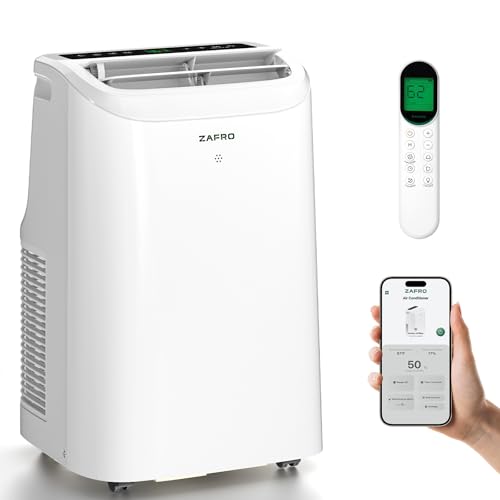
For heat safety, it is important to note that the relevant capacity is the manufacturer's specified 12,000 BTU SACC figure, rather than the larger 16,000 BTU ASHRAE figure. The unit's dual-hose design and included sealing materials help minimize hot-air leakage and pressure effects when installed tightly. The manual recommends maintaining clearance around the unit, placing it on a level surface, cleaning the washable filters periodically, and unplugging the unit before performing maintenance. Additionally, it states that in conditions of high humidity or when using Dry mode, draining may be necessary—this serves as an important safety measure to prevent water pooling. The product documentation specifies that R-32 refrigerant is used. According to EPA information, R-32 has a global warming potential (GWP) below the 700 limit, making it a more environmentally friendly option compared to many older high-GWP refrigerants. As it contains refrigerant, the appliance should be disposed of through a recycler or disposal chain that recovers the refrigerant charge. No specific CPSC recall or public safety listing for the exact model was identified in this review. Additionally, there are inconsistencies between the published noise and power specifications, so these claims should be regarded as manufacturer statements rather than independently verified data.
This unit is ideal for individuals who require portable cooling for a large, enclosed room and have a suitable window nearby for installation. Its dual-hose design is beneficial for those comfortable with assembling the panel kit, aligning both hoses properly, and sealing any gaps using the included foam. It is best suited for situations where the manufacturer's specified 12,000 BTU SACC capacity is considered an estimate rather than an exact figure, and where moving a 55-pound floor unit is feasible.
This product may not be ideal for buyers who require independently certified safety documentation, DOE-listed efficiency ratings, or laboratory-verified noise levels before installing an appliance in a bedroom or care environment. Additionally, it is less suitable for highly humid areas where continuous, unattended operation is essential, as manual drainage might be required. Do not depend on its 600-square-foot coverage claim for open floor plans, top-floor rooms, areas with intense sunlight, poor insulation, or spaces with significant internal heat sources.
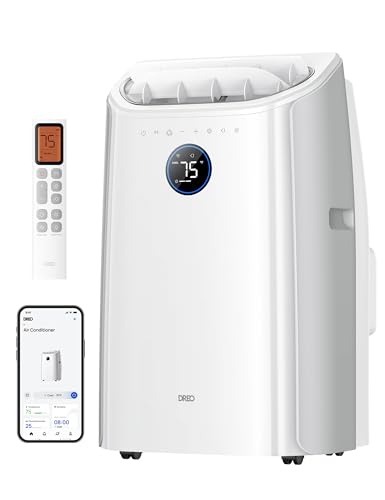
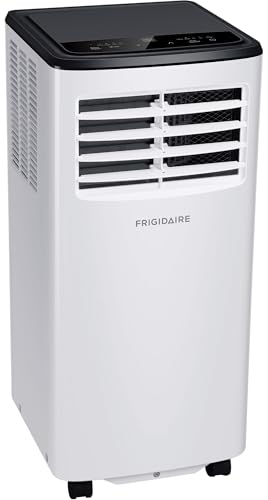
The practical key point regarding heat safety is the unit's capacity. The official manual indicates a cooling capacity of 6,000 BTU SACC, suitable for spaces up to 250 square feet. Therefore, it should be considered a small-room air conditioner. Proper installation is crucial; the single exhaust hose and window panel must be sealed properly to prevent hot outdoor air from entering the room. The manual also recommends maintaining adequate clearance around the unit, using a grounded electrical outlet, avoiding installation in wet areas, and regularly cleaning or managing drainage as needed. The manual states that the unit uses R-32 refrigerant. According to the EPA, HFC-32 has zero ozone-depletion potential and a global warming potential of 675. It is classified as A2L, indicating it is mildly flammable. No specific safety listing for this exact model was found to confirm electrical and refrigerant safety standards. When the appliance reaches the end of its life, it should be disposed of through a certified collection or recycling process that recovers refrigerant, in accordance with EPA disposal guidelines. Additionally, no recalls for this specific product model were identified in the available CPSC recall database.
This product is suitable for cooling a small enclosed space such as a bedroom, office, or dorm room, especially if there is a nearby compatible sliding or sash window. The user should be able to install and seal an exhaust hose, maintain proper clearance around the unit, and understand that the 6,000 BTU SACC and 250-square-foot coverage are manufacturer specifications, not independently verified. It is also ideal for users who appreciate remote, app, and touch controls, and who can keep an eye on condensate levels during humid conditions.
This product is not ideal for large, open-plan, sun-exposed, poorly insulated, or multi-room areas, as its rated 6,000 BTU SACC capacity may not sufficiently control indoor heat in such spaces. It is also unsuitable in situations where a window cannot be properly sealed around the exhaust kit or where hose routing could pose tripping, access, or security concerns. Customers who require certified third-party electrical approval, independently verified noise levels, or confirmed energy-label performance should request this documentation before relying on the product.
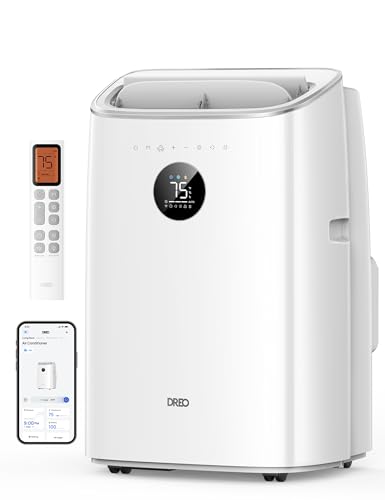
The manual provides important moisture control instructions. Its evaporator typically minimizes water buildup during cooling mode, but high humidity levels may still cause the reservoir to drain. When in dry mode, a hose connected to a suitable drain or container is required. It is crucial to drain any leftover water before storage and to clean the filters every two weeks to help prevent leaks, stagnant water, dust accumulation, and the development of unpleasant odors or microbial growth. The product listing states that it uses R-32 refrigerant; however, the manual reviewed does not include specific instructions for refrigerant recovery or disposal. Refrigerant should never be vented into the environment during servicing or disposal, as per EPA regulations. Additionally, a verified California Proposition 65 warning label indicates that the product may expose users to lead and bisphenol A. Separately, the California Energy Commission’s 2025 settlement related to this model addressed previous issues with energy efficiency and certification noncompliance. No recalls for this product have been recorded with the Consumer Product Safety Commission (CPSC) according to available records.
This product is ideal for individuals seeking temporary cooling in a small to medium-sized room such as a bedroom or office, with a compatible window opening ranging from 18 to 53 inches. Buyers should be able to position the 62.9-pound unit near the window, install and seal the single exhaust hose properly, and perform filter cleaning at least every two weeks. It is also suitable for users who appreciate app-based scheduling and are comfortable performing occasional manual drainage during periods of high humidity.
This product is not ideal for those looking for guaranteed ultra-quiet operation, as the claimed 46 dB noise level does not specify the testing distance or provide independent sound measurements. It is also not suitable for large, open, sunny, poorly insulated, or frequently accessed spaces, where a single-hose portable air conditioner with approximately 8,300 Btu/h SACC may not sufficiently manage heat. Households that are unable to drain condensate or clean filters should avoid relying on its claim of needing no drainage.
The manual provides essential safety precautions, including using a grounded outlet, avoiding the use of adapters or extension cords, keeping the unit away from water and flammable gases, and not operating it if the power cord is damaged. It also highlights that the refrigerant R-32 is flammable and warns that a leak exposed to an external ignition source could pose a fire hazard. Although a retailer states the product is ETL Listed, no exact product listing was found in the issuing body's public registry during this review. R-32 refrigerant has a lower environmental impact compared to many older residential AC refrigerants, with a global warming potential (GWP) of 675 as noted by the EPA. It is classified as a mildly flammable A2L refrigerant, meaning the sealed system should only be serviced or opened by qualified technicians. The manual covers draining water and drying the filter for storage but does not provide consumer instructions for refrigerant recovery. When the product reaches the end of its life, it should be recycled by an authorized appliance recycler capable of recovering refrigerant in compliance with EPA disposal regulations. No recalls or public warnings from the CPSC specific to this product were found in the searched records.
This product is ideal for cooling a small, enclosed space such as a bedroom or office, especially when installing a window unit isn't practical. The recommended coverage of 150 square feet is a reasonable maximum only if the room is well-insulated, doors and windows are kept closed, and the included hose can be directed straight to a suitable window. It is suitable for users who are willing to carefully install the foam seals, regularly clean the reusable filter, and monitor drainage during humid conditions. Additionally, the app-based scheduling and remote control features can benefit users who want to adjust the temperature from bed or across the room.
This product is not suitable for large, open-plan, sun-exposed, poorly insulated, or multi-room areas that require reliable heating beyond a small enclosed space. It is also not ideal where near-silent operation is necessary for sleep, as independent tests showed noise levels exceeding the stated minimum, and portable compressors remain audible. Do not depend on drainage-free operation in consistently humid environments unless manual draining is performed occasionally. Homes lacking a properly grounded three-prong outlet, a safe window installation route, or sufficient space to keep the exhaust hose short and straight should avoid this installation method. Those needing verified safety certifications or confirmed CEER data should seek more detailed documentation.
The product includes comprehensive instructions for moisture management. Its manual details features such as automatic condensate evaporation, full-water alert and shutdown, manual drainage options, continuous drainage, washable filters, and a drying procedure for seasonal storage. Following these steps can help reduce standing water and prevent mold growth. Independent testing has also shown that the product maintains stable room humidity during operation. Retail information indicates that it is ETL Listed; however, the specific certification could not be verified through public records during this review. No product-specific CPSC recalls were found. There is some uncertainty regarding environmental impact. The product catalog states it uses R410A refrigerant, but an independent test identified R32. This distinction is important because R32 has a lower environmental impact compared to R410A but is flammable, so the rating plate should provide guidance for service and disposal. Additionally, the single-hose design limits efficiency because it can draw in warm air from outside the room. Refrigerant should be recovered by qualified professionals at the end of the product’s life, rather than being released into the environment.
This product is ideal for individuals cooling a very small, enclosed room who require a portable, rolling unit that can be positioned near a compatible window. It is best suited for users who can tolerate some noticeable fan and compressor noise, can properly fit and seal the exhaust panel, and are willing to follow the routine maintenance for drainage and filter cleaning. Its optional continuous-drain feature is beneficial in humid environments, provided that a suitable drainage setup or bucket can be used.
This device is not suitable for large, open-plan, sunny, poorly insulated attics, or rooms with high heat loads where reliable cooling is essential. Independent testing shows it has limited cooling capacity and slow cooling response. It is also not ideal for light sleepers, nurseries, noise-sensitive bedrooms, or spaces used for calls or recording, as actual sound levels significantly surpass the stated specifications. Homeowners who cannot inspect the drainage system, clean filters, or verify refrigerant levels from the rating plate should not consider it maintenance-free.
The product line includes comprehensive safety documentation. An official Authorization to Mark designates the Antarctic Star version of this model series under UL 60335-1 and UL 60335-2-40, standards related to household appliances and air conditioners. The shared manual recommends using a grounded three-prong outlet, a dedicated 15A circuit, and advises against unauthorized repairs. It also details features such as a water-overflow alarm and automatic shutoff to help prevent spills, although drainage instructions are somewhat brief. The Intertek report confirms the use of R-32 refrigerant. The EPA classifies HFC-32 as having zero ozone-depletion potential and a 100-year global warming potential of 675, which is lower than older HFC refrigerants but not climate-neutral. EPA categorizes it as A2L, indicating mild flammability, so refrigerant handling should be performed exclusively by qualified technicians. The manual encourages responsible recycling at the end of the product’s life. No recalls or safety warnings from CPSC were identified during this review.
This product is ideal for renters, dorm residents, or homeowners cooling a small enclosed space, provided there is a compatible window and access to a grounded 115 V outlet. It is best suited for users who understand that its actual cooling capacity is approximately 5,233 BTU per hour, rather than the higher advertised figure. Additionally, it is suitable for those who can carefully install the included exhaust hose and panels, regularly clean the mesh filter, and monitor or empty the condensate tank when the water-full indicator lights up.
This product is not suitable for large, open-plan, sun-exposed, poorly insulated, or heat-generating spaces that require reliable full-room heating. The 350 square foot coverage claim should not be used as a sizing guideline without considering the lower verified SACC rating, the room's heat load, and the inherent losses associated with a single-hose portable unit. Additionally, it is not appropriate for users who do not have a compatible window, a grounded dedicated outlet, or the ability to monitor drainage and clean the filter. Those seeking independently verified low noise levels overnight should be cautious, as the quiet performance claim has not been officially confirmed.
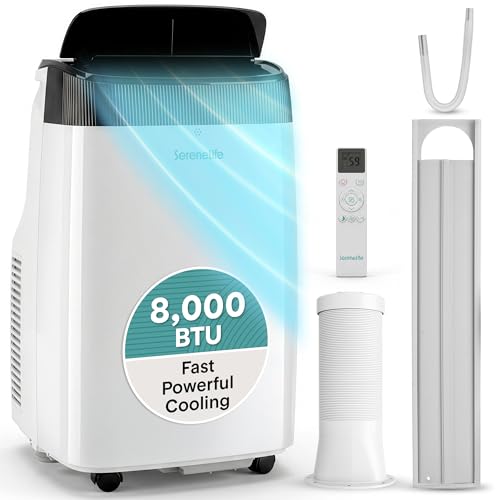
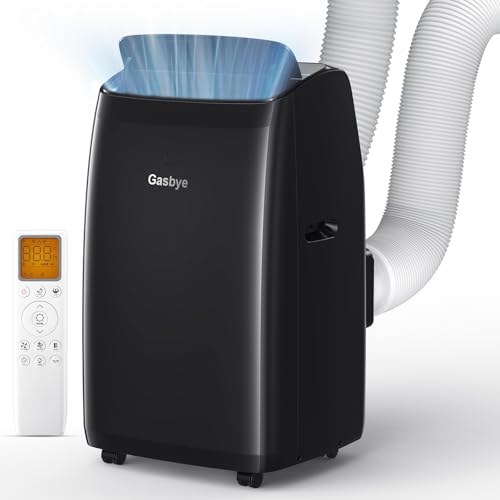
The product listing indicates that it uses R-32 refrigerant. The EPA classifies HFC-32 as an A2L refrigerant, meaning it is slightly flammable. Its 100-year global warming potential (GWP) is listed as 675, which is significantly lower than older, high-GWP refrigerants. However, proper installation, damage inspection, qualified servicing, and refrigerant recovery during disposal remain important. No specific disposal or refrigerant recovery instructions for this product were found in the publicly available materials reviewed. Gasbye states that the unit can automatically evaporate condensate during normal cooling. However, in conditions where relative humidity exceeds 85 percent or the room is unsealed, this system may be overwhelmed. To prevent issues, it is recommended to drain, clean filters, and dry the appliance before storing. As of August 16, 2026, a review of the CPSC recall database shows no recalls for this product. Gasbye offers serial-number-based support and warranty registration, although publicly available safety and performance documentation could not be located.
This product is ideal for renters or homeowners seeking portable cooling for a closed bedroom, office, or other moderate-sized room with a compatible sliding window and enough space for a 65-pound floor unit. It is best suited for individuals willing to install both hoses properly, use the included foam seals carefully, keep the room relatively closed, and monitor drainage during humid conditions. The rated 10,500 BTU SACC capacity is more relevant for matching the unit to your room size than the higher ASHRAE number.
This product is not ideal for buyers who require independently verified safety certifications, a publicly available EnergyGuide label, or third-party noise testing results prior to installing an electrical cooling device indoors. It is also unsuitable for outward-opening windows, bathrooms, laundry rooms, spaces that cannot be properly sealed, and highly humid areas where drainage cannot be monitored. Individuals who are very sensitive to nighttime noise should not assume that the 45 dB Inverter mode rating indicates near-silent operation.
The product features a sealed R-32 refrigerant system, as indicated by the available product documentation. R-32 is a refrigerant with a lower global warming potential compared to many older room air conditioner refrigerants; however, it must not be vented into the environment. EPA guidelines mandate proper recovery of refrigerant before disposal or recycling. The reviewed product materials did not include any specific instructions for refrigerant recovery or identify a designated take-back program. Regarding moisture management, the manufacturer explains that the unit self-evaporates condensate and provides a drain hose. Instructions specify that additional drainage may be necessary in conditions with humidity above 90% or when operating in dry mode. This is important to prevent standing water and mold growth. The manufacturer offers U.S. support information and a one-year warranty, but no publicly available UL, ETL, CSA, DOE, EnergyGuide, recall notices, or independent test records for this specific product were found in the sources reviewed.
This product is ideal for cooling a closed, moderately-sized bedroom, office, or apartment room, provided the window accommodates two hoses and a panel kit. The manufacturer specifies a cooling capacity of 10,000 BTU SACC, but recommends it for rooms up to 500 square feet rather than 700. It is suitable for users who appreciate app control, remote operation, and panel controls, and who are capable of checking the hose connections, window seals, and condensate behavior during humid conditions.
This product is not suitable for buyers who require publicly verified electrical safety certification, EnergyGuide information, or independent performance testing prior to operating a high-wattage cooling device indoors. It is also not ideal for large, open-plan, sun-exposed, poorly insulated spaces, or rooms exceeding 500 square feet, as the manufacturer specifies a lower coverage area of 500 square feet. Do not depend on the claim of drainage-free operation in consistently humid environments without a safe drainage solution, and avoid using it where a two-hose window installation cannot be properly sealed.
The most valuable health-related documentation available is the drainage instructions. It indicates that the product can automatically evaporate some condensate but may require manual drainage in conditions of high humidity or when using a dehumidifier. The product also offers continuous drainage, which is preferable to suggesting it is always maintenance-free. However, users still need to keep the unit level, ensure the hose remains clear, clean the filter, and drain the unit before storing it. The product documentation specifies the use of R-32 refrigerant. The EPA lists HFC-32 with a GWP of 675, which is lower than R-410A's GWP of 2,090, and classifies it as A2L, indicating it has lower toxicity but is mildly flammable. No public safety listing record or independent laboratory report for the specific product was found. Additionally, no relevant CPSC recall was identified through a public search. Due to conflicting warranty and specification records, it is especially important to retain purchase, model, and serial information for support or incident reporting.
This product is ideal for renters or homeowners seeking temporary spot cooling in a room that has a compatible sliding or double-hung window, a grounded 115V outlet, and sufficient space for a large floor unit and exhaust hose. It is best suited for rooms that are significantly smaller than the maximum specified, where doors and windows can be kept closed, and where solar gain is manageable. Additionally, it is suitable for users comfortable with cleaning the washable filter, inspecting the drain ports, and utilizing continuous drainage when humidity levels require it.
This device is not ideal for anyone requiring verified quiet sleep performance, certified electrical safety, or a clearly defined warranty and service support. It should not be relied upon as the only heat safety measure in sunny, poorly insulated, open-plan spaces with high ceilings or rooms around 750 square feet, as its room coverage claims lack specific operating limitations. Additionally, it is unsuitable where the exhaust cannot be properly sealed, where drainage cannot be monitored, or where the use of an R-32 appliance with uncertain safety documentation for the exact model is unacceptable.