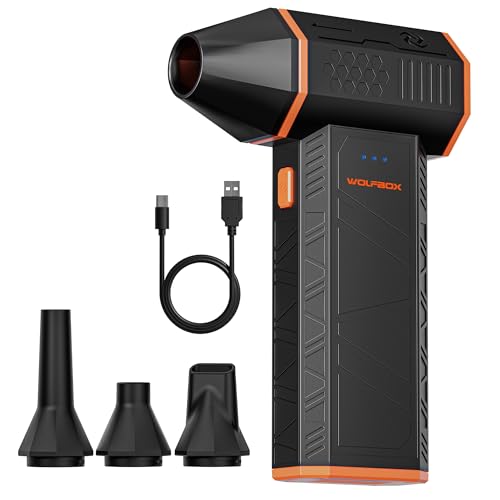
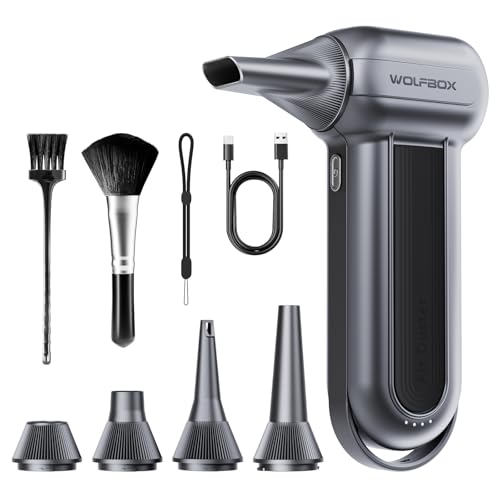
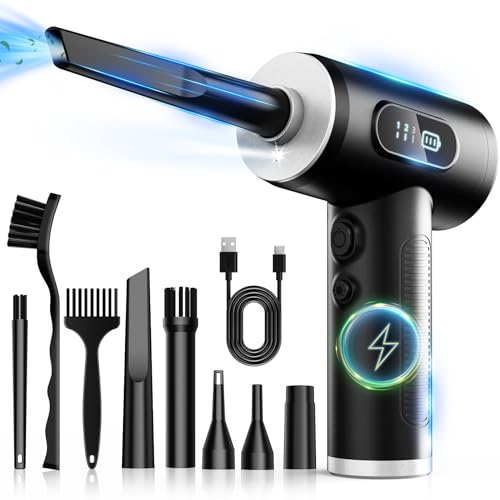
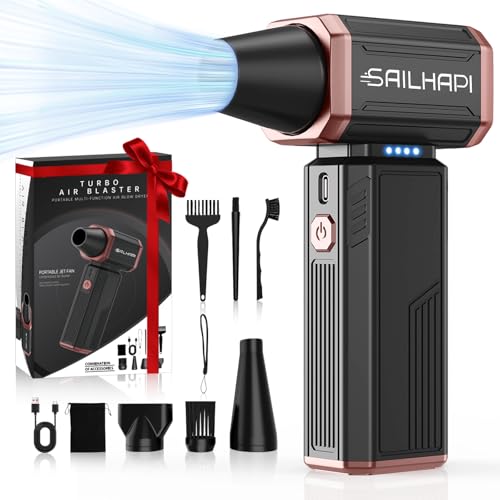
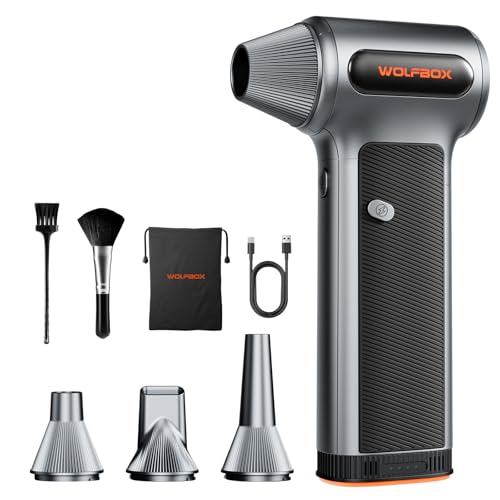
WOLFBOX MF50 Electric Air Duster
Rechargeable battery offers convenient cordless use.
Three adjustable speed settings for versatile cleaning.
High power effectively removes dust from tight spaces.
We compared the top Air Duster products so you can quickly spot the strongest options for value, features, and everyday performance.
Rechargeable battery offers convenient cordless use.
Three adjustable speed settings for versatile cleaning.
High power effectively removes dust from tight spaces.
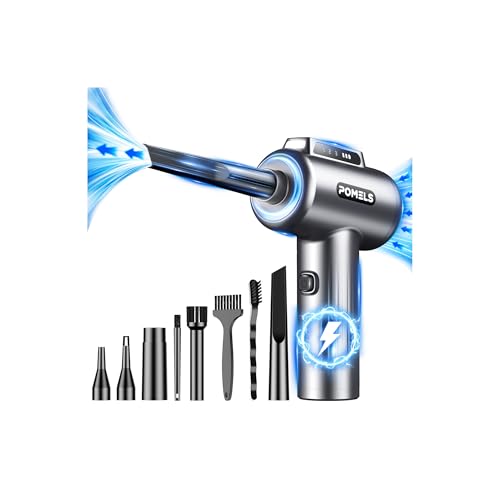
Powerful 150000 RPM for effective cleaning.
Rechargeable and cordless for easy portability.
Three adjustable speeds for versatile use.
Adjustable speed settings for versatile cleaning tasks.
Rechargeable and cordless for easy mobility.
Built-in LED light enhances visibility in dark areas.
High-speed motor for efficient cleaning.
Cordless design for easy maneuverability.
Rechargeable feature eliminates need for canned air.
High RPM for powerful cleaning performance.
Cordless design offers easy portability.
Adjustable speeds for versatile use.
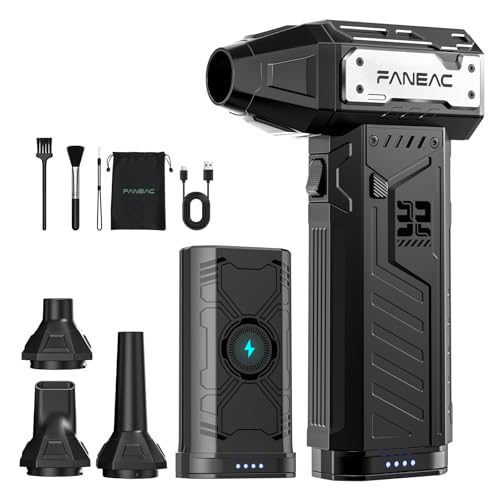
Removable battery ensures easy charging and replacement.
Three adjustable speeds for versatile cleaning needs.
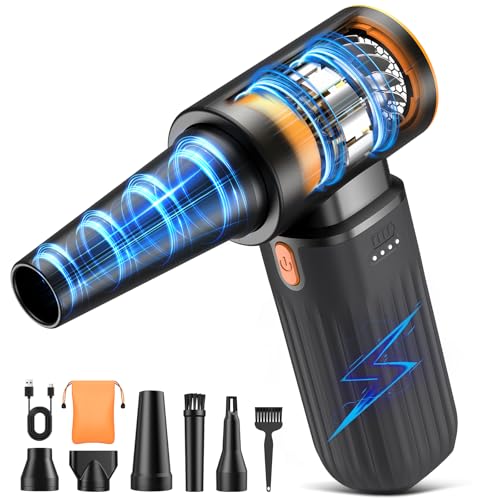
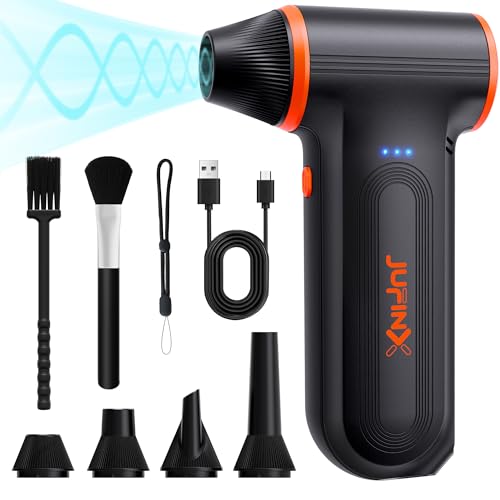
Includes four nozzles for different cleaning tasks.
High-speed performance with 150000RPM motor.
Versatile use for indoor and outdoor cleaning.
Convenient fast charging for continuous operation.
High-speed motor ensures powerful cleaning.
Rechargeable battery offers extended usage time.
Adjustable gears provide versatile cleaning options.
Ultra-powerful 110,000 RPM motor for effective cleaning.
Rechargeable and eco-friendly design reduces waste.
Built-in LED light enhances visibility in dark areas.
Ultra-powerful 150,000 RPM for deep cleaning.
Includes two battery packs for longer use.
Brushless motor ensures durability and efficiency.
Electric air dusters operate with a motor and fan to blow air that clears away dust and debris. They are often promoted as reusable alternatives to disposable aerosol cans. However, the critical question isn't just how fast the motor spins. An effective product provides controlled, consistent airflow from the nozzle for the duration needed to complete your task—without excessive heat, noise, or safety risks related to the battery.
Motor speed figures, such as 110,000, 150,000, or 280,000 RPM, primarily indicate motor rotation rate, not the force or airflow delivered to your target surface, like a keyboard, computer case, or vehicle vent. Airspeed claims are more meaningful when manufacturers disclose details about the nozzle, settings, battery charge level, measurement distance, and testing conditions. Runtime estimates should specify the operating speed; a long runtime at low speed doesn't clarify how long maximum performance lasts. The best evidence of performance comes from independent testing that reports airflow, thrust, or air velocity, along with usable runtime under specified conditions. Standardized testing methods like AMCA 210 or ISO 5801 can be relevant if applicable.
Control features are essential for effective cleaning and safety. Look for devices with multiple settings, a boost function, continuous operation mode, appropriate nozzles, protective guards, and automatic shutoff. These features help users start gently, prevent accidental damage, and avoid scattering dust or debris. Safety instructions should cover dust direction, eye protection, keeping hair and fingers away from intakes, avoiding airflow obstructions, moisture, flammable materials, hot surfaces, and proper cooldown and charging procedures. Remember, a blower is not a vacuum—unless properly designed for dust collection, it can simply redistribute debris.
Battery-powered models introduce additional safety considerations. Verify that the charging instructions match the product, check that battery capacity and charging times are clearly stated and consistent, and seek independent safety certifications. Certifications may include listings from UL Product iQ, Intertek’s ETL, CSA Group, or other OSHA-recognized testing organizations. Battery safety testing may involve standards such as ANSI/UL 2054, UL 2595, IEC 62133-2, or a manufacturer’s UN 38.3 test summary. Note that a safety symbol on the product or packaging doesn't replace an official certification record for that specific model.
Environmental and durability factors are also important. Replacing aerosol cans with rechargeable blowers reduces disposable waste, but this benefit depends on the product’s lifespan and recyclability. Consider whether the battery is removable, if spare parts are available, the product's expected service life, and disposal options. A warranty, accessible replacement parts, and clear recycling instructions suggest the product can remain useful over time.
Be cautious of broad claims such as “quiet,” “cool-running,” “eco-friendly,” “long-lasting,” or “replaces canned air,” as these often lack verified data. Many products do not provide measured noise levels, surface temperatures, duty cycles, or lifecycle information, and specifications may vary or be inconsistent. Additionally, a lack of independent safety testing, airflow validation, or lifecycle testing, as well as sealed batteries or limited repair support, can be red flags. High airflow can dislodge loose objects, scatter dust, cause overheating if the unit becomes blocked, or pose burn hazards. Always wear eye protection, and keep hair, fingers, skin, liquids, flammables, and people clear of airflow and intakes.
Finally, these products are generally unsuitable for wet cleaning, hazardous dust, unattended charging, unsupervised children’s use, or tasks requiring vacuuming or professional safety procedures. Use caution and follow safety guidelines to prevent accidents or damage during operation.

A: An air duster effectively removes dust and debris from electronics like keyboards and fans without risking moisture damage. This helps ensure your devices operate efficiently and have an extended lifespan.
A: Yes, air dusters are designed to clean sensitive computer components safely. The compressed air removes dust without physical contact, reducing the risk of damage compared to traditional cleaning methods.
A: Certainly! An air duster is useful for reaching confined areas in your car, such as air vents and between seats. It effectively blows away dirt and crumbs, helping to keep your vehicle tidy.
A: Always follow the instructions on the canister. Hold it upright to prevent liquid from escaping, use short bursts for controlled airflow, ensure adequate ventilation, and avoid inhaling the expelled air directly.
A: Depending on usage, cleaning your keyboard every few weeks with an air duster can prevent dust and debris buildup. Regular cleaning maintains your keyboard's performance and appearance.
The reviews reveal a consistent tradeoff: electric blowers eliminate exposure to aerosol propellants but bring issues related to airflow, dust, heat, charging, batteries, and electronic waste. The most effective products are distinguished less by their advertised RPM and more by their practical controls, verified performance, transparent safety instructions, and reliable battery support.
This assessment evaluates whether the product prevents aerosol-propellant exposure and provides practical precautions for dust, eyes, heat, and charging. Electric models generally received higher scores, ranging from 70 to 78, as they do not use disposable aerosol propellants. Products with higher ratings also included more specific warnings. Lower scores indicated the absence of guidance on eye protection, dust, charging, or exposure, rather than indicating that the blower was chemically hazardous.
This assesses protection against lithium-ion overheating, short circuits, and overcharging, along with providing compatible charging instructions and independently verifiable certification for the battery or appliance. Scores ranged from 61 to 73. Products with higher scores disclosed more information about charging and batteries, but none provided the specific model-independent certification evidence that was requested. A low score indicates unresolved concerns regarding the battery and charger, rather than evidence of a defect.
This evaluates whether airflow can be safely adjusted and utilized without causing unnecessary injury, debris displacement, hot surfaces, or equipment damage. The products tested received scores ranging from 72 to 79. Devices with higher scores typically featured multiple speed settings, boost or hold-to-run controls, nozzles, and clearer warnings for obstructions or heat. In contrast, lower-scoring products generally had limited instructions or less information about managing high-speed airflow.
This assessment confirms the monitoring of sound levels and surface temperature during prolonged use. Scores ranged from 68 to 72, as reviews consistently lacked independent testing of sound levels, temperature rise, duty cycle, or cooldown. A higher score reflects more cautious warnings or restricted claims, but it does not indicate that the product was independently tested and verified as quiet or cool.
This assessment evaluates whether reusable electric devices are likely to decrease the use of single-use aerosol cans without generating excessive short-lived electronic waste. The scores ranged from 63 to 78. Products with higher scores typically featured more clearly defined reusable designs and, in some cases, offered better support for ongoing use; however, none included a product-specific lifecycle assessment or a quantified comparison of reuse benefits. Ultimately, a reusable design provides only a limited advantage and does not necessarily indicate a reduced overall environmental footprint.
This assessment evaluates if the battery and high-wear components are replaceable or serviceable, and whether recycling instructions are available. Scores ranged from 64 to 78. The highest scores were observed in products with removable battery packs, whereas most fixed-battery devices lacked parts catalogs, replacement procedures, or U.S. take-back programs. Regardless of the score, lithium-ion devices should never be disposed of in household trash or curbside recycling.
This assessment evaluates whether claims regarding RPM, air velocity, runtime, battery capacity, charging duration, noise levels, and canned-air replacement are detailed and backed by specific disclosed conditions. The scores ranged from 52 to 76 points. Products with higher scores generally provided more comprehensive testing context or had fewer inconsistencies, while lower-scoring products tended to base claims primarily on RPM or unsupported runtime data, showed conflicts regarding weight or charging time, or exaggerated environmental benefits.
This assesses whether a claimed safety mark can be linked to an independent U.S.-recognized certifier for the specific product. Scores ranged narrowly from 68 to 70 because none of the supplied products had verified records from UL, ETL, CSA, or similar organizations for the exact model in the reviewed directories. Thus, a higher score indicates better traceability of the available evidence, rather than confirmed certification.
This evaluates the actual airflow or thrust and the practical runtime during a charge, rather than just the motor RPM. Scores ranged from 68 to 78. The top-performing products were assessed through independent, hands-on measurements of thrust or runtime, whereas many others relied solely on manufacturer claims. Even a disclosed airspeed figure is less reliable than a precise product test that specifies the nozzle, mode, distance, and measurement method.
This assesses whether consumers can determine the manufacturer, model, importer, support contact, warranty, and recall procedures. Scores ranged from 54 to 80. Products with higher scores featured identifiable manufacturers, clear support contacts, and stated warranty information. In contrast, lower scores indicated the absence of manufacturer details, inconsistent model information, inadequate warranty documentation, or no transparent product-specific accountability channels.
The primary health benefit is that this is an electric blower instead of a disposable aerosol can. The EPA highlights that most compressed-air dusters sold in the U.S. use greenhouse-gas propellants, so using an electric blower repeatedly can help avoid direct propellant emissions and waste. However, this does not mean the blower is entirely risk-free. Its manual warns against blocking the air inlet with skin, inhaling hair, using the device when wet, operating near flammable materials, or continuing to use it if smoke appears, the internal components turn red, or if it repeatedly stops working. The built-in lithium-ion battery shifts some environmental impact to electronics and battery disposal. The EPA advises that lithium-ion batteries should not be disposed of in household trash or curbside recycling because damaged batteries can pose fire hazards. The available documentation does not mention any battery replacement service, parts supply, or company recycling program. While no specific product recalls have been identified through CPSC sources, there is also no independent safety certification or laboratory exposure testing available for this product.
This product is ideal for home users who need a compact, cordless tool for quick cleaning tasks, such as clearing loose debris from keyboards, desks, car interiors, or household crevices. It is best suited for users who are comfortable using lower settings when cleaning delicate or loosely mounted items, holding fans steady when cleaning electronics, and following the manual's safety instructions regarding intake, heat, and flammable materials. The included nozzles and the specified maximum runtime of 19 minutes are designed for intermittent use rather than continuous operation.
This product is not suitable for users who require independently verified electrical safety certification, certified noise emission levels, or confirmed sustained airflow for workplace procurement or safety-critical environments. It is also not recommended for long continuous operations, unattended use, or cleaning in areas with flammable vapors, liquid fuels, aerosol sprays, or paint thinners. Households with young children should keep it out of reach. Additionally, those needing a replaceable battery or a clear end-of-life recycling program should select a product that offers documented parts and recycling support.
Here is a rewritten version of the content in English, preserving the key points: One significant health benefit of this product is that it is an electric blower instead of a propellant aerosol duster. According to EPA guidelines, many canned dusters contain hydrofluorocarbon propellants, which are greenhouse gases. This product avoids releasing such propellants during normal use. The manual also includes important safety warnings, such as keeping the inlet clear, avoiding moisture and flammable materials, stopping use if smoke or unusual behavior occurs, and not using a visibly overheated charging cable. However, these precautions do not replace the need for independent verification of battery safety. The product does not have an exact-model listing in a U.S. NRTL registry, nor is there specific battery certification or published thermal testing information. The battery is built-in, and the manufacturer does not provide detailed repair or take-back instructions for the battery. When the device reaches the end of its life, it should not be disposed of in household trash or curbside recycling. EPA recommends recycling lithium-ion batteries through a proper recycling facility and protecting the terminals when applicable.
This product is ideal for individuals seeking a compact cordless blower for quick, occasional cleaning tasks such as clearing keyboard crumbs, ventilating PC cases, cleaning car seat crevices, cleaning window tracks, or dusting work surfaces. It is particularly suitable for those looking to minimize dependence on disposable canned air and who can utilize a standard USB charging setup. The three-speed control feature is beneficial when a gentle airflow is needed to prevent debris from scattering. Additionally, it caters to users who prefer the included narrow nozzles and brushes over a fixed wide-air outlet.
This product is not suitable for users who need independently certified safety for battery-powered devices, a removable battery, or a publicly available battery transportation and recycling program from the manufacturer. Individuals sensitive to noise, those requiring continuous high-power operation, or anyone working close to others should be aware of the high noise levels measured at high speeds, as well as the absence of a verified duty cycle or temperature limits. It should not be operated near flammable vapors, in wet conditions, with a blocked inlet, or in situations where loose hair, skin, eyes, or delicate unprotected parts could come into contact with the intake or airflow.
The main health benefit of this product lies in its design. It utilizes a rechargeable electric blower instead of a disposable aerosol can, making it propellant-free according to FRESMOL. The EPA highlights that many aerosol dusters used in the United States contain hydrofluorocarbon propellants, which are greenhouse gases. By using an electric blower, this product avoids that specific chemical exposure during operation. However, it can still dislodge dust and loose debris, so wearing eye protection, applying short bursts, maintaining distance from components, and restraining the fan are recommended safety measures. The user manual advises allowing the unit to cool before charging and states that it has protections against overheating, overcurrent, and short circuits. However, these safety claims have not been independently verified or certified for this product. No related Consumer Product Safety Commission (CPSC) recalls were identified during the review. The built-in lithium-ion battery necessitates responsible disposal at the end of its life. The EPA recommends that lithium-ion batteries not be thrown in household trash or curbside recycling but instead be taken to dedicated battery recycling or household hazardous waste collection facilities. The manufacturer does not specify a clear U.S. take-back program, battery replacement procedure, or disposal instructions.
This product is suitable for home-office users, hobbyists, or car owners who require quick cordless dusting sessions for keyboards, a computer, small electronic devices, or interior vents. Its three adjustable settings and included attachments are particularly useful when a narrow nozzle or brush is needed to access debris without disturbing surfaces. Additionally, it appeals to those looking to minimize the use of disposable aerosol cans. Buyers should understand that the listed runtime, battery capacity, and airflow specifications are provided by the manufacturer and should be considered unverified, rather than confirmed through testing.
This product is not suitable for users who need independently certified battery safety, verified electrical compliance, or documented noise and temperature limits, including workplaces with strict equipment safety standards. It is also not ideal for repeated, prolonged high-output cleaning activities, such as servicing multiple computers or large equipment sequentially, as its sustained performance has not been independently tested. Households requiring user-replaceable batteries, repair parts, or specific recycling instructions from the manufacturer should choose a product that offers these features. Children should not operate it without supervision.
The main health benefit is related to the product's design. This is a battery-powered blower instead of an aerosol can, meaning that routine cleaning does not require the use of aerosol propellants. According to CPSC materials, inhalation toxins and potential fatalities are risks associated with common aerosol dusters. Additionally, battery-powered dusters can achieve similar air speeds. However, this does not eliminate exposure to dust, the risk of eye injuries from blown debris, or hazards related to charging lithium batteries. The product guide advises users not to operate the unit while it is charging and to unplug it once fully charged. While these instructions are helpful, there is no specific certification or testing data available for the product or its battery. Reusing the battery can reduce the reliance on disposable aerosol cans, but the product’s broad environmental benefits are not supported by a comprehensive lifecycle analysis. The built-in rechargeable battery also requires proper disposal, as per EPA guidelines—lithium-ion batteries should not be disposed of in household trash or curbside recycling due to fire risks from potential damage.
This product is designed for adult users seeking a compact cordless blower for occasional dry cleaning of keyboards, desktop equipment, car vents, or work surfaces. It allows users to start with a low setting to keep debris away from the eyes and lungs. It is particularly suitable for those looking to avoid disposable aerosol duster propellants. The included accessory set can assist with cleaning narrow gaps. Users should consider the specified airflow, runtime, and motor speed figures as manufacturer estimates rather than verified performance guarantees.
This product is not suitable for buyers who require certified electrical safety documentation, independently verified runtime, confirmed airflow ratings, or established noise level specifications for workplace or professional environments. It is also not ideal for household use where clear battery replacement and end-of-life support are needed, or for users who may operate it near children, eyes, loose clothing, combustible dust, liquids, or sensitive electronics without proper precautions. Do not use the device while it is charging, and avoid using it as a hair or pet dryer unless there is specific safety data confirming its suitability for such purposes.
This product utilizes a rechargeable electric blower instead of a disposable aerosol can, meaning it does not emit aerosol propellants during normal operation. This is important because the EPA highlights that many canned dusters contain greenhouse gas propellants. The user manual provides practical safety tips, such as avoiding water contact, keeping the device away from children, securing the nozzles, not operating it while charging, and allowing it to cool down after overheating. However, the claimed overheat protection has not been independently confirmed. The environmental consideration involves the built-in rechargeable battery and electronic components. The EPA recommends that lithium-ion batteries and devices containing batteries should not be disposed of in household trash or curbside recycling, as damaged batteries can pose fire risks. The product documentation does not specify the battery chemistry or capacity, does not mention battery replacement options, spare parts, or provide information on recycling or take-back programs in the U.S. No relevant recalls for this product have been found in available public sources.
This device is ideal for adults seeking a compact, rechargeable blower for occasional cleaning of desks, keyboards, PC cases, vehicle vents, or household crevices. Users should be willing to follow the safety instructions provided in the manual. With three adjustable output levels and included nozzles, it is best suited for situations where a gentler airflow can be used initially before switching to a stronger setting. It also appeals to those who prefer to avoid disposable aerosol cans and already have a compatible USB power source available.
This product is not suitable for buyers who need independently verified electrical safety certification, specified noise level measurements, documented battery testing results, or confirmed airflow and runtime data. It is also not ideal for children, exposure to wet or outdoor conditions, or use while plugged in, as the manual advises keeping it dry, out of children's reach, and not operating it while charging. Customers requiring a product with a serviceable battery or an end-of-life program specified by the manufacturer should select a model that includes those features in its documentation.
This electric duster operates without the use of aerosol propellants. This is important because the EPA highlights that many canned dusters contain HFC propellants, which are potent greenhouse gases. The Consumer Product Safety Commission (CPSC) recognizes rechargeable electric dusters as safer alternatives to aerosol products that use hazardous HFCs. However, this shift involves trade-offs, such as the presence of a lithium battery and electronic waste considerations. A key feature of this product’s lifecycle is its removable battery, which can be replaced when capacity declines, eliminating the need to discard the entire blower. WOLFBOX also provides safety warnings regarding eye exposure, hot surfaces, blocked air intake, hair, flammable components, liquids, and damaged charging cables. Nonetheless, no specific independent safety certifications, noise level measurements, thermal testing, or battery recycling programs were identified for this product. When the battery reaches the end of its life, it should be kept intact, terminals protected, and disposed of through an appropriate battery recycling facility rather than household trash.
This product is ideal for individuals who frequently remove loose dust from keyboards, desktop PC filters, car vents, workshop surfaces, or outdoor equipment, and prefer to avoid purchasing and using disposable aerosol cans. It is particularly useful in situations where cordless operation and a removable battery are advantageous, such as extended cleaning sessions or locations without access to an outlet. Users should be comfortable following the manual's safety instructions regarding heat, intake, eye protection, and charging. Additionally, the specified runtime and maximum airspeed are manufacturer estimates and may vary.
This product is not suitable for buyers who need independently certified safety approval for battery-operated appliances, documented lithium battery transportation testing, or specific noise and surface temperature measurements. It is also not appropriate for cleaning in environments with flammable vapors, high levels of dust in combustible settings, wet surfaces, or areas with exposed moving fan parts that could be oversped by direct airflow. Children and individuals unable to adhere to safety precautions related to eye, hair, heat, and charging should not use this device. Additionally, it is not a substitute for vacuuming, wet cleaning, or professional compressed-air equipment for heavy, high-volume cleaning tasks.
The primary health benefit of this product is that it is an electric blower, not a pressurized aerosol duster. According to EPA materials, many disposable dusters use greenhouse-gas propellants harmful to the environment. The user manual provides basic safety precautions, including keeping the device dry, avoiding contact with hands, not aiming it at people or animals, preventing blocked air vents, and using the recommended charging equipment. It also recommends allowing the unit to cool down after extended use. However, it does not include specific noise level measurements, surface temperature data, detailed guidance on dust or eye protection, or verified battery safety certifications. While reusing the product can reduce dependence on disposable aerosol cans, there is no available lifecycle assessment, carbon footprint comparison, battery capacity details, or information on expected operational lifespan. The built-in lithium-ion battery poses an end-of-life disposal responsibility. EPA recommends recycling lithium-ion batteries and devices containing them through proper recycling facilities rather than disposing of them in household waste or curbside recycling bins. No specific U.S. take-back programs or instructions for replacing the battery were identified for this product. Additionally, no recalls or public incident reports related to this product were found during the review.
This product is suitable for adults seeking a portable, rechargeable blower for occasional cleaning of keyboards, desktops, car interiors, and light household dust. It is ideal for users who can follow basic safety precautions related to battery use. The device offers three different output settings and includes interchangeable nozzles, which are helpful when a focused, narrow stream is required instead of a wide airflow. It is best suited for customers comfortable with considering the specified airflow of 52 m/s, a four-hour runtime at the low setting, and a maximum speed of 150,000 RPM as manufacturer-provided specifications that may not be independently verified.
This product is not suitable for buyers who require independently certified safety for batteries and appliances, verified noise level standards, or documented thermal safety measures for frequent or unattended operation. It should be used with caution around children, pets, the eyes, exposed skin, loose powders, or debris that could become airborne. Additionally, it is not ideal for users who focus on repairs, as the battery is built-in and no replacement parts or repair instructions are provided. Those cleaning delicate electronics should avoid using spinning fans with airflow and opt for the lowest practical setting.
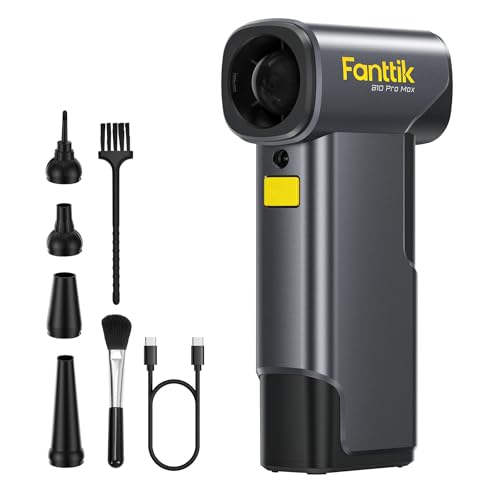
The product is an electric blower rather than an aerosol can, which means it does not expose users to canned-duster propellant during normal operation. EPA information highlights that many compressed-air dusters contain greenhouse-gas propellants. Additionally, Fanttik’s manual offers important safety tips, such as avoiding use when wet, preventing blockage of the intake or outlet, keeping it away from heat or flammable materials, and not directing airflow towards the eyes, ears, mouth, or other parts of the body. The rechargeable lithium-ion battery introduces specific responsibilities at the end of its life. According to the EPA, lithium-ion batteries and devices containing them should not be disposed of in household trash or curbside recycling to prevent potential fire hazards caused by damage. Fanttik provides customer support through a U.S. address, phone support, and email support, along with a one-year warranty. However, there is no evidence of independent safety certifications, battery testing documentation, a designated route for battery replacement, or a U.S. recycling program for the batteries in the materials reviewed.
This product is ideal for an adult seeking a compact, reusable blower suitable for light to moderate dry dust removal. It works well on keyboards, desk equipment, camera surfaces, workbench crevices, or car interiors. It is especially suitable for individuals who prefer to avoid purchasing and storing disposable aerosol dusters, and who are willing to follow the manual’s instructions for dry use and proper ventilation. The six adjustable settings allow for lower airflow when cleaning around delicate surfaces or loose debris. Always unplug the device from charging before using.
This product is not suitable for buyers who require independently certified safety for the battery and appliance, independently tested runtime, verified sound level limits, or documented temperature-rise testing. It should not be used by children, near eyes or other body openings, in wet environments, inside a hot parked vehicle, or near flammable vapors such as LPG, paint thinner, sprays, or other combustible substances. Additionally, it is not ideal for users needing a user-replaceable battery, guaranteed availability of spare parts, or a manufacturer-established battery recycling program at the end of its lifecycle.
This product is an electric, reusable blower instead of a disposable aerosol can, which helps prevent regular exposure to aerosol propellants. The EPA highlights that many canned dusters contain greenhouse-gas propellants, so switching to a reusable blower can potentially reduce that particular waste stream. However, its overall environmental benefits remain unproven, as there is no lifecycle analysis, evidence of expected service life, disclosure of recycled content, or data comparing reusability. The primary safety and disposal concern is related to the battery. External sales records indicate the presence of a lithium-ion cell, but no certification details, battery test reports, or accessible charging instructions have been found. As of August 16, 2026, there are no known product-specific CPSC recalls or public safety notices. The EPA advises that lithium-ion batteries and devices containing them should not be thrown in household trash or curbside recycling bins, as damage could pose a fire hazard. Instead, these should be taken to a dedicated electronics or battery recycling facility at the end of their life.
This product is ideal for individuals performing short, occasional dry-cleaning tasks such as cleaning a desk, keyboard, car interior, or household crevices. It offers a cordless alternative to traditional disposable canned dusters. With three adjustable settings and an included accessory kit, it is best suited for removing loose surface debris rather than comprehensive workshop cleaning. It is also suitable for users who are willing to follow basic battery care guidelines, such as charging while the device is stationary on a clean hard surface, stopping use if the housing becomes unusually hot, and wearing eye protection when there’s a risk of debris becoming airborne.
This product is not ideal for buyers who need certified electrical safety documentation, independently verified runtime, or confirmed limits on sound and surface temperature. It is also unsuitable for extended cleaning sessions, heavily clogged equipment, or environments with delicate optics and electronics where uncontrolled debris movement could cause damage. Households that cannot handle a built-in lithium-ion battery at the end of its lifecycle, or users who require replaceable batteries and accessible repair parts, should select a product with these features clearly documented.
The primary health benefit of this product is related to its format. Unlike disposable gas dusters, this is an electric blower, which does not intentionally emit aerosol propellants during operation. The EPA highlights that many canned dusters contain hydrofluorocarbon greenhouse gases. While this advantage helps reduce certain environmental impacts, it does not eliminate common risks associated with traditional blowers, such as airborne dust and debris or hazards from lithium-ion battery charging. The removable battery packs offer a practical advantage in terms of longevity, as they can be replaced when depleted rather than discarding the entire device. However, no manufacturer-specific battery recycling program, U.S. take-back option, or safety certification for the batteries used in this model has been identified. The EPA advises against disposing of lithium-ion batteries and devices containing batteries in household trash or recycling bins. Instead, they should be taken to dedicated battery or electronic waste collection facilities, and special care should be taken with any damaged packs.
This product is ideal for users who frequently remove dry dust from keyboards, desktop computers, workshop surfaces, vehicle interiors, or tight spaces, and prefer to avoid purchasing disposable duster cans. The two rechargeable battery packs are especially useful for those who perform multiple short cleaning sessions or want to keep one pack charging while using the other. It is best suited for individuals comfortable with trusting the manufacturer’s stated speed, runtime, and battery performance specifications rather than independently verifying them.
This product is not ideal for buyers who need a model with an official U.S. safety certification, independently verified battery testing, or precise measurements of noise and temperature for workplace purchasing decisions. It is also unsuitable for households that require detailed documentation on charging and child-safety instructions, or for users handling loose powders, delicate optics, or exposed electronics where strong airflow could disperse debris or cause fans to spin excessively. Do not use it as a replacement for a vacuum if dust containment is a priority.