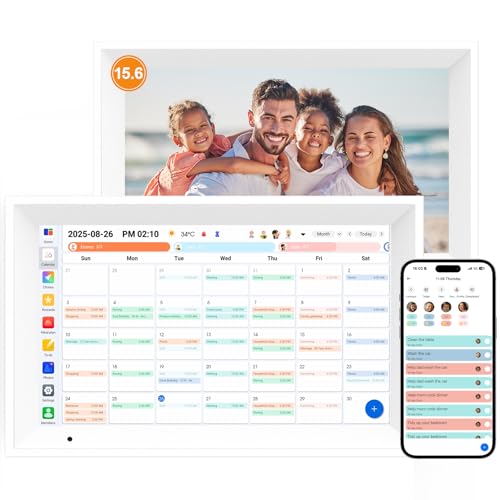
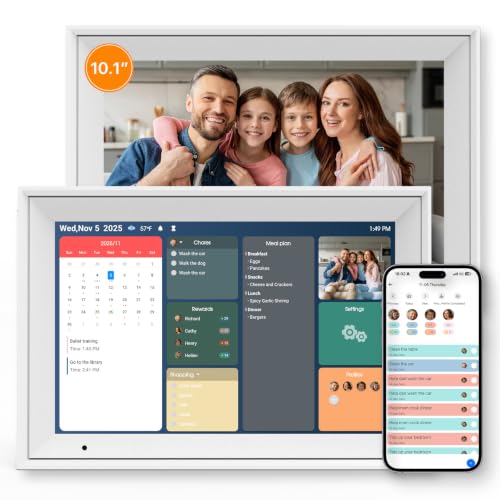
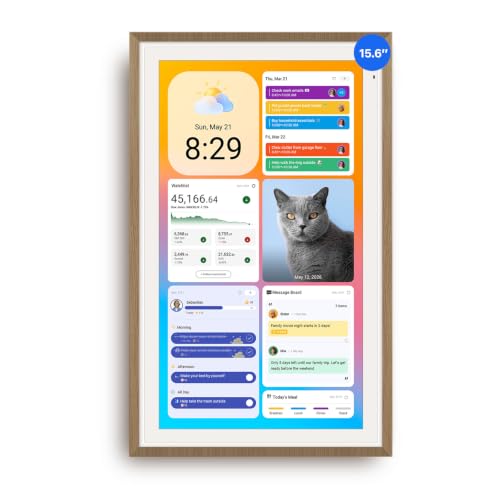
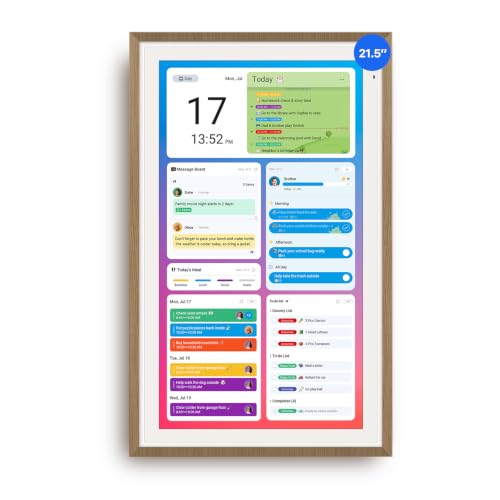
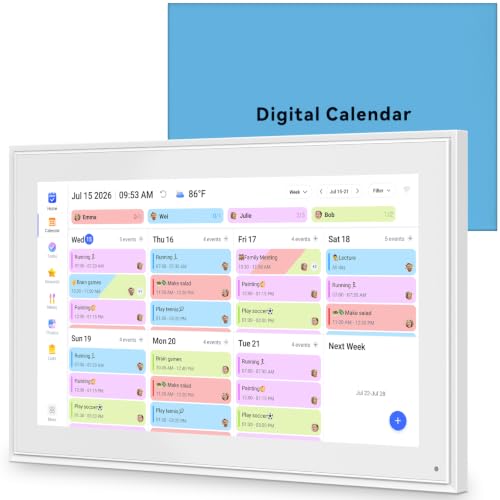
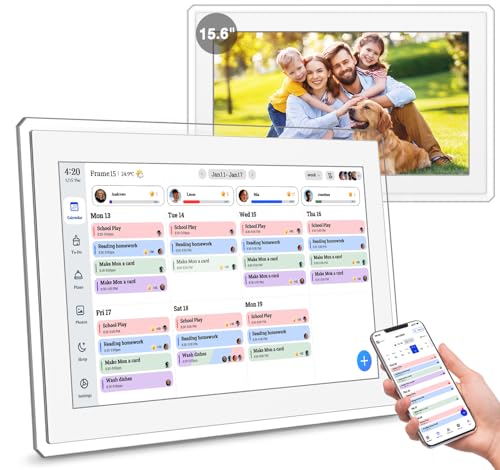
Linkdaze Smart Calendar and Chore Chart
Syncs seamlessly with family members' schedules.
Interactive design makes chores fun and engaging.
Easy customization for personalized family needs.
We compared the top Digital Calendar products so you can quickly spot the strongest options for value, features, and everyday performance.
Syncs seamlessly with family members' schedules.
Interactive design makes chores fun and engaging.
Easy customization for personalized family needs.
High-resolution 1280 * 800 IPS touchscreen.
Combines digital calendar and photo frame.
Generous 32GB built-in memory storage.
Dual mode with Google Play compatibility.
Multi-calendar sync for seamless organization.
Smart touchscreen with interactive family features.
Versatile tool for organizing family schedules.
Interactive touchscreen for easy navigation.
Includes photo display feature for personalization.
Seamlessly syncs with multiple calendars.
Interactive touchscreen for easy navigation.
Elegant teak wood design enhances home decor.
No subscription required for full functionality.
Large 15.6" touch screen for easy use.
Supports app store for added versatility.
Large 24" display for easy viewing.
Seamless integration with multiple digital calendars.
User-friendly interface with voice command support.
Clear and vibrant 15.6-inch display.
Easy-to-use touch screen interface.
Seamless integration with smart home devices.
Streamlines family scheduling with digital ease.
Customizable interactive display enhances organization.
Syncs seamlessly with multiple devices for updates.
Easy-to-use touch screen interface.
Versatile wall or desk mounting options.
No subscription required for full functionality.
A digital calendar is a connected touchscreen device that consolidates shared schedules, chores, reminders, meal plans, lists, and sometimes photos into a single household interface. Most models require power cords and rely on Wi‑Fi, companion apps, online accounts, and external calendar services. The crucial question isn't just about the number of integrations listed but whether the device's features function as advertised, if changes sync bidirectionally, and whether the primary display remains useful when apps, cloud services, subscriptions, or internet connections change.
Synchronization and Compatibility
Begin by examining synchronization capabilities. While a device may mention support for Google, Apple, Outlook, Yahoo, Cozi, or other calendar services, verify if it supports two-way editing or only one-way import for certain services. Documentation should specify if full two-way editing is possible. Also, check whether Wi‑Fi connection is essential, if offline use is supported or limited to viewing, how frequently imported calendars update, and whether a subscription alters available features. Even "subscription-free" devices may include optional paid services like apps or photos—review app details and service terms carefully.
Privacy and Security
For family-focused displays, security and privacy are integral. Look for clear, detailed explanations of data handling—covering names, schedules, photos, chores, voice inputs, children's data, device identifiers, and diagnostics. Desirable security features include options for account deletion, factory resets, screen locking, parental controls, and meaningful app permissions. Evidence of security robustness includes encrypted data connections, regular updates, channels for reporting vulnerabilities, unique device credentials, and declared support end dates. While privacy labels and marketing statements provide some insight, they are not independently audited; discrepancies between FAQs, privacy policies, and app store listings should raise caution.
Electrical and Radio Certifications
Claims about electrical safety and radio communication require precise, verifiable proof. Safety certifications should cover the entire sold unit—display, power adapter, and cables—validated through recognized testing labs such as UL Solutions Product iQ, Intertek’s ETL, or OSHA-recognized labs. The relevant safety standard is UL 62368-1. Radio claims about Wi‑Fi or Bluetooth must match exact device models, radio configurations, FCC filings, and labeling—look up the FCC Equipment Authorization record. Generic statements or certifications not directly linked to the purchased product are insufficient proof.
Installation Considerations
Misleading confidence often arises from vague installation claims. Labels like “wall mountable” don't guarantee safe installation. Verify if the product includes model-specific mounting hardware, installation instructions tailored to wall types, load capacity, cable management guidance, and stability instructions that address tipping, falling, or strain on cables. Large, permanently powered displays require proper wall placement, secure fastening, and protected cabling. Desk models should be placed on stable, flat surfaces with adequate ventilation.
Technical Specifications
Specifications listed in marketing materials can be misleading. Check the exact model number and look for verifiable data on screen size, resolution, storage capacity, power consumption, sync speed, AI features, subscription requirements, recycled content, environmental impact, or health and child safety claims. Rely on specific, testable specifications—such as power use, sleep modes, material certifications, and official standards—rather than broad claims or badges.
Additional Caveats
Many products lack complete certification proof: adapters without UL or ETL listings, Wi‑Fi configurations without matching FCC records, and insufficient mounting or wall compatibility guidance. Most do not provide information on security support duration, repair options, spare parts availability, take-back programs, or measured energy consumption. Since connected calendars depend on cloud services, they may expose household schedules or photos. Always test synchronization features thoroughly before relying on a device for critical reminders or household management.

A: Sharing your Digital Calendar is easy. Most calendar applications, like Google Calendar, enable you to share your calendar by entering the email addresses of the people you want to share with. You can also customize permissions to allow others to view or edit your events as needed.
A: Yes! Most Digital Calendars support automatic synchronization across various devices. By logging into your account on different devices, your calendar updates in real-time, giving you access to your schedule anytime, anywhere.
A: Setting reminders in a Digital Calendar is simple. When creating an event, you can add a reminder notification, selecting the preferred time and notification type (such as email or pop-up) to ensure you don't miss important appointments or deadlines.
A: Yes, many Digital Calendars can connect with productivity tools like task managers and email services. Such integrations help streamline your workflow by providing access to tasks and appointments in one place and enabling you to receive notifications from linked applications.
A: A Digital Calendar enhances productivity by helping you organize your schedule, set priorities, and allocate time efficiently. Features like reminders, color coding, and app integrations assist in keeping you on track with your tasks and managing your time effectively.
These topics evaluate the real-world risks and existing evidence gaps associated with having a continuously powered, connected screen as part of family life. The scores are comparative across the products provided: higher scores reflect better documentation or controls but do not guarantee safety or performance.
This assesses whether the specific display, provided adapter, and cable have verifiable independent electrical safety certifications. This is important because these products are typically mains-powered and often left on for extended periods. The scores for the supplied products were closely clustered between 69 and 72. The main issue was the absence of precise UL or ETL certification evidence, rather than any documented defect. Consequently, a higher score indicates better traceability, while a lower score points to an unresolved verification gap.
This assessment determines whether the specific Wi-Fi or Bluetooth setup aligns with an approved U.S. FCC authorization, including the correct model, grantee, radio functions, and labeling. This is important because calendar synchronization relies on proper wireless functioning. The scores ranged from 69 to 92, with higher-scoring products having publicly accessible authorization records for the relevant hardware. In contrast, lower-scoring products lacked an exact FCC ID or only provided general radio-related information.
This assesses the safety features of stands, brackets, anchors, screws, load limits, cable management, and installation instructions. It is important because a falling touchscreen, tip-over, or strained power cable can pose physical and electrical hazards. The scores ranged from 58 to 79. Products with higher scores provided detailed hardware and placement instructions, while lower-scoring items advertised wall mounting without specific guidance on wall types, fastener details, or load capacities.
This assesses features such as brightness adjustment, automatic dimming, sleep or screen-off functions, and restrictions on claims related to eyes, children, nutrition, routines, or wellbeing. It is important because these displays can stay visible overnight and are frequently marketed to families. Scores ranged from 62 to 80, with higher scores indicating well-documented controls for sleep, brightness, and ambient light, as well as fewer unsupported claims. Conversely, lower scores pointed to weaker controls or more generalized, unsubstantiated benefits.
This assesses how transparently a product explains its collection, sharing, retention, consent, deletion, reset controls, and management of schedules, photos, names, chores, voice inputs, and children’s data. It is important because a shared calendar can reveal personal routines and relationships. The scores ranged from 49 to 78. Products with higher scores provided clearer controls or disclosures, while those with lower scores often used vague language about data collection, involved third-party sharing, or contained contradictions within their privacy policies.
This assesses various aspects such as account security, encrypted connections, software updates, vulnerability reporting, and the declared end-of-support date. It is important because a family display may continue to be used after software updates, potentially exposing household data. Scores ranged from 68 to 76, with higher scores indicating the presence of documented update or encryption features. However, even these higher-rated reviews often lacked publicly available end-of-support dates and clear vulnerability-reporting procedures.
This assessment covers active and standby power usage, sleep scheduling, product lifespan, packaging, and verified claims regarding recycled materials or carbon footprint. It is important because a corded calendar can draw power continuously. Scores ranged from 68 to 75, with higher-scoring products typically documenting sleep or screen-off behavior. However, few products provided measured wattage or independently verified environmental claims. Therefore, achieving sleep mode does not necessarily equate to a quantified environmental footprint.
This assessment covers replacement adapters, screens, stands, mounts, repair instructions, software recovery, take-back support, and recycling guidance. It is important because a malfunctioning connected display can turn into electronic waste even if only a single component needs to be replaced. The scores ranged from 68 to 73 and were constrained by the absence of parts catalogs, repair manuals, take-back programs, and product-specific recycling instructions throughout the collection.
This assesses whether calendars, reminders, chores, photos, and app features function as advertised and continue to be usable despite changes in Wi-Fi, apps, cloud services, or subscriptions. It is important because a display is only valuable if the household can trust the information it provides. Scores ranged from 52 to 80. Higher scores indicated features with documented two-way synchronization or clearer limitations, while lower scores reflected issues such as reliance on specific apps, refresh problems, or conflicting service claims.
This assesses whether aspects such as screen size, resolution, storage capacity, touch capabilities, integrations, AI features, included hardware, subscription terms, and sustainability claims are specific and consistent. This is important because digital calendar listings frequently highlight multiple key features. The scores ranged from 48 to 76. Higher scores indicated fewer significant contradictions, while lower scores involved conflicting specifications, ambiguous paid tier details, or claims beyond what the available documentation supported.
This assesses whether third-party evidence clearly specifies the exact model, issuer, standard, scope, and current status in a publicly accessible or verifiable register. This is important because badges issued by sellers and generic compliance statements are hard to validate. Scores varied from 68 to 83. The most compelling evidence included product-specific FCC authorization and documented installation details; however, precise proof related to electrical, cybersecurity, environmental, and performance aspects was much less frequently available.
The most verifiable safety feature is radio compliance. FCC authorization records confirm the A1 digital calendar's wireless operation on 2.4GHz and 5GHz frequencies. However, this authorization does not represent electrical safety certification, and no publicly available UL or ETL listing was found for the specific product or its power adapter. The A1 manual provides information on wall-mounting hardware placement, but public installation instructions do not specify the appropriate fasteners, wall conditions, or load capacities. According to the AiMOR privacy policy, the app may collect account information, contact details, photos or videos, coarse location data, and diagnostic information. The linked policy also mentions the collection of device, usage, and shared content metadata. While Linkdaze offers a one-year warranty, there is no publicly available information on replacement parts, repair procedures, power consumption, recycled materials, recycling programs, or the expected end of product support. These gaps make it difficult to evaluate long-term energy efficiency and end-of-life management.
This product is ideal for households seeking a modest-sized, stationary shared display to showcase schedules, chores, and photos, rather than a portable tablet. It is best suited for families already using one or more of the supported calendar services listed by the manufacturer and willing to connect an app account for setup and sharing. The 15.6-inch Full HD screen is practical in locations where multiple people pass by a central wall or counter each day, especially when a nearby power outlet and reliable Wi-Fi are available. It also appeals to users who prefer a device with an independently verifiable FCC radio authorization.
This product is not suitable for households that need standalone electrical hardware, as there is no confirmed UL or ETL certification for this specific item and its adapter. It is recommended to avoid wall mounting the device in situations where the wall construction is uncertain, children might pull on it or its cable, or where specific fasteners and a clear load rating are required. Additionally, it is not ideal for privacy-conscious households that prefer not to store personal information such as names, schedules, photos, or account-linked content within an app ecosystem that may collect extensive data and lacks transparent service retention policies.
The provided instructions recommend placing the device on a stable, flat surface, keeping the display dry, ensuring proper ventilation, and using the included power adapter. They also include scheduled settings for turning off or dimming the screen, which are useful for reducing glare and conserving display time. No health-related claims were found in the reviewed materials. A public search did not reveal any recalls or regulatory alerts specifically related to this calendar. Additionally, there is no publicly available UL or ETL certification listing for the exact calendar or the included adapter. The documentation includes a reset procedure and states a one-year warranty, but does not contain a parts replacement catalog, repair instructions, take-back or recycling programs, power consumption details, recycled-content information, or verified carbon footprint claims. When disposing of the unit, please use an appropriate electronics recycler rather than throwing it away with household trash.
This product is ideal for households seeking a compact, always-on schedule display placed on a stable kitchen counter, desk, or shelf. It is best suited for a single person to handle setup, connect calendar feeds, and manage app invitations for family photos. The small screen is perfect for viewing upcoming events and chores at close range. Additionally, it appeals to users who appreciate a photo-frame idle mode and can schedule screen-off hours to prevent the display from remaining lit overnight.
This device is not suitable for households that require verified electrical safety certification for each powered device or need official, publicly documented radio authorization prior to connecting a product to home Wi-Fi. It is also not ideal for wall-mounted installations, as the instructions only describe a tabletop stand and do not include hardware for wall mounting. Families that are privacy-conscious, particularly those sharing children's photos or detailed schedules, should avoid using it as a local-only device, since its companion app collects account information and may share photos or videos with third parties.
The most reliable independently verifiable safety evidence is radio compliance. A public technical report links the device's configuration to a U.S. FCC identifier and Part 15 testing. However, searches of the CPSC and SaferProducts databases revealed no product-specific recalls or public safety warnings from the Consumer Product Safety Commission. This does not equate to an official safety certification. Notably, no public UL or ETL certification records were found for either the display or its power adapter. The manufacturer states that the monitor features anti-glare glass, auto-brightness, and sleep scheduling. While these features can help reduce unnecessary display activity, the claim that the screen finish lessens eye strain has not been independently verified. The product page claims to offset carbon emissions but does not provide a public certification number, energy consumption data, standby power information, recycled content percentage, or material certifications that can be verified. A documented factory reset feature facilitates safer resale or transfer of the device, but there is no indication of a product take-back or electronics recycling program.
This product is ideal for households seeking a compact, constantly connected shared schedule display for a kitchen countertop, desk, or small communal space. It is best suited for adults who already utilize shared calendars such as Google, Outlook, iCloud, Yahoo, or Cozi and are comfortable managing connected devices, app permissions, and firmware updates. The included reset feature is helpful for households that may need to transfer the device in the future. Its 15.6-inch screen is more suitable for close-up viewing rather than serving as a large-room wall display.
This product is not suitable for households that need standalone electrical devices, a clearly documented process for replacing adapters, or a fully verified wall-mounting kit. Do not consider the package wall-ready until you verify that the included bracket and hardware are appropriate, as the manufacturer’s current information is inconsistent. Additionally, it is not ideal for privacy-conscious families who prefer not to store schedules, messages, photos, microphone-enabled features, and smart-home controls on a cloud-connected Android display. Customers requiring a specified security support duration or an offline-first calendar should select a different product.
The key health-related feature is display control. The manufacturer’s manual details options such as manual brightness, automatic brightness, and a scheduled Sleep Mode that turns off the screen during chosen times. These functions can help minimize unnecessary exposure to the display at night, but the product has not been independently tested for eye comfort. Additionally, claims that chores, rewards, or meal planning foster habits or promote healthy eating should be regarded as organizational benefits rather than proven health outcomes. The calendar is a plastic, mains-powered connected display. The manufacturer recommends a 5V 2A adapter; however, there is no publicly available UL or ETL certification for this specific adapter or device. The provided information does not specify active or standby power consumption, recycled-content details, packaging information, repair instructions, replacement parts, or take-back options. While the scheduled screen-off feature may help reduce unnecessary use, its actual energy savings cannot be determined from the available documentation.
This device is ideal for households seeking a compact, easily visible desk calendar for organizing color-coded schedules, chores, meal planning, and shared lists. It is designed to be managed via Wi-Fi and a companion app, making it convenient to operate. It is especially suitable for placement on a desk, as the manufacturer provides a stand but does not offer wall-mount options for the 10.1-inch version. Additionally, it appeals to users who appreciate the documented timed screen-off feature and are comfortable with the manufacturer’s stated specifications for screen and connectivity performance, rather than independently verified data.
This product is not suitable for households that need individually traceable electrical certification for each power component or for buyers who require a publicly verifiable FCC record before connecting a home display to Wi-Fi. Additionally, it is not ideal for wall mounting, as the manufacturer states that this size does not support wall installation and does not provide mounting anchors. Privacy-conscious families should be cautious, as the device may involve cloud-hosted photos, synchronized calendars, device analytics, or account-based services with uncertain data retention policies.
The product offers practical exposure-management features on paper. The manufacturer notes that it includes automatic brightness adjustment and sleep mode, and it provides a swipe-based privacy cover for the screen to conceal household information from visitors. Its claim that anti-glare glass helps reduce eye strain should be viewed as a comfort feature rather than a health benefit backed by specific human testing on the product. The device's display contains microphones and can integrate with Google voice and smart home services, making account and permission management important in shared environments. There are no records of a CPSC recall or public safety warning specific to this product in the sources reviewed. While a related digital-calendar radio authorization exists, it could not be definitively linked to this exact product. The company states that the product’s carbon footprint has been measured, reduced, and offset; however, details about the measurement scope, the offset project, or independent certification are not provided. Additionally, no published catalog of replacement parts or instructions for electronics recycling and take-back programs were found.
This solution is ideal for households that need a consistently visible, large shared schedule displayed in a kitchen, hallway, or home office, with the capability to install a wall-mounted, outlet-powered display. It is especially useful for families already utilizing Google Calendar, iCloud shared calendars, or Outlook. Additionally, it appeals to adults who wish to display chores, reminders, meal plans, and photos on a single screen. The Android mode may also be suitable for experienced users who are comfortable managing app permissions, updates, and account access diligently.
This solution is not ideal for renters or households that cannot drill into walls, particularly when wall construction, anchor stability, and cable routing cannot be evaluated. It is also less suitable for privacy-conscious families who prefer to keep family calendars, messages, photos, voice features, and smart-home controls off cloud-connected apps. If you require a display with a clear data-retention policy, ongoing security support, or an independently verified power adapter listing, consider opting for a simpler offline display instead.
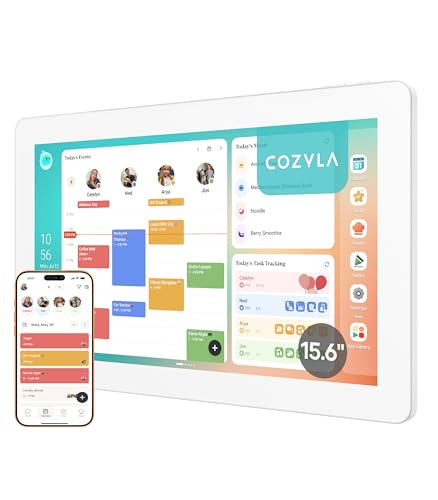
The product includes practical controls such as a scheduled sleep mode and parental lock features; however, there is no independently verified evidence regarding its brightness, blue-light reduction, or overall eye health benefits. Its organizational features—such as chores, rewards, meal planning, and voice functionalities—are not based on proven health interventions. Additionally, the device's four-microphone design and early-access voice assistant require households to be mindful of the information spoken near the device, as it could potentially capture sensitive data. According to Cozyla's privacy policy, the company collects data related to calendars, tasks, meals, diagnostics, and linked services to operate its services. Cozyla states that it does not sell personal data and offers options for data deletion through customer support, although some data may be retained for legal or legitimate business purposes. No recalls from the Consumer Product Safety Commission (CPSC) were found during the review. The product comes with a replacement adapter and a one-year warranty. However, there is no publicly available repair guide, screen parts program, take-back or recycling plans, measured energy usage data, or verified claims regarding the use of recycled materials.
This product is ideal for households seeking a compact, continuously powered shared display located near a kitchen counter, desk, or other small shared space. It is particularly suitable for adults who already use Google, Apple, Outlook, or compatible online calendars and want a centralized view of events, routines, chores, and meal plans. It also suits families willing to manage account permissions, connected calendar access, and screen scheduling. The 15.6-inch size is best suited for close-up viewing rather than as a distant wall display.
This device is not ideal for households that require independently listed electrical hardware, documented long-term security support, or a clearly defined vulnerability reporting process. It is also unsuitable in environments where children might pull on the power cable, climb near the display, or where wall installation needs to be carried out without verifying the structural integrity of the wall or using a pre-sourced mount. Privacy-conscious households should avoid sharing detailed family, medical, location, or school calendars unless they are comfortable with Cozyla's specified data collection and cloud synchronization policies.
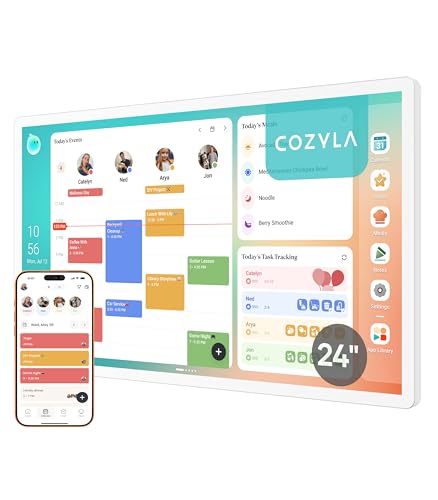
The wellness controls offered by Cozyla are practical rather than medical in nature. The device features an anti-glare screen and a scheduled sleep mode. Its website mentions parental locks for certain apps and features. Additionally, the product includes microphones for voice-related functions; families should consider the implications of voice use in relation to the overall privacy policy. There are no claims related to health treatment or disease prevention associated with this product. Furthermore, no Cozyla-specific recalls or regulatory warnings from the CPSC or other authorities were found in the U.S. recall sources reviewed. This is a mains-powered device, supplied with a 12 V, 5 A adapter. While sleep scheduling can reduce operating hours, Cozyla does not publish specific active or standby power consumption figures, making it impossible to determine electricity use. There are no documented recycled-content materials, packaging reduction initiatives, or programs related to carbon footprint, take-back schemes, spare parts, or electronics recycling specific to this product. The product comes with a one-year warranty to cover early failures; however, no published repair instructions or information about the availability of replacement parts were found.
This product is ideal for households seeking a large, fixed shared screen in spaces such as the kitchen, entryway, dining room, or living room. It is suitable for those comfortable managing accounts, Wi-Fi connections, and cloud-based calendars. It caters to families that plan to actively utilize features like chores, routines, meal planning, and reminders, rather than simply using it as a display. The 24-inch screen, combined with a rotating mount, is best suited for locations with unobstructed wall space near a protected outlet, where an adult can securely install the mount on a sturdy surface.
This product is not ideal for renters who cannot securely mount a 10.4-pound screen, or for households with uncertain wall structures, exposed cords, or children who might pull on the device or cables. Additionally, it may not be suitable for those who need a verified safety certification for the specific adapter provided, a publicly available security support lifetime, or strict local-only management of family photos and schedules. For buyers looking for a straightforward offline calendar, it’s important to note that essential syncing and account features rely on internet connectivity.
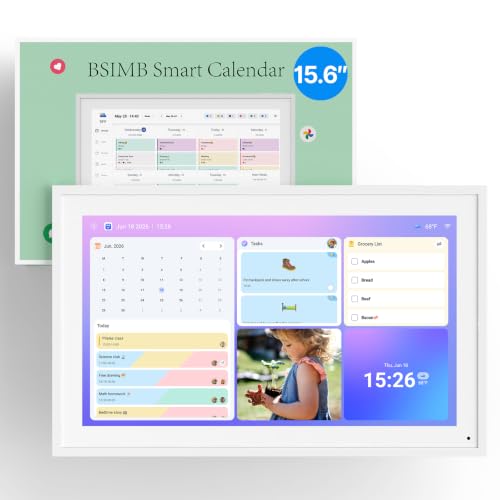
The manual outlines important indoor-use guidelines. It advises keeping the calendar away from water, moisture, heat sources, direct sunlight, and sharp or heavy objects. It also mentions that the device may heat up during operation. Users are warned not to dismantle the device due to the risk of electric shock. The included installation guide shows how to mount the device on a wall using anchors and screws but does not specify a maximum load capacity for installation. During this review, no specific model of the device was found to have an official NRTL electrical listing or an independently verified FCC authorization. BSIMB states that photos and videos are stored in the cloud and transmitted to the device via encrypted protocols. Its privacy policy indicates that it collects logs, device details, usage data, as well as calendar, photo content, and may confidentially share email addresses for advertising purposes. However, the Apple privacy disclosure for the app claims that no user data are collected, which contradicts the privacy policy. The manual features a crossed-out wheelie bin symbol and recommends separate electronic waste disposal, but no U.S. take-back program, spare parts catalog, repair instructions, or verified recycled material claims were identified.
This product is ideal for households seeking a dedicated medium-sized shared screen for scheduling appointments, routines, grocery lists, and chores. It is suitable for users comfortable with Wi-Fi and using a companion app. The device is best positioned on a desk, kitchen counter, or a carefully prepared indoor wall with proper installation using the supplied anchors. It is also suitable for those who appreciate a screen-off schedule and a straightforward local display for family planning. The included one-year warranty provides support coverage for common component issues during the first year.
This product is not suitable for households that require independently verifiable U.S. electrical certification for each plugged-in device or need a publicly accessible radio authorization for a specific model. It is also not ideal for privacy-conscious families who prefer not to upload calendars, photos, device identifiers, or usage data to a cloud-connected service that shares information for advertising purposes, as outlined in its privacy policy. Renters, homes in earthquake-prone areas, and installations near children should avoid makeshift wall mounting, since there are no load ratings or stud-specific installation instructions provided. Additionally, it is not designed for use in wet, outdoor, or commercial environments.
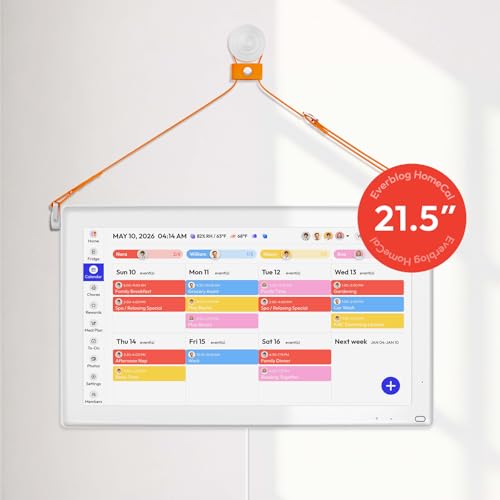
The display features a light sensor and has scheduled power-on and power-off controls provided by the manufacturer, which can help reduce screen exposure and prevent the display from remaining powered on continuously. These are practical features; however, they do not serve as evidence that the product enhances eye health, influences behavior, improves nutrition, or ensures food safety. Marketing claims suggesting that the product helps children develop habits or keeps food safe should be regarded as organizational statements rather than confirmed health benefits. Everblog states that the device has an ABS enclosure and claims compliance with FCC, CE, RoHS, MSDS, and UN38.3 standards. Nonetheless, no specific public records of FCC authorization, U.S. electrical safety listings, or third-party certifications for the product or its included adapter were found. Details such as product-specific active or standby power consumption, recycled content, take-back programs, spare parts availability, or electronic recycling initiatives are not provided. The manufacturer offers a two-year limited warranty and publishes firmware update notes, which may help prolong the device's lifespan. No Everblog-specific recalls have appeared in current recall searches conducted by CPSC.
This product is ideal for households needing a large, fixed shared display in a kitchen, entryway, or home office, especially if they already use Google, Outlook, Apple Calendar, Cozi, TeamSnap, or shareable calendar links. It is best suited for adults who can set up an app account, connect to Wi-Fi, manage calendar permissions, and properly install the device on a stable surface or securely mount it. Features such as scheduled power controls and a two-year documented warranty make it a reliable choice for households anticipating regular, long-term daily use.
It is not ideal for households that need independently verified U.S. electrical compliance evidence for the specific display and power adapter, or a traceable FCC authorization for the exact radio configuration. Additionally, it may not be suitable for renters or installers who require published mounting requirements, load limits, and detailed instructions for cable routing before mounting a 13.7-pound screen. Privacy-conscious families should refrain from using photo scans, voice input, or child profile features until they are confident in the app’s data practices and account security.
The most effective wellbeing feature is the manufacturer-recommended sleep mode. This setting allows the device to turn off the display on a scheduled basis, typically from 20:00 to 08:00, preventing a bright screen from remaining on overnight. The manual advises against exposure to moisture, blocked ventilation, direct sunlight, and the use of incompatible power adapters. It specifies a 5V, 3A power adapter requirement; however, there is no publicly available independent safety certification for either the adapter or the device. The related service claims to encrypt data during transmission and provides options for users to access, correct, or delete their data. Despite this, it also collects or processes household schedules, photos, device information, diagnostic data, and linked calendar details. Its privacy labels on Apple’s platform conflict with disclosures on Google Play and its own privacy policy. While sleep scheduling can help reduce unnecessary device use, there are no publicly available power consumption measurements, recycled material assurances, programs for replacement parts, or guidance on e-waste recycling. Additionally, no relevant recalls or regulatory warnings in the U.S. were found during searches.
This product is ideal for households seeking a single, visible, always-on display for shared appointments, chores, meal reminders, and selected family photos. It is best suited for users comfortable with linking their Google or Outlook calendars and managing the companion app, permissions, and updates independently. The customizable sleep schedule is helpful if the display is placed in a kitchen or common area that needs to remain dark overnight. Additionally, it can be used in a desk setup if wall mounting instructions do not adequately suit the intended surface.
This device is not appropriate for households that need independently verified electrical certifications, a verifiable FCC radio record, or detailed installation instructions for wall mounting before placing a powered display in areas frequented by children or high-traffic zones. Do not rely on it as the sole source of important appointments, as access to the calendar relies on cloud connectivity, Wi-Fi, app compatibility, and permissions from third-party services. Additionally, it is not suitable for privacy-conscious families who prefer not to upload schedules, names, photos, or device data to cloud-connected platforms.