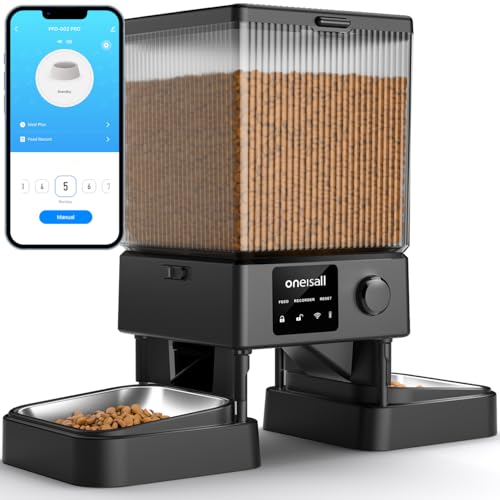
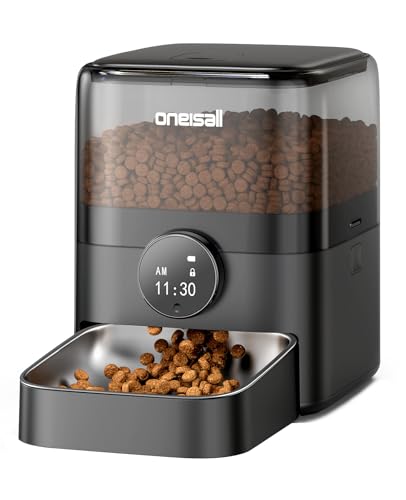
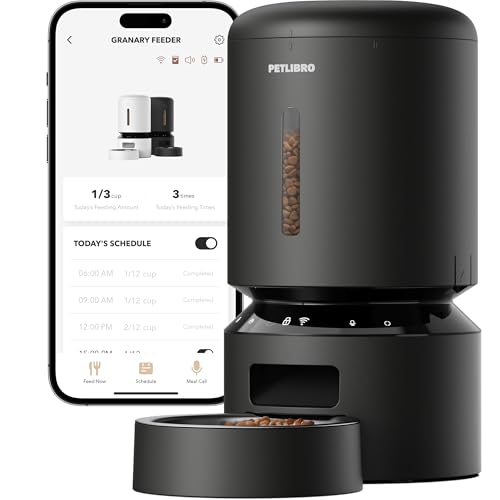
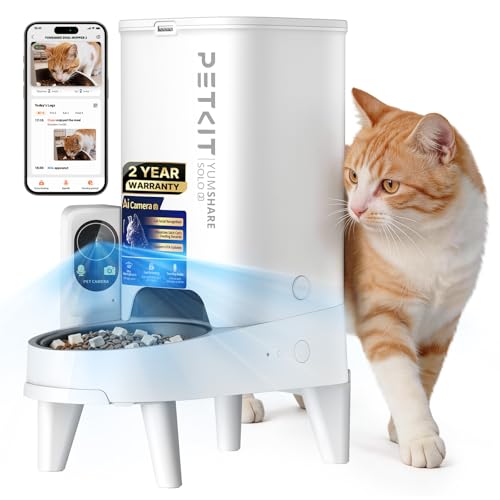
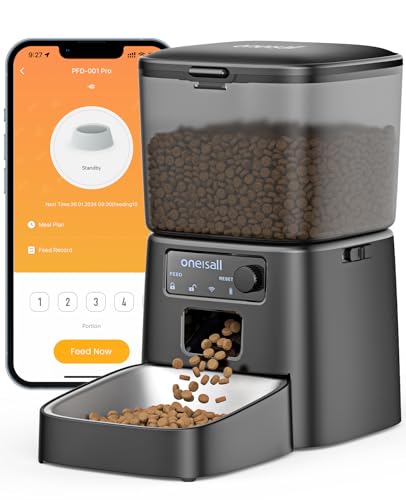
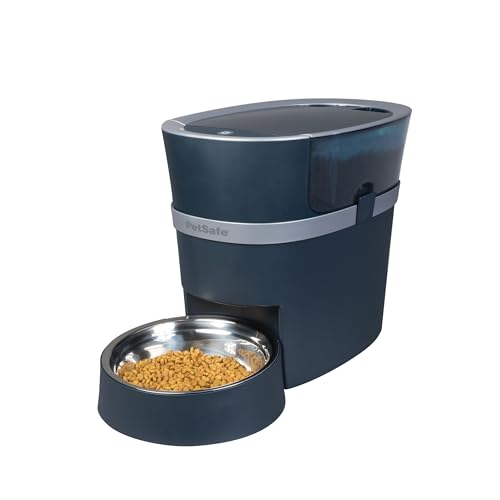
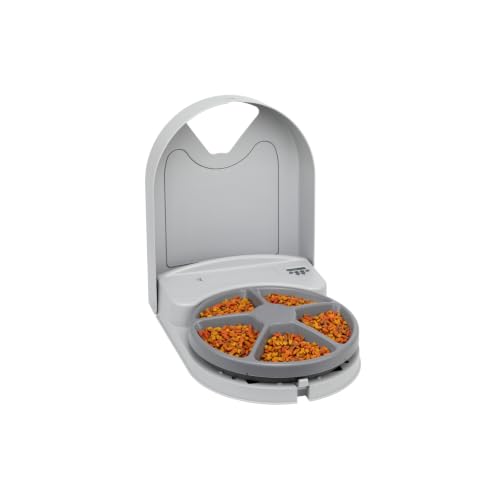
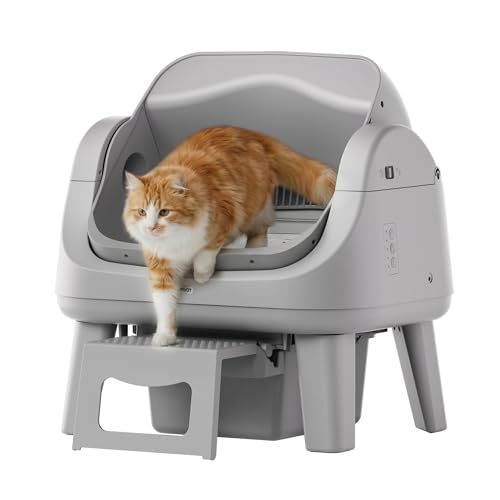
Oneisall WiFi Automatic Cat Food Dispenser
WiFi control for convenient remote feeding.
Programmable feeding schedule for precise meal times.
Large capacity hopper reduces refill frequency.
We compared the top Automatic Pet Feeder products so you can quickly spot the strongest options for value, features, and everyday performance.
WiFi control for convenient remote feeding.
Programmable feeding schedule for precise meal times.
Large capacity hopper reduces refill frequency.
Accommodates large kibble sizes easily.
Programmable for convenient feeding schedules.
Generous 3L capacity reduces refill frequency.
WiFi control for easy feeding adjustments.
Low food sensor ensures timely refills.
Freshness preservation keeps food tasty longer.
App control for convenient feeding schedules.
Portion control helps maintain pet health.
Supports WiFi connectivity for easy setup.
Real-time video lets you monitor pets remotely.
Two-way audio enables easy interaction with pets.
Scheduled feeding ensures consistent meal times.
Customizable meal portions for precise feeding.
Built-in 10-second voice recording feature.
Keeps food fresh with desiccant bag.
Large capacity for fewer refills needed.
Durable stainless steel ensures longevity.
Two-in-one design saves space efficiently.
Programmable feedings for precise portion control.
Detachable design ensures easy cleaning.
Information display enhances user experience.
Tracks pet's eating habits accurately.
Convenient app-based meal scheduling.
Durable stainless steel feeding bowl.
App-controlled for convenient remote feeding.
Compatible with Alexa for voice commands.
Backup batteries ensure feeding during outages.
Automatic pet feeders are designed to dispense dry food according to a set schedule, using mechanisms such as motorized hoppers, rotating pre-filled trays, or gravity-based reservoirs. Rather than focusing solely on hopper capacity, it’s essential to evaluate whether the device reliably delivers the correct meal at the right time, under the specific conditions of your home—including the type and fill level of kibble, power stability, and ease of cleaning.
Start with the food. Most available feeders are intended for dry pet food only and specify suitable kibble sizes, typically ranging from 2–10 mm, 2–15 mm, or 2–18 mm. Factors such as moisture, irregular shapes, oversized pieces, low hopper levels, and food variability can impact dispensing accuracy or cause blockages. A measurement described as a cup, milliliters, teaspoons, or an approximate weight (e.g., 7 grams) does not guarantee precise portion control. A responsible product documentation will include calibration instructions, trial weighing methods, or even an ISO/IEC 17025-accredited testing report indicating exact product details, kibble type, hopper fill levels, cycle counts, programmed versus actual weights, timing accuracy, and testing dates. Such detailed evidence was not found for the products reviewed.
Seek devices with safe failure modes rather than just “anti-jam” claims. Good documentation should clarify jam detection, error handling procedures, low-food warnings, schedule retention during power or internet outages, and the behavior when power is lost. Battery backup information should specify the type of battery used, whether scheduled feedings continue, and which functions are affected during a power outage. Claims of operation lasting 180 days or continuous feeding during outages are only valid if independently tested under real conditions with the specific setup.
For food hygiene, the entire food pathway—from hopper and rotor to chute, lid, and tray—must be considered. These parts should be removable, washable, and able to be completely dried. While stainless steel is beneficial, details about the grade, material composition, and compliance with food contact standards should be provided. Marketing claims such as “food grade,” “BPA-free,” or “304 stainless steel” should be supported by proper documentation rather than accepted at face value.
Connected features introduce additional factors. An FCC authorization record for the specific product confirms compliance with radio regulations but does not guarantee electrical safety of the power adapter, dispensing accuracy, or cybersecurity protections. For powered devices, look for approval in recognized testing laboratories such as UL Solutions Product iQ, Intertek ETL, or CSA databases. For app-controlled features including cameras, audio, or remote feeding, review data privacy disclosures, account security, software update policies, support lifecycle, and whether scheduled feedings function without cloud connectivity.
Be cautious of claims related to capacity, meal counts, camera resolution, low-food alerts, dual bowls, or “precise” and “healthy” feeding. Dual bowls may simply be equal portions without pet identification or theft prevention. Scales may show bowl changes but cannot confirm which pet ate. Scheduled feedings can support veterinary plans but do not measure calories or prevent issues like obesity, vomiting, diabetes, or anxiety.
Throughout reviews, a consistent safety warning is that no feeder should be the sole safety measure against missed or extra meals, which could pose urgent health risks. The lack of independent verification of gram accuracy and timing means owners often need to weigh trial portions and monitor operations themselves. Shared or open bowls do not allow individual feeding, and gravity-fed models cannot measure or schedule precise portions. Limitations related to dry food and kibble size, cleaning, battery health, jams, tipping, food theft, and power failures mean that human oversight is essential. Wet food, medically critical feeding, or pets with special diets generally require alternative arrangements.

These topics distinguish a simple, convenient dispenser from one that is better suited for a meticulously managed feeding routine. The scores evaluate the products based on the same criteria, but they do not replace the specific limitations outlined in each individual review.
This assesses whether the planned timing and meal portion sizes align with the designated kibble and hopper settings. It is important because volume adjustments do not equate to precise calorie control. The highest score awarded was 80 for the standalone PETLIBRO 3L, backed by an independent review confirming consistent dispensing. The lowest score was 45, assigned to gravity feeders that lack measurement or scheduling functions. None of the products underwent verified gram-accuracy testing.
This includes issues such as jams, repeated dispensing, empty hoppers, clock loss, alerts, and power outages. A higher score indicates effective error management and adherence to schedules, rather than simply promoting an "anti-jam" message. Scores provided ranged from 52 for a gravity dispenser without timed-meal safeguards to 78 for the PETLIBRO 3L basic model. Backup batteries are beneficial only if they are properly installed and maintained, and offline operation may disable app functionalities or alerts.
This evaluation considers every surface that touches food, not just the bowl, including access points for cleaning and drying. Features such as removable bowls, hoppers, rotors, and chutes help minimize trapped residue. The scores varied from 52 for a gravity set with a fixed water bowl and conflicting cleaning instructions, to 76 for Pawsync. Throughout the assessment, claims of stainless steel construction were frequently made by manufacturers, but comprehensive material declarations and independent evidence of food-contact compliance were generally lacking.
This evaluates the device's resistance to tipping, prying, chewing, climbing, and uneven access among pets. It is important because dual-bowl or shared feeders do not track which animal has eaten. The highest score achieved was 82 for the PETLIBRO 3L basic model, demonstrating strong resistance to pawing, probing, and tipping during hands-on tests. The lowest score was 60 for a Wi-Fi dual-power feeder, which recommended placing it against a wall. Personalized access for individual pets was still rarely available.
This topic assesses whether claims related to weight management, slow feeding, vomiting, calm behavior, or nutrition are supported by scheduled feeding practices. Higher scores indicate more restrained claims and an acknowledgment that individual calorie needs vary and that veterinary care remains important. Scores ranged from 52 for a feeder making unsupported claims about slow feeding benefits to 78 for several models. None of the products provided evidence of treatment benefits; simply delivering portions does not constitute a medical intervention.
Powered feeders must have traceable safety documentation from the U.S. for both the product and the adapter; wireless models also require lawful radio frequency authorization. An FCC record confirms radio compliance but does not verify electrical safety or overall performance. The test scores varied, with models lacking specific certification earning around 68, while the non-powered gravity feeder—without an adapter, battery, or radio—received a score of 90. Certifications listed precisely in recognized databases such as UL Product iQ, ETL, CSA, or other OSHA-approved directories carry more weight than mere logos.
This assesses whether consumers can identify the manufacturer or seller, including details such as the model, warranty information, support contacts, and any official corrective actions. Scores varied from 64 for the PETLIBRO dual-tray model with a camera to 79 for Pawsync. Factors like a clearly named company, accessible customer support, a straightforward replacement or warranty process, and traceable labeling enhance accountability. However, the lack of a known recall does not guarantee that a product is safe or free from recalls.
This assesses whether components such as bowls, lids, rotors, cables, adapters, batteries, and electronic parts can be repaired or replaced rather than discarding the feeder. The scores ranged from 68 for certain products with limited information on replaceable parts to 78 for Voluas and PetSafe Healthy Pet Simply Feed. Voluas provides standalone repair guides for internal components, while PetSafe offers a list of available replacement parts. However, neither brand offers a comprehensive repair program or guarantees a long service life.
This focuses on specific, quantifiable claims regarding materials, packaging, energy, and waste, supported by certification for the exact product. All the evaluated products received scores ranging from 69 to 72, indicating minimal differentiation. None of the products provided verified evidence of recycled content, GRS, ISCC PLUS certification, packaging impact, energy consumption, or electronics recycling relevant to the product. Do not consider factors like “large capacity,” “freshness,” or fewer refills as proven environmental benefits unless supported by appropriate calculations.
This assesses whether claims related to capacity, portion size, battery life, range, freshness, anti-jam, camera, and multi-pet features have well-defined limits that align with the manual. Scores varied from 48 for a gravity-based product with conflicting specifications to 78 for PETLIBRO’s 5L Wi-Fi model. Important specifications to consider include kibble diameter, fill limits, portion definitions, cleaning restrictions, and outage behavior. Descriptors such as “precise,” “jam-free,” and “multi-pet” are incomplete without clear operating conditions.
This subject emphasizes current, model-specific evidence that can be verified through an issuer’s registry or disclosed testing methodology. Scores ranged from 68 for products primarily supported by seller or manual claims to 81 for Pawsync, which provided precise FCC documentation for the product along with related wireless test reports. The PETLIBRO 3L basic model also underwent independent hands-on dispensing and access testing. However, neither type of evidence guarantees every safety or performance claim.
This assessment evaluates privacy, account security, software updates, reliance on cloud services, and the usability of feeding devices in the event of internet connectivity issues. Scores ranged from 63 for an app-dependent feeder with limited security documentation to 95 for a non-connected gravity model. Non-connected devices avoid exposure to apps and cloud services but typically lack remote control capabilities. Pawsync demonstrated precise wireless authorization but did not undergo an independent security evaluation. While having a published support end date—such as December 31, 2027, for a PETLIBRO camera model—is helpful, it does not provide a complete security assurance.
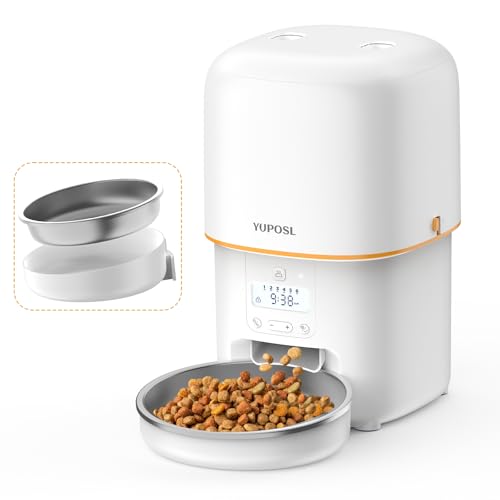
The primary hygiene advantage of this product is the manufacturer’s claim that the removable bowls are made of dishwasher-safe 304 stainless steel. The hopper and dispensing system also contain ABS plastic; however, the manufacturer has not provided a comprehensive declaration of food-contact materials, coating details, or an independent food-contact compliance report. To maintain hygiene, keep dry food dry, clean the outlet if food builds up, and verify actual output after changing kibble size or shape. The wireless radio has a traceable FCC authorization record. However, this authorization does not guarantee the accuracy of meal dispensing, the electrical safety of the included adapter, or cybersecurity standards. The user manual states the product can operate locally during internet outages and on battery power during mains power failures. Replacement bowls are available, and the manufacturer offers a two-year warranty. Nonetheless, there is no extensive spare parts catalog, repair guide, environmental certification, recycled-content claims, or specific electronics recycling plan for the product. Additionally, no CPSC recalls for this product were found during the search.
This product is ideal for households with two cats that typically eat the same dry kibble and have similar caloric needs. It is most suitable for owners who are comfortable measuring multiple test meals using the same type of kibble, then periodically monitoring the bowl output and hopper level. Features such as the 5-liter hopper, two washable bowls, local scheduled feeding, and a battery backup option make it well-suited for routine feeding, especially when a person is present to check the device, refill it, and address any outlet blockages.
Using this as the sole feeding safeguard is not suitable for pets with medically critical diets, such as cats on carefully regulated calorie plans, insulin-dependent meal routines, or treatments where missing or extra meals pose immediate risks. Additionally, it does not address issues like food theft or unequal feeding between cats, since both bowls dispense equal portions without any form of pet identification. For wet food, kibble larger than 0.5 inch, strong chewers, or households requiring independently verified dispensing accuracy and safety certification of adapters, select an alternative feeding solution.
The primary health feature of this product is scheduled dry food delivery; however, the manual clearly highlights an important limitation. The portion size is influenced by the type of kibble, and owners are advised to measure the food they dispense and adjust the number of servings accordingly. This approach is more responsible than relying solely on a fixed calorie setting. The manufacturer also recommends using a stainless steel bowl exclusively for dry food, with kibble sizes between 2 and 18 mm, and suggests periodically replacing the desiccant. However, there is no documentation confirming food-contact safety for all surfaces that touch the food or for the desiccant contents. The product comes with a two-year warranty, U.S. support contact information, and promises for repair or replacement if needed, supporting extended use. Nonetheless, there is no specific spare parts catalog for the feeder, electronic repair guide, recycling instructions, data on packaging environmental impact, recycled-content certification, or independent verification of environmental standards. An official U.S. recall for this feeder was not identified during searches, but the available safety and performance information is largely provided by the manufacturer.
This feeder is ideal for a single healthy cat that consumes dry kibble within the specified 2 to 18 mm size range. It is especially suitable for caregivers who prefer to program multiple meals locally without the use of an app. It is best suited for owners who are comfortable setting it up at home, installing fresh backup batteries, keeping the outlet unobstructed, and weighing multiple trial portions of their chosen food. The small hopper and removable bowl make it convenient for a routine of regular cleaning and inspection, rather than leaving it unattended for long periods or during extended travel.
This is not a safe standalone solution for cats with specific dietary or medical needs, such as those being treated for diabetes, experiencing rapid weight changes, or on medication that must be mixed with food. It is not suitable for wet food. Households with food-aggressive pets, multiple cats on different diets, or animals that tend to steal food require personalized access control, which cannot be provided by a single open bowl. Do not rely solely on the stated portion size without actually weighing the food, especially when using large, irregularly shaped, or variable kibble.
The product features a removable stainless-steel bowl, which is the clearest food-contact material disclosed. The manufacturer advises users to remove and rinse the lid, hopper, tank base, bowl, and tray, then allow them to air dry. This is important because FDA guidelines recommend keeping dry pet-food containers clean and dry, washing food bowls after use, and preserving the food bag and lot information. However, the specific grade of stainless steel and the materials used for the hopper, internal food pathway, and colorants are not specified. The manufacturer also mentions that a desiccant bag should be replaced regularly and that the device can operate either offline or on battery backup. These features can help reduce moisture exposure to food and provide convenience during power outages, but they do not ensure precise dispensing accuracy. No relevant Consumer Product Safety Commission (CPSC) recall was found during the review. The product has an identifiable manufacturer, a manual, and a wireless authorization record. However, there is no information available regarding recycled content, packaging sustainability, energy use, or any specific environmental certifications related to the product. Additionally, repair parts for food contact surfaces and electronics, apart from the desiccant, are not documented.
This product is ideal for households that use dry kibble within the specified 15 mm size limit and prefer consistent daily meal times over a veterinary-grade measured diet. It is best suited for situations where an adult can regularly monitor the hopper, bowl, app notifications, and feeding history, and where three D batteries can be used to ensure operation during power outages. Additionally, it is suitable for a single pet or multiple pets that can safely share an open bowl and have compatible feeding requirements.
It is not suitable as the sole feeding method for pets whose health relies on precise measurements, such as those on strict calorie-controlled diets or with medical conditions requiring closely monitored meals. Additionally, it is not ideal for households with food guarders, pets that steal food, strong animals capable of opening a hopper or lid, or animals with different dietary needs. Do not use it for wet food, large kibble, or during long periods of unsupervised absence without a backup plan involving human supervision.
The most effective health safeguard is procedural rather than relying solely on hardware that isn’t independently tested. The manufacturer recommends dry food pieces smaller than 12 mm and encourages owners to measure the actual output, since kibble shape and brand influence portion sizes. While this is important for calorie control, it does not guarantee that programmed grams or meal times are always precise. The feeder should not replace veterinary-calculated calorie plans or medical advice. No significant official recalls or regulatory actions have been identified in the U.S. sources reviewed. The food-contact bowl is made from 304 stainless steel, and the overall product incorporates ABS plastic along with stainless steel components. The hopper, bowl holder, outlet, and bowl are washable, but the base and hopper's electronic components should only be wiped clean and not submerged. The product comes with a 24-month manufacturer warranty and includes replaceable desiccants to potentially extend its lifespan. No information was found regarding recycled content, packaging, energy consumption, repair parts, or end-of-life recycling initiatives.
This product is ideal for owners who feed a single cat or small indoor animals with dry kibble. It should be placed on a stable surface near a wall, with meal portions verified before use. It is best suited for scheduled, routine feeding times, with the owner keeping fresh AA backup batteries on hand, regularly cleaning the removable parts that contact food, and using a 2.4 GHz Wi-Fi network to operate the app. The calibration process outlined in the manual is especially useful for households willing to weigh multiple test meals after switching kibble types.
This device is not ideal for pets that require strict portion control due to medical conditions, unless the owner has thoroughly tested the specific kibble to ensure accurate dispensing and has a backup feeding plan in place. It is also not suitable for highly food-motivated animals that might tip or sabotage the feeder, or for households with multiple pets needing personalized feeding schedules. Consider selecting an alternative solution if wet food feeding is necessary, if consistent app connectivity during outages is critical, or if certified electrical and wireless standards are a priority.
The manual outlines several practical hygiene practices. It instructs users to remove and wash components such as the hopper, vanes, impeller cover, impeller, lid, and bowl, ensuring each part is completely dry before reassembling. Additionally, it specifies that only dry food should be used and sets maximum size limits for food pieces. While these details are helpful, they are manufacturer instructions and do not constitute independent food-contact certifications. The manual does not specify every type of food-contact plastic, coating, colorant, or grade of stainless steel used. The Wi-Fi functionality of the product is independently certified through FCC documentation. However, other safety certifications, including the electrical safety approval and adapter listing, have not been independently verified. No relevant CPSC recall records were found during searches. PETKIT provides contact and warranty information for customers in the U.S.. The feeder features removable parts for cleaning, but no public repair guides, spare parts catalog, or claims regarding recycled content, packaging, or electronics recycling are available. Additionally, five disposable AAA batteries may be required for backup operation.
This product is ideal for households with a single cat or small dog that consumes compatible dry kibble and maintains a consistent feeding schedule. It is particularly useful for caregivers who want scheduled meal times along with the ability to visually monitor bowl visits while away. Owners should be comfortable operating a 2.4 GHz Wi-Fi app, manually cleaning removable food pathway parts, checking the battery level before extended absences, and understanding that the camera serves as a monitoring tool rather than providing exact food intake confirmation. It is better suited for everyday convenience rather than for critical medical feeding needs.
It is not ideal for pets that need precisely measured gram-level portions, wet food, or prescribed diets that rely on accurate intake measurement. It is also not suitable for situations where missing a meal could pose a serious health risk. Additionally, it does not address food competition in multi-pet households due to its single shared hopper and bowl, which lack individual access control. Avoid placing it where a persistent pet could tip it over, and do not use it for pets that chew on cords unless the power cord can be properly protected.
The primary health-related limitations are practical rather than therapeutic. Scheduled feeding can assist owners in establishing a routine, but the product does not guarantee that its volume measures correspond to a consistent weight of food across different kibble shapes, fill levels, or battery conditions. Owners should measure the actual dispensed meals with their chosen food before relying on a calorie-based plan. The manufacturer specifies use with dry food only, recommends kibble sizes between 2 and 10 mm, advises regular cleaning, and suggests replacing the desiccant every 15 days. The hopper is made from ABS plastic, while the bowl is stainless steel; however, available documentation does not specify the stainless steel grade or provide a comprehensive food-contact safety declaration. The manual lists several replaceable accessories, and independent repair guides detail access to internal components, potentially extending the product’s lifespan. No claims regarding recycled materials, packaging, energy use, or recycling have been found. Additionally, no official product recalls or safety corrections have been identified in the CPSC and FDA sources reviewed, though this does not constitute independent safety certification.
This product is ideal for households feeding a single adult cat or small dog with dry kibble measuring between 2 and 10 mm, as specified by the manufacturer. It is most convenient for owners who prefer a simple, local button-controlled timer over a mobile app, and who can place the feeder indoors on a flat surface. Users should regularly check the dispensing mechanism, battery levels, food supply, and cleanliness. Additionally, it is suitable for those willing to use three D-cell batteries as a backup power source and to hand-wash the removable parts that come into contact with food.
This product is not suitable as the only feeding safeguard for pets with medical conditions that require precisely measured gram-level meals, such as those on strict calorie-controlled or diabetes management plans. It cannot be used with wet, canned, or moist foods. The manual clarifies that it is not intended for puppies, kittens, or animals that cannot reach the tray. Additionally, in households with multiple pets, pets with food aggression, or pets that can access another animal’s bowl, a separate system with individual access control is necessary. This is because the product features a single open shared bowl and does not have an individual identification-based feeding system.
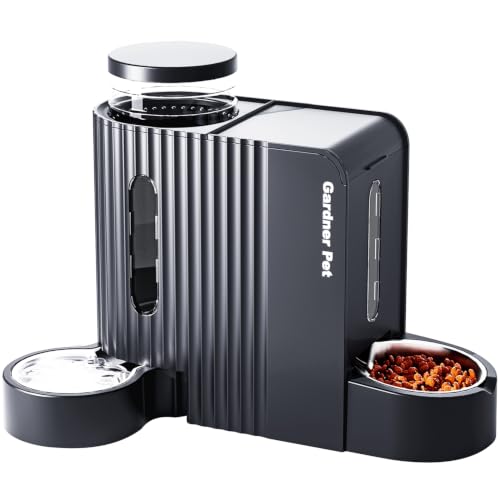
The product minimizes electrical and connected-device risks by operating solely through mechanical gravity, eliminating the need for batteries, adapters, wireless radios, cloud accounts, and their related replacement and electronic waste concerns. The provided instructions mention the use of stainless steel bowls and specify 304 stainless steel; however, there is no verification of the grade, food-contact safety declarations, coating disclosures, or independent lab testing reports. The food bowl is described as removable, whereas the water bowl is stated to remain permanently attached. Hygiene is a primary concern. The FDA recommends washing and drying food bowls after each use and cleaning water bowls daily. In contrast, the available instructions suggest cleaning with a dry or slightly damp cloth and advise against washing with water unless the product is explicitly water-resistant. This advice conflicts with the fact that the product includes a water dispenser and a non-removable water bowl. No product-specific recalls from CPSC, FDA alerts, environmental certifications, recycled-content claims, or independently verified sustainability reports were found in the sources reviewed.
This product is ideal for households with a healthy small or medium-sized cat or dog that already self-regulates their dry kibble intake. It is designed for owners seeking a straightforward backup supply of food and water during an ordinary workday. Additionally, it appeals to buyers who prefer to avoid device plugs, batteries, Wi-Fi connections, app permissions, and timer configurations. Owners should be prepared to monitor the animals’ food and water intake regularly, refill the bowls as needed, clean the bowls frequently, and retain the original food packaging information for traceability if the kibble is transferred to the device.
This product is not suitable for pets that require precise calorie intake, scheduled feeding times, diabetes management, weight control, medication administration, or reliable individual feeding in a multi-pet household. The gravity mechanism allows food to be available whenever the bowl is emptied, which can result in one pet eating another’s portion. It is also not ideal for highly food-motivated animals that may try to pry or knock over the unit. Additionally, it is not suitable for households that need a fully removable water bowl for daily washing. Do not rely on the stated multi-day capacity as a guarantee of unattended feeding.
The food pathway is constructed from BPA-free ABS plastic and features two stainless-steel bowls. The manual states the plastic is BPA-free; however, there is no information provided about the stainless-steel grade, any food-contact additives, or a basis for compliance with food-contact standards. According to FDA guidance, it is recommended to keep dry-food containers clean and dry, wash the bowls after each use, and retain food lot information. Since kibble is poured into this hopper, it is advised to keep the original packaging information separate and to clean the hopper between different bags. There have been no reports of recalls or official corrective actions for this model from U.S. consumer-product safety agencies. The feeder comes with a one-year warranty, and features removable, washable components along with a replaceable cable and power adapter, which can help prolong its usability. However, no spare parts catalog, repair instructions, recycling program, recycled-content claims, packaging specifications, or independent environmental certifications were found. The manual's advice regarding slow feeding is not backed by veterinary evidence specific to this model and should not replace a veterinarian’s calorie plan.
This device is ideal for households with two compatible cats or small pets that can safely share the same dry food meal and do not require individual access control. It is also suitable for users who prefer local button controls over an app, can use dry kibble within the specified size range of 5 to 15 mm, and are comfortable installing fresh backup batteries. Pet owners should test multiple dispense cycles with their own food to ensure the portion settings are accurate, particularly for calorie management.
Using this as the only method to control feeding for a pet with diabetes, a strictly prescribed calorie intake, a history of food guarding, or a diet that must not be shared is not appropriate. It cannot distribute different meal sizes into two bowls or prevent a faster-eating pet from taking both portions. Avoid using it for wet food, large kibble, pets capable of defeating standard hopper lids, or in situations where it is left unattended, as missing a meal could lead to medical issues. Pets with such needs require personalized access and a verified feeding plan.
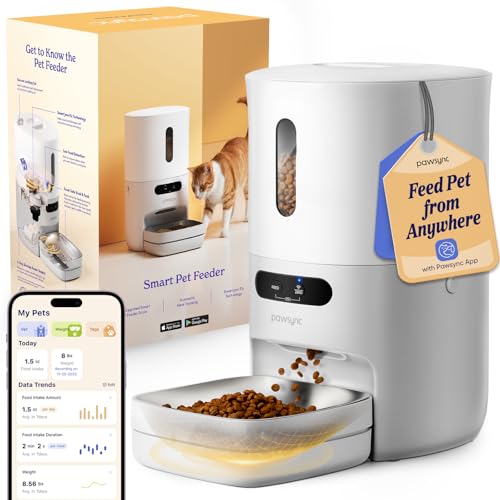
The accessible food path is a practical feature that enhances hygiene. Pawsync states that the removable hopper components and stainless steel bowl can be easily cleaned with soap and water and should be allowed to air dry completely. The scale and powered base must remain dry during cleaning. The manufacturer specifies that the bowl is made of 304 stainless steel and other surfaces that contact food are BPA-free plastic, though a full declaration of food-contact materials and compliance information was not provided in this review. Scheduled feeding portions can assist with a veterinary feeding plan; however, they do not determine an individual pet’s calorie requirements. Veterinary guidance recommends setting calorie targets based on factors such as body condition, health status, age, activity level, and diet. There is no available information on specific environmental certifications, recycled-content content, packaging impact, spare parts availability, or end-of-life disposal guidance for the product. While the device uses replaceable D batteries, has a removable bowl, and offers a warranty for repair or replacement, its overall service life may be limited. Additionally, the electronic base is not designed for user repairs.
This feeder is ideal for households feeding a single cat or small dog dry kibble within the specified size range of 4 to 15 mm. It is particularly suitable for owners who can regularly monitor the bowl and review app records. The device is best for those who prioritize scheduled mealtimes, appreciate a removable and washable food pathway, and want to track consumption between household visits. To ensure continuous operation during brief power outages, backup batteries should be installed if missed meals are a concern. Additionally, portion settings should be verified to match the pet’s actual food and veterinary calorie guidelines.
This device is not a safe replacement for direct supervision of a pet with diabetes, unstable appetite, history of food guarding, or a medically prescribed feeding regimen where missing or incorrect meals could be critical. It is also not suitable for wet, canned, moist, or irregularly shaped kibble. In multi-pet households requiring restricted access for each animal, the bowl scale should not be relied upon for individual feeding control. Customers needing independently verified portion accuracy, dishwasher-safe food-contact components, or minimal data collection via the app and cloud should consider a different setup.
The key health-related features of this product include scheduling, a slow-feed delivery mode, low and empty-food alerts, and backup power capability. These are operational features provided by the manufacturer and do not indicate that the feeder itself addresses medical conditions such as obesity, vomiting, anxiety, diabetes, or others. The manual appropriately advises owners to check the dispenser frequently, prime the conveyor when food runs low, and avoid using it for pets that cannot reach the bowl. For pets with special medical or weight management needs, a veterinarian should determine appropriate calorie targets. The product comes with a stainless-steel bowl and several removable components that are washable. The base must remain dry, and PetSafe states that the conveyor and crumb catcher are not dishwasher safe. The manufacturer offers a replacement adapter and bowl holder, which allows for limited repairs, but does not publish a complete list of service parts, material details, recycled content information, packaging impact data, or a U.S. end-of-life disposal program. No specific product recalls or regulatory warnings were found in the sources reviewed.
This device is ideal for households that feed dry or semi-moist kibble to cats or small to medium-sized dogs on a consistent daily schedule. It is most convenient for owners who can set up a 2.4 GHz Wi-Fi connection, regularly monitor the activity log and food level, clean the conveyor, and replace backup batteries before potential power outages or travel. With a 24-cup hopper and the ability to schedule up to 12 meals, it minimizes the need for frequent refills and allows for multiple smaller feedings. However, it’s important to verify that the programmed cup settings align with the pet’s actual kibble size and daily calorie needs.
This product is not suitable for wet, canned, or moist foods, outdoor use, or for puppies, kittens, or pets with disabilities that prevent reliable access to the bowl. It is also not appropriate as the primary, unattended safety measure for pets with diabetes, strict calorie restrictions, a history of food-related illnesses, or any condition requiring precise gram-level meal control. Households with persistent food stealers should not rely on the button lock or bowl holder to prevent access to the hopper. Additionally, in homes with multiple pets, the shared bowl or optional splitter should not be considered as a method for individualized feeding control.