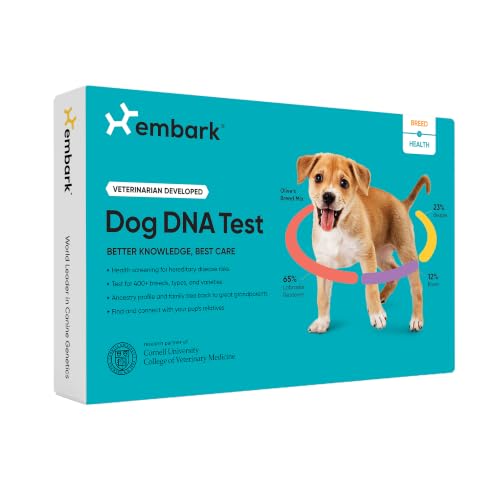
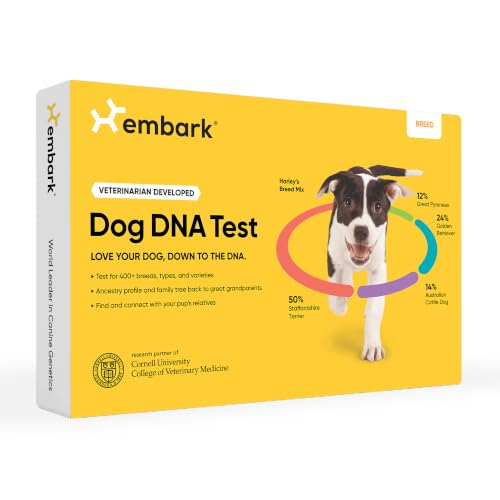
Embark Dog Breed Identification Kit
Tests for over 350 dog breeds
Provides detailed ancestry and family tree
High accuracy and user-friendly process
We compared the top Dog Dna Test products so you can quickly spot the strongest options for value, features, and everyday performance.
Tests for over 350 dog breeds
Provides detailed ancestry and family tree
High accuracy and user-friendly process
Comprehensive breed and ancestry information.
Genetic health screening for potential issues.
Connects with relatives through Relative Finder.
Identifies over 365 dog breeds accurately.
Screens for 30 genetic health conditions.
Provides detailed ancestry and relative information.
Identifies over 350 dog breeds accurately.
Provides a detailed breed report quickly.
Includes a non-invasive cheek swab kit.
Identifies over 300 breeds accurately.
Includes genetic age detection feature.
Easy, non-invasive cheek swab method.
Estimates dog's age and possible birthday.
Uses DNA methylation for accuracy.
Provides personalized life stage care tips.
Identifies over 365 dog breeds accurately.
Includes MDR1 health test for safety.
Connects you with your dog's relatives.
Comprehensive testing with 265+ health screenings.
Identifies over 365 dog breeds accurately.
Includes genetic diversity and ancestry insights.
Provides insights on your pet's life stage.
Easy at-home testing for dogs and cats.
Ideal for understanding rescued pets' ages.
Easy at-home testing for pets’ food sensitivities.
Fast results available in just 5 days.
Comprehensive analysis of 289 food items.
Most dog DNA tests involve collecting a cheek swab that is sent to a laboratory for analysis. Depending on the specific product, the results may include breed ancestry estimates, identification of relatives, screening for certain inherited genetic variants, reports on medication sensitivities, age estimation based on DNA methylation, or parentage verification. Each of these uses serves different purposes, so a test designed for one function may not be suitable for another.
The effectiveness of a test depends on more than just the number of breeds, genetic markers, or health conditions listed. For ancestry testing, look for clear explanations of the testing platform, the size and makeup of the reference database, the breeds included, how unresolved ancestry is handled, confidence levels for the results, and how database updates might alter previous reports. Breed percentages are estimates based on genetics, not definitive proof of pedigree, purebred status, registration, behavior, or legal breed classification. A large list of breeds can be misleading if the company does not clarify how closely related breeds are distinguished or how mixed-breed results are validated.
For health screening, a comprehensive report should specify the gene, variant, inheritance pattern, relevance to specific breeds, and the strength of the scientific evidence for each finding. Simply stating the number of health tests performed (e.g., “265 health tests”) does not indicate whether all variants are clinically significant, whether the test covers all disease-causing mutations, or if a negative result rules out the condition. While medication sensitivity reports can be useful in managing health, they should be interpreted with a veterinarian’s guidance. Remember, genetic risk markers are not diagnoses, and a negative panel cannot exclude acquired diseases or variants outside the scope of the test.
Laboratory quality and validation are separate considerations. An independent accreditation from a recognized body (such as ISO/IEC 17025 supported by A2LA, ANAB, ILAC, or AAVLD) that covers the specific genetic testing performed is a strong indicator of reliability. Merely claiming CLIA certification is not enough for canine genetic testing. It’s also important to look for independent evidence of consistent genotype results, repeatability, call rates, sample failure rates, and accuracy of breed inference on known samples. A stated accuracy percentage from the company alone is weak evidence if it’s unverifiable, based on an undisclosed sample set, or doesn’t address performance with mixed breeds.
Sample collection procedures impact both test reliability and animal welfare. Prefer instructions that specify food and water restrictions, avoiding contact with other dogs, gentle handling during cheek swabbing, drying, proper labeling, activation, shipping, and procedures for rejected samples or recollection. Do not force a distressed or uncomfortable dog to accept a swab. Privacy considerations are also important: check if participation is opt-in or opt-out for research, whether results sharing and relative matching are controllable, how long samples and data are retained, and if options exist for deletion or sample destruction.
Overall, caution is advised with all products: no DNA test can replace veterinary examinations or confirmatory diagnostics; none are suitable for establishing legal pedigree or registration; and results should not be used to make critical decisions about medication, treatment, breeding, insurance, housing, or legal matters without professional advice or official registry confirmation. Some products lack independent validation, clear laboratory scope, or transparent packaging disclosures. The so-called ovulation detector mentioned is not a DNA test and should not be solely relied upon for timing breeding.

A thorough comparison takes into account collection safety, clinical utility, environmental impact, laboratory capabilities, validation processes, result interpretation, marketing reach, and control over DNA data. Typically, the highest scores are awarded to products that have specific claims, clear veterinary restrictions, well-defined sample collection protocols, or independently verified laboratory accreditation—not necessarily those offering the broadest range of tested markers.
This assessment evaluates whether health findings encourage safer veterinary decisions instead of self-diagnosis or self-treatment. For dog DNA tests, higher scores indicate explicit statements clarifying that genetic risk does not equate to disease, along with recommendations for veterinary confirmation. Lower scores tend to result from more general health or behavior marketing that can be easily misinterpreted. The scores provided range from 20, such as for ovulation detectors, to 89 for certain ancestry tests that have well-defined clinical boundaries.
This assesses whether owners can obtain a usable sample without causing unnecessary distress, choking hazards, contamination, or the need for multiple mailings. High-scoring products clearly outline food restrictions, gentle swabbing techniques, drying, labeling, shipping procedures, and the process for replacing failed samples. Lower scores indicate unclear eligibility or recollection steps. The overall score range is from 70 to 86, with the highest-rated methods integrating comprehensive contamination controls and a clear pathway for replacement or recollection.
This assessment evaluates whether each reported variant is linked to a specific gene, inheritance pattern, breed relevance, and the strength of supporting evidence. It is important because a high number of health conditions may mask incomplete coverage or weak associations. Products with high scores are backed by detailed lists of conditions or variants and breed-specific information, while lower scores primarily depend on overall counts. The scoring scale ranges from 10 for non-DNA-based detectors to 93 for breed-only products that do not make health claims.
This section addresses the transparency regarding confidence levels, unassigned ancestry, false positive and false negative rates, limitations of variants, and situations requiring veterinary or confirmatory testing. For this category, the use of prediction intervals and clear statements emphasizing that ancestry assessments are statistical are particularly valuable. High scores, up to 87, help to clearly communicate the limits within reports or terminology, while lower scores require buyers to interpret the level of confidence in health, age, or breed results on their own.
This assessment covers single-use swabs and tubes, plastic and printed materials, repeat mailing, return shipping, recycling instructions, and support for environmental claims. Almost all mailed-in kits receive a score of 70 because their materials and shipping footprints are not publicly detailed, making it impossible to verify lower-waste claims. The reusable ovulation probe also does not disclose material composition or certifications, although it does eliminate the need for collecting and mailing biological samples.
This metric evaluates whether the specific laboratory—beyond just its brand—currently holds independent accreditation for relevant genetic-testing procedures. High scores indicate the laboratory has proper accreditation records and uses appropriate methods, such as an A2LA ISO/IEC 17025 accreditation for Neogen SNP genotyping or a NATA scope covering canine inherited-variant testing. Low scores suggest the laboratory is unnamed or lacks supported CLIA, ISO, or partner-laboratory certifications. The scores provided range from 15 to 93.
This provides independent evidence that the specific product accurately and consistently determines genotypes or ancestry inferences, focusing on metrics such as concordance, reproducibility, call rate, and sample failure rate. Achieving high scores goes beyond marketing claims; many of the products on the market do not offer comprehensive, product-specific validation data. For example, DNA My Dog products received a score of 52 in an independent assessment, correctly identifying the registered breed in 8 out of 12 purebred samples, whereas the highest score among comparable products was 76.
This assesses the transparency regarding the disclosure of markers, reference samples, covered breeds, algorithm updates, and handling of unresolved ancestry. It is important because breed results are estimates of genetic similarity rather than definitive pedigree proof. Products with higher scores clearly explain their chip or marker methods and reference databases, whereas lower-scoring products often rely on inconsistent or vague descriptions. Scores range from 52 to 90; for age-only and non-breed products, a more limited interpretation is appropriate.
This assesses whether marketing differentiates factors such as ancestry, traits, carrier status, risk markers, age estimates, parentage, diagnosis, behavior prediction, and registration. High scores indicate that the product's purpose is clearly defined, while low scores suggest the use of broad or health-related language that exceeds the supporting evidence. The provided scores range from 48 to 82. Claims like 99% accuracy are especially questionable when independent validation on mixed breeds or specific products is not available.
This assesses consent, research purposes, storage, sharing, relative matching, deletion, sample destruction, data transfers, and account security. It is important because a cheek swab generates biological data that may persist beyond the time of purchase. Products with higher scores indicate options for opting out, deletion, or destruction requests; lower scores allow for wider use, sale, or indefinite retention without specific time limits. The scores provided range from 30 to 82, and withdrawing consent may not retract data already used in completed research.
The primary safeguard for health is the scope of the test. This version, known as Breed ID by Embark, does not include a health report. It does not label dogs as being at risk for inherited disorders or encourage owners to act on disease markers without veterinary confirmation. While this limits its clinical utility, it also prevents the genetic risk from being presented as a diagnosis. Embark’s collection instructions are clear: no food for 30 minutes prior, then a gentle cheek and under-tongue swab for up to 60 seconds, followed by sealing the swab in its stabilizing liquid. The company notes that if samples are invalid or fail, a free replacement test can be requested. The return process involves a USPS-labeled mailer and a single-use collection tube with DNA-stabilizing liquid. While convenient, this approach generates material and transportation use for each test and any necessary recollections. There is no information available on the use of recycled materials, recyclability, packaging reduction, or the carbon footprint of the packaging. Additionally, no product-specific FDA recalls, animal safety advisories, or warning letters related to this product were found in the FDA’s animal and veterinary resources.
This product is ideal for owners of mixed-breed or adopted dogs seeking an estimate of their pet’s breed ancestry, an approximate recent breed-contribution overview, and the ability to search for tested relatives. It is especially suitable for households comfortable collecting cheek swab samples at home and creating an online account to activate the test and receive results. The service caters to curiosity, training-related questions, and general background inquiries, but owners should consider the breed percentages and family tree as statistical estimates rather than definitive lineage records or medical advice.
This version is not suitable for owners interested in genetic disease screening, medication sensitivity results, inherited trait analysis, adult size predictions, or genetic diversity information, as these reports are not included. Additionally, it is not appropriate for confirming purebred status, registering with a kennel club, resolving legal breed disputes, or substituting documented parentage. Owners requiring verified parentage should choose a program specifically designed for parentage testing with a verified chain of custody. Households that prefer not to create an online profile, mail a sample, or handle research and privacy settings should also avoid this format.
The cheek-swab process eliminates the need for a blood draw and is designed for at-home collection. Embark advises pet owners not to feed their dog for 30 minutes prior to sampling, to swab the inside of the cheek for up to 60 seconds, and then to seal and mix the tube containing DNA stabilizer. The company reports that quality control measures identify samples that are insufficient, contaminated, or mixed, and they offer a free replacement swab for any failed, invalid, or lost samples. The health reports use language focused on risk. Embark states that their results are not clinical diagnoses and should be reviewed with a veterinarian. This approach aligns with standard guidelines for canine genetics, acknowledging issues such as incomplete penetrance and the limitations of panel testing. They also publish a list of conditions that specify the genes and variants tested. While Embark claims that their laboratory is CLIA-certified, a current, independently verifiable certification or details about the scope of genetic testing for the laboratory could not be found. Additionally, there is no information about the packaging materials, recycling options, or environmental claims for the mail-back kit, which uses disposable collection and return materials.
This product is ideal for owners of healthy adopted or mixed-breed dogs who want a detailed breed-ancestry estimate and screening information to discuss during routine veterinary visits. It is also suitable for households that can adhere to the pre-swab dietary restrictions, set up the correct dog profile, and wait for the mail-in results. Its primary use is in a preventive context, such as consulting a veterinarian about potential medication sensitivities or inherited risk variants, rather than providing treatment guidance. Additionally, it is well-suited for owners comfortable managing their dog’s genetic data through online platforms.
This service is not intended for owners seeking a veterinary diagnosis for current symptoms, urgent care advice, or as a replacement for blood tests, imaging, or physical examinations. A positive result may suggest a potential risk but does not confirm disease, while a clear result does not rule out all genetic conditions. Additionally, it is not suitable for verifying official purebred status, pedigree, registration, or parentage. Buyers needing independently verified ISO 17025 laboratory accreditation, detailed third-party validation of all reported variants, or information on environmentally friendly packaging should choose a service that provides such documented records.
The health precautions are more robust than the marketing language implies. The collection guidelines recommend waiting at least two hours after eating, avoiding contact with the swab tip, swabbing the cheek for a minimum of 15 seconds, and allowing the swabs to dry for five minutes. The company states that its laboratory conducts quality checks before analysis and will notify the customer if the DNA quality is insufficient. Additionally, the terms specify that the service is intended for informational and educational purposes only and should not replace veterinary care or serve as a disease diagnosis. If a risk-related result is obtained, it should be reviewed with a veterinarian and, if clinically significant, confirmed through appropriate veterinary testing. The designated testing laboratory currently holds A2LA accreditation to ISO/IEC 17025:2017 for biological testing. No product-specific FDA recalls, warnings, or adverse-event alerts were found in the reviewed FDA animal and veterinary sources. Regarding environmental impact, the kit includes disposable collection swabs, a return mailer, and postal shipping. There was no information on recycled content, recyclability, reduced packaging, or carbon footprint, so the environmental impact of the single-use kit and return shipping cannot be precisely determined.
This product is ideal for owners of recently weaned puppies or adult dogs seeking a noninvasive method to estimate breed and traits, perform relative matching, and conduct a limited genetic screening panel to discuss with their veterinarian. It is most suitable for dogs that tolerate gentle mouth handling, as sample collection involves rotating a swab inside the cheek. Additionally, it is designed for owners who are comfortable setting up an account and receiving a digital report instead of a paper one, and who understand that the results serve as a starting point for preventive care discussions rather than a diagnostic tool.
This service is not intended for individuals seeking official pedigree verification, documentation for breed-restricted housing or legal matters, or a definitive prediction of a dog's behavior. The company explicitly disclaims any responsibility for such uses. It should not be relied upon as the sole basis for altering medication, diet, surgery, breeding, or treatment plans, particularly if an at-risk result is obtained. Owners who prefer not to have their pet’s sample and associated results stored, shared, or potentially sold for lawful purposes should not proceed under the current terms. For dogs that cannot safely undergo cheek swabbing, veterinary guidance may be necessary instead.
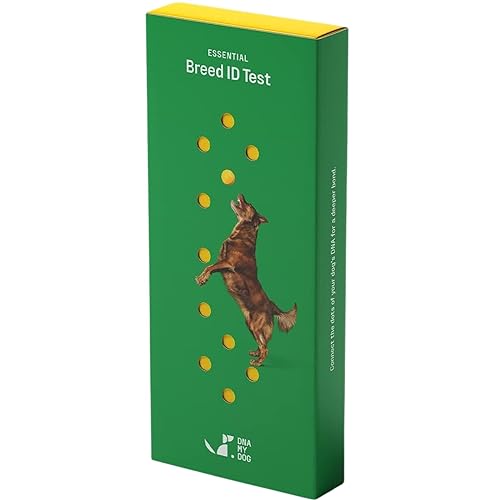
The physical collection involves a dry cheek swab. According to DNA My Dog's instructions, it is important to follow several sample integrity steps: wait at least one hour after eating before collecting, avoid recent oral contact with other dogs, firmly rub the inner cheek, and air-dry the swabs for approximately 20 minutes. The company emphasizes that the reports provided are for informational purposes only and that any medical concerns should be discussed with a licensed veterinarian. This precaution is important because breed association and genetic risk information do not constitute a medical diagnosis. There are no records of an FDA recall, warning letter, or advisory action specifically targeting DNA My Dog in publicly available sources. The company does not appear to have independent laboratory accreditation, published validation for its products, environmental certifications, disclosure of packaging materials, or recycling instructions. The mail-back process involves single-use collection and shipping materials, meaning a second sample would require an additional shipment. Additionally, the privacy policy states that personal information is not sold and allows for deletion requests where applicable; however, it does not specify how long canine DNA samples or genetic data are retained.
This product is ideal for owners of healthy mixed-breed dogs seeking a noninvasive, mail-in test to estimate their dog's breed ancestry and receive related discussion points for training, enrichment, or veterinary conversations. It is especially suitable for owners who can follow preparation instructions, such as fasting their dog for at least one hour and avoiding recent oral contact with other dogs. Additionally, it is intended for owners who understand that the results are informational and not official pedigree documentation, medical diagnoses, or a replacement for veterinary assessment.
This product is not appropriate for owners who require independently verified accuracy, the use of a certified laboratory, or test results suitable for pedigree, breed registration, legal identification, or parentage verification. Dogs experiencing itching, gastrointestinal issues, recurring ear infections, medication-related concerns, or suspected genetic conditions should be evaluated by a veterinarian rather than relying solely on this product’s allergy and sensitivity information, personality assessments, or breed-specific health guidance. Additionally, it is not suitable for buyers who need publicly available evidence for all health-related results or a well-documented policy on DNA sample retention.
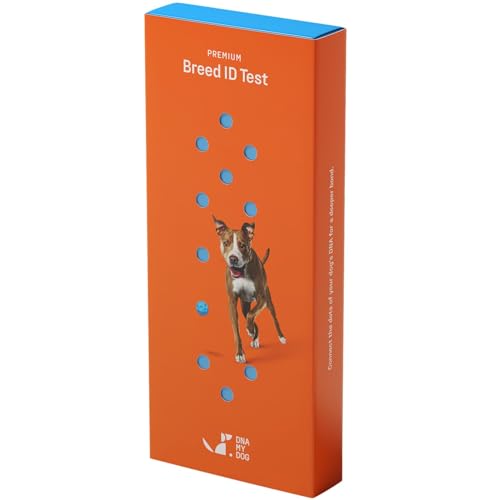
The company's health disclaimer clearly states that its analyses are for informational, educational, and research purposes only and are not meant to diagnose, prevent, treat, or cure any diseases. Customers are advised to consult a licensed veterinarian for any health concerns. Additionally, collection instructions recommend that owners avoid feeding their dogs for at least one hour prior to sampling and prevent oral contact with other dogs to minimize sample contamination. For the deceased-dog service, the company recommends keeping cheek swabs dry. The Premium product offers additional outputs, including health, trait, allergy sensitivity, and telomere age insights. However, the supporting evidence package for this product is incomplete. The laboratory used is not publicly identified, and there is no information about independent accreditation or validation specific to the tests. No details were provided regarding recycled content, recyclability, packaging materials, carbon footprint, or the use of eco-friendly return-mailers. As the kit is single-use and mail-back, repeated sampling would increase packaging and shipping waste.
This product is ideal for owners seeking a general, non-technical overview of a mature dog's potential ancestry, with the understanding that the results are approximate. It is best suited for personal curiosity, generating breed-related enrichment ideas, or sparking a discussion with a veterinarian. Owners should be comfortable creating an online account, adhering to a one-hour food restriction and contamination prevention guidelines, and sending in a dry cheek-swab sample by mail.
This is not appropriate for owners seeking a medical diagnosis, treatment decisions, definitive allergy assessments, or proof of a dog’s expected lifespan. A positive health marker requires interpretation by a veterinarian and, if necessary, clinical verification. Additionally, it is not suitable for matters such as pedigree verification, purebred registration, parentage, insurance, rental agreements, breed bans, breeding purposes, or confirming wolf-hybrid status that require a reliable official record. An independent study revealed surprising breed identifications in purebred dogs, including a Bulldog that was mistakenly identified as a wolf-hybrid.
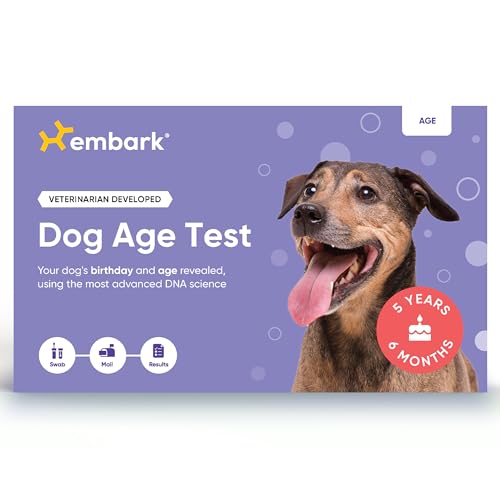
The collection process involves a cheek swab, eliminating the need for a blood draw. Embark states that the tube's liquid preserves saliva for 6 to 12 months across various weather conditions, though they recommend avoiding freezing temperatures and heat above 100°F. The company also notes that if a sample fails due to insufficient DNA, a replacement swab will be provided free of charge. However, for this Age Test, Embark cautions that contamination is harder to detect compared to their genotyping tests. The age estimate is based on DNA methylation, a biological mechanism supported by published research on canine aging. The accuracy of this specific product is as stated by the manufacturer, though an earlier version was withdrawn and refunded due to performance issues. The kit does not appear to have environmental certification, disclose packaging materials, include recycling instructions, or make claims about reduced waste. Embark provides options for owners to opt out of research, but their terms specify that the company may use the data for research purposes unless owners actively choose to decline this during account setup.
This product is designed for owners of adopted or rescue dogs without a verified birth date, seeking an approximate age estimate to help select a tentative birthday or discuss the dog's life stage with a veterinarian. It is most useful when an age range that may cover several months is still beneficial. It is also suitable for households able to keep multiple dogs separated before sampling, who follow the activation instructions carefully, and who understand that the result should be regarded as a single data point rather than a definitive medical or legal record.
This test is not appropriate for individuals who require an exact birthdate for purposes such as insurance, breeding, competitions, registration, legal documentation, or shelter records. It should not be relied upon as a replacement for veterinary evaluation when age influences anesthesia planning, medication choices, senior dog assessments, nutrition, or medical treatment. Households with multiple dogs that cannot effectively prevent sharing bowls, licking, or sample mix-ups should exercise caution, as Embark notes that contamination is harder to detect with this methylation-based age test.
The primary health indicator is the MDR1 test result. This test detects a specific deletion in the ABCB1 gene, a well-documented causative variant linked to adverse reactions to certain medications. Wisdom specifies the gene involved, the type of variant, inheritance pattern, and potential clinical implications, advising owners to consult a veterinarian. This approach offers more actionable insights compared to simply providing breed estimates or behavioral predispositions as medical advice. Swab collection is generally safe when instructions are carefully followed. The company recommends waiting until after meals, avoiding contact with the swab bristles, applying gentle pressure to the cheek, and allowing the swabs to dry before mailing them back. Wisdom states that its laboratory conducts quality checks on the samples. However, an independent certification specific to this product’s genetic testing capabilities has not been confirmed. No current FDA recalls or warning notices related to animal safety are found during verification. Additionally, the company does not provide verified environmental claims or transparent information regarding the kit, mailing materials, or recycling options, making it difficult to assess whether the return process is environmentally friendly.
This product is ideal for owners of adopted or mixed-breed dogs who seek detailed pedigree information, potential relative matches, and specific MDR1 medication sensitivity results—all obtained through a single cheek-swab sample. It is especially beneficial for owners willing to share their dog’s MDR1 test results with their regular veterinarian prior to administering medications or undergoing procedures. Additionally, it suits households that can follow contamination-control measures, such as waiting two hours after feeding before collecting samples and allowing the swabs to dry before mailing.
This test is not suitable for individuals seeking official pedigree verification, breed registration, proof of parentage, or legally recognized breeding records. Breed-heritage testing measures genetic resemblance to reference populations provided by the company, whereas recognized pedigree status requires documented lineage. Additionally, it is not appropriate for owners who need comprehensive health risk assessments, diagnostic information for current health issues, or behavioral predictions for training or safety purposes. Owners who are concerned about the company's rights to retain, share, or sell pet samples and associated data should review the terms carefully.
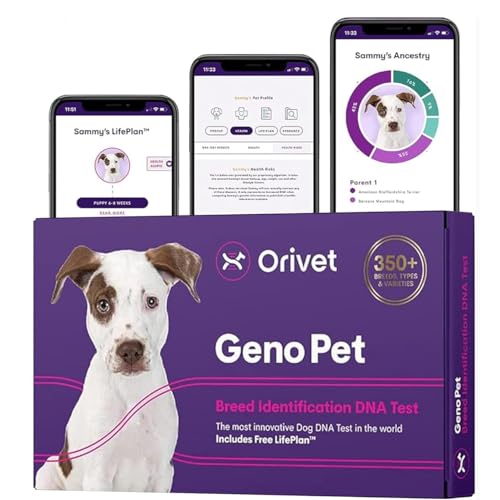
Health-related testing includes important safety features. Wisdom Panel explains that its disease panel detects specific genetic mutations rather than all possible genetic causes of every disease. Additionally, their terms clarify that the test results are not diagnostic or predictive of medical conditions. Owners are advised to seek regular veterinary care and personalized follow-up. The company also states that, for high-risk Premium results, users have access to a veterinary genetics specialist. Regarding sample collection, the manufacturer recommends waiting at least two hours after eating, swabbing the inside of the cheek, avoiding contact with the bristles, and air-drying each swab before returning it. The testing is conducted at a USDA-accredited laboratory, although the specific laboratory name and current accreditation details for this product were not provided in the materials reviewed. The kit is designed for single use and requires return shipping. While Wisdom Panel mentions that their paper materials are sourced through the Sustainable Forestry Initiative, detailed information about the U.S.-based materials and instructions for end-of-life disposal were not available.
This product is ideal for owners of adopted, mixed-breed, or undocumented dogs seeking a comprehensive ancestry estimate along with carrier and risk-marker screening. It is designed for those who are willing to use the results as a starting point for discussions with a veterinarian. The testing is especially suitable for households that can comfortably perform a quick cheek swab and follow the instructions for drying and labeling samples. Additionally, the included specialist consultation for potential health concerns can assist owners in interpreting the results before consulting a veterinarian for further advice.
This product is not appropriate for individuals seeking legal, breed-ban, pedigree, registration, parentage, or purebred verification. Wisdom Panel clearly states that its product is not designed for these purposes. Additionally, it should not be used as a replacement for a veterinary examination, diagnostic testing, treatment decisions, or behavioral evaluations. Owners who are uneasy with the extensive contractual rights allowing the company to use, share, or sell pet samples and data should review the terms carefully before activating the kit. For dogs that cannot safely tolerate mouth handling, veterinary assistance or alternative methods may be necessary.
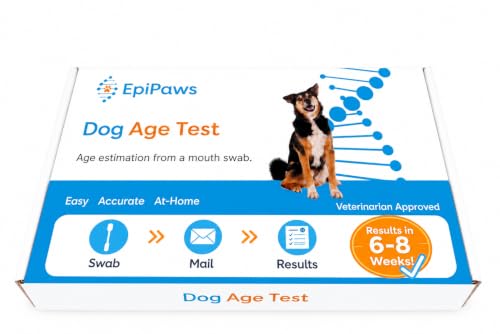
The collection process is minimally invasive, involving a cheek swab instead of a blood draw. EpiPaws states that samples are shipped back using a prepaid mailer. The company describes DNA methylation as the measurable signal, aligning with published research on canine epigenetic clocks. While this research supports the correlation between DNA methylation and age, it does not independently verify the performance of this specific consumer product. There are no disclosures regarding environmental impact, recycling instructions, claims of reduced packaging, or third-party sustainability certifications. The mail-in process requires a kit, return packaging, and postal transportation. No FDA safety alerts, recalls, or FTC enforcement actions related to EpiPaws were found in publicly available records. According to EpiPaws' privacy policy, personal information is not sold, and they allow for account deletion requests. The policy outlines general security measures—administrative, technical, and physical—but does not specify detailed procedures for data retention, research consent, or the deletion of genetic data.
This product is suitable for owners, foster families, rescue organizations, or shelters with an adult dog whose exact date of birth is unknown. It provides a noninvasive method to estimate the dog’s age, which can be helpful when discussing health, nutrition, or adoption history with a veterinarian. This estimate is most useful for organizing routine preventive care and planning, rather than serving as a confirmed birth date or diagnosis. Users should treat the results as an approximation, not as a definitive age or a substitute for a veterinary examination.
This service is not appropriate for owners looking to determine breed ancestry, parentage, inherited disease variants, medication sensitivities, or for diagnostic health screening. It is also not suitable when an exact date of birth is necessary for registration, insurance, breeding, or legal purposes. Dogs under one year of age are generally not included in the catalog's eligibility criteria. Households making decisions related to treatment, diet, supplements, or end-of-life care should consult a veterinarian and utilize proper clinical testing instead of relying on age estimates or biological health interpretations.
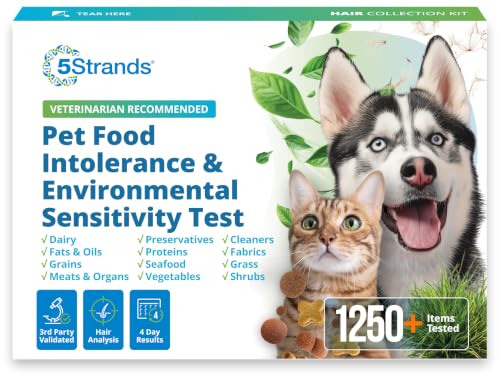
The primary health concern centers around the test's mechanism. The manufacturer states that the product employs bioresonance testing of hair samples and claims to detect "energetic disruption" responses to ingredients. They also recommend removing certain high-ranking ingredients from the pet's diet for a period of 6 to 8 weeks. However, existing scientific studies on similar direct-to-consumer allergy tests using canine hair and saliva samples have shown no consistent ability to reliably distinguish between allergic, healthy, fake-fur, or saline samples, and these tests often lack repeatability. The company acknowledges that the test provides informational insights, but its dietary recommendations should be interpreted within a veterinary context. ([5strands.com](https://www.5strands.com/products/freeze-dried-pet-food-intolerance-test?utm_source=openai)) Regarding privacy, 5Strands states that pet hair samples are discarded after 60 days. Their general privacy policy allows users to request deletion of their account information, but some data may be retained for legal, research, development, or business purposes. The policy also indicates that data may be shared with service providers and other parties under specified conditions. No details about packaging materials, recycling instructions, or environmental certifications were found, leaving the environmental impact of the kit, including single-use sample packaging and return mailing materials, unspecified. ([5strands.com](https://www.5strands.com/products/freeze-dried-pet-food-intolerance-test?utm_source=openai))
This product is intended solely for pet owners seeking a non-invasive, manufacturer-provided discussion aid. It is important to understand that it cannot diagnose allergies, intolerances, or diseases. The most responsible approach is to use it for tracking symptoms and diet, then consult a veterinarian with the report. Any dietary changes should be implemented within a properly supervised elimination and re-challenge plan. It may be especially useful for pets that have difficulty with blood draws, but buyers should accept that the method's clinical accuracy remains unproven. ([pubmed.ncbi.nlm.nih.gov](https://pubmed.ncbi.nlm.nih.gov/30819419/?utm_source=openai))
This test is not suitable for pets experiencing facial swelling, difficulty breathing, repeated vomiting, severe diarrhea, weight loss, bloody stools, collapse, or rapidly worsening skin conditions. Such symptoms require immediate veterinary evaluation rather than mail-in screening. Additionally, it is not appropriate for owners looking to determine breed, inherited disease risks, medication sensitivities, official registration status, or a confirmed food allergy diagnosis. For suspected food reactions, current veterinary evidence recommends a veterinarian-supervised elimination diet followed by re-challenge as the standard method. ([pubmed.ncbi.nlm.nih.gov](https://pubmed.ncbi.nlm.nih.gov/22301200/?utm_source=openai))