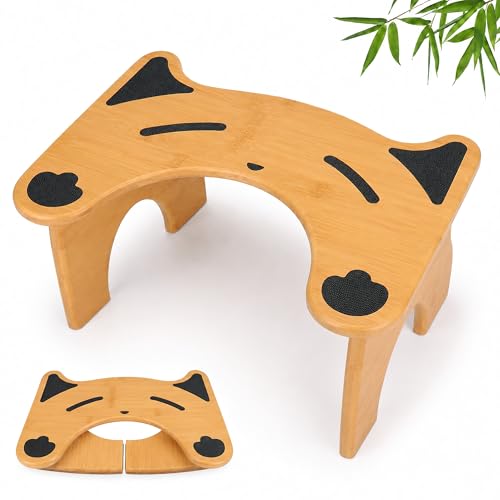
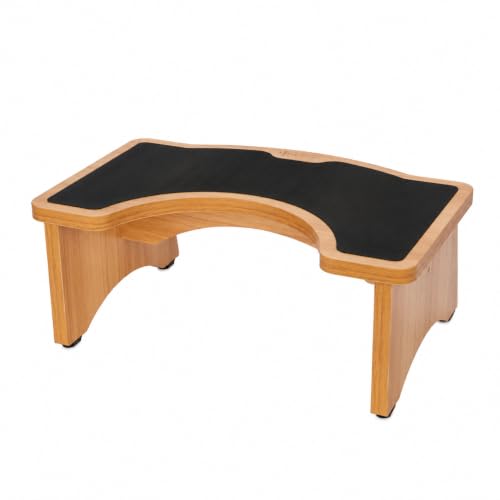
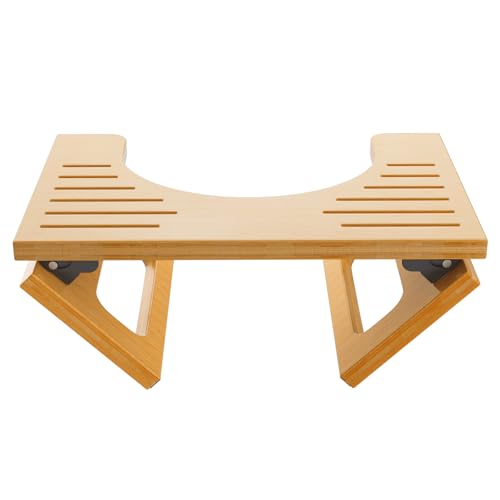
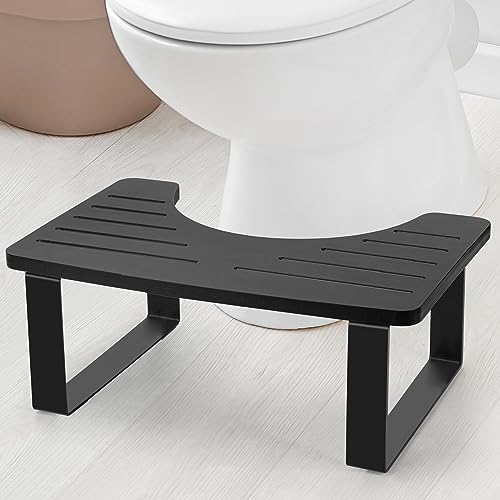
Squatty Potty Bamboo Flip Toilet Stool
Adjustable heights for personalized comfort.
Made from eco-friendly bamboo material.
Enhances bathroom posture effectively.
We compared the top Squatty Potty products so you can quickly spot the strongest options for value, features, and everyday performance.
Adjustable heights for personalized comfort.
Made from eco-friendly bamboo material.
Enhances bathroom posture effectively.
Promotes natural, comfortable posture for easier relief.
Compact design fits neatly around toilet base.
Durable, easy-to-clean plastic construction.
Sturdy design supports up to 350 lbs.
Made of durable, extra-thick wood.
Suitable for kids, adults, and seniors.
Adjustable height to fit different users.
Non-slip design ensures secure footing.
Versatile for both adults and kids.
Dual anti-slip design ensures safety and stability.
Stain, scratch, and crack-proof for durability.
Portable and easy to clean for convenience.
Space-saving, foldable design for easy storage.
Non-slip strip for added stability and safety.
No assembly required, ready to use immediately.
Adjustable height for personalized comfort.
Removable topper for easy cleaning.
Suitable for both adults and kids.
Made from eco-friendly bamboo material.
Supports up to 350 pounds safely.
Sturdy design ensures long-lasting use.
Foldable design for easy storage.
Non-slip pads for safety and stability.
Eco-friendly bamboo construction adds durability.
Adjustable heights for personalized comfort.
Foldable design for easy storage.
Non-slip layer ensures stability and safety.
A toilet footstool elevates both feet while you are seated, creating a more natural positioning for bowel movements. The main purpose is positional: raising the knees increases hip flexion and alters the typical seated defecation posture. While limited scientific evidence supports specific benefits, a randomized study comparing 7-inch and 9-inch footstools found both changed posture, with greater hip flexion at the higher height. However, it did not show improvements in evacuation time, ease, urge, or discomfort for participants with general constipation. A subsequent review described the overall evidence as mixed and inconclusive. Therefore, claims that these stools can treat constipation, hemorrhoids, bloating, inflammation, or guarantee faster or more complete emptying should be viewed with caution.
Fit is the foremost practical concern. Look for clear specifications on platform height, width, depth, internal clearance, and compatibility with toilet height. Fixed stools typically range from about 6.8 to 9 inches, while some adjustable models offer multiple settings. Although 7-inch and 9-inch heights match those studied, neither height is universally ideal. The stool should securely support both feet without forcing uncomfortable angles at the knees, hips, ankles, or during sit-to-stand movements. Load capacity figures can be misleading; only consider those supported by consistent testing. Beware of conflicting or vague weight limits, and verify the overall or in-use height details.
Stability is more critical than maximum weight capacity. A reliable product should undergo specific tests for cracking, collapse, rocking, off-center loads, and tipping—preferably by an ISO/IEC 17025-accredited laboratory. When used as a stepstool, look for testing standards aligned with ANSI/ASC A14.11. Passing a high weight threshold (such as 300, 400, 500, or 550 pounds) does not automatically guarantee safe performance. Check safety recall databases like the CPSC Recalls and SaferProducts.gov for any incident reports, but keep in mind that absence of recalls does not equate to certification of safety.
Bathroom grip features—such as textured surfaces, grooves, rubber feet, and non-slip pads—are practical additions. However, claims of superior slip resistance should specify test conditions: the type of specimen, testing methods, and results, ideally documented through independent testing like an ISO/IEC 17025 report using relevant friction assessment standards (e.g., ASTM E303). Features like folding, adjustable heights, stacking, or removable tops require secure locking mechanisms, pre-use inspection, and warnings about potential pinch points, accidental collapse, wet floors, or uneven surfaces. Fixed one-piece stools avoid some moving parts but still require stable contact with the floor and proper use instructions.
For hygiene considerations, prefer surfaces that are smooth, sealed, and easy to clean, with straightforward care instructions. Material labels such as “bamboo,” “wood,” “plastic,” “BPA-free,” or “recyclable” are generic; they don’t specify finishes, adhesives, resins, dyes, recycled content, or end-of-life options. Responsible sourcing of wood or bamboo can often be verified through FSC certification, and recycled content claims should be backed by appropriate documentation. If marketed for children, review product-specific chemical safety reports—these should detail testing methods and detection limits, especially for lead, phthalates, and other potentially harmful chemicals.
A common safety concern across these products is the lack of independent testing for load capacity, stability, slip resistance on wet surfaces, folding durability, chemical safety, and finish quality. Conflicting capacity ratings, unclear warnings about adjustments or hinges, and incomplete guidance regarding leveled floors, wet environments, supervision, or risk of falls are also recurring issues. These stools are not substitutes for mobility aids such as transfer devices, grab bars, raised toilet seats, shower chairs, or bathroom steps. Individuals with poor balance, weakness, dizziness, neuropathy, recent surgeries, significant arthritis, limited joint mobility, or a history of bathroom falls should avoid relying solely on an unverified footstool without personalized advice. Do not use as a stepping stool for other purposes or to manage persistent constipation, pain, bleeding, or other bowel-related health issues.

These items are positioning accessories, not validated therapies. The scores listed below indicate how effectively each listing addressed the topic and the amount of supporting evidence available; they do not transform unsupported marketing claims into verified facts.
This assesses whether the height, platform, clearance, and adjustment range allow users to securely position both feet for the specific toilet and user. Products with higher scores provided clear dimensions and guidance on toilet height or offered practical options like 7 and 9 inches. In contrast, lower-scoring products lacked proper fit guidance or included conflicting height details. It is important to note that a suitable height in one context does not automatically guarantee a universal fit.
This assesses the resistance to cracking, collapsing, rocking, and tipping over, even when the foot is placed off-center under the specified load. This is important because a toilet footstool is used in a small bathroom space during sitting and standing. Some fixed designs received higher scores; however, none of the products had undergone independent testing for load capacity and stability. Therefore, a high capacity rating alone is not strong evidence of safety or reliability.
This assesses traction based on the standing surface and floor-contact pads under realistic wet bathroom conditions. Features such as grooves, textured tops, and rubber feet that are present tend to improve the score. However, most of the products evaluated did not have documented wet-slip testing. To achieve a high score, products must demonstrate durable, specific results under the specified conditions, rather than relying solely on a "non-slip" label or a photograph of the tread.
This evaluates whether folding, stacking, flip-height, and removable-top components lock securely to prevent pinching or unexpected collapsing hazards. Fixed stools generally perform well because they lack moving parts, reducing associated risks; in contrast, adjustable and folding products require clearer locking instructions and thorough testing. While fold-flat designs offer convenience, convenience alone does not guarantee the durability of hinges or safe engagement.
This assesses whether surfaces are sealed, smooth, accessible, and suitable for regular cleaning without trapping dirt or absorbing moisture. Plastic items with smooth or wipe-clean surfaces typically received higher scores, whereas wood and bamboo products often lacked information on finishing and cleaning. A high score indicates clear care instructions and minimal challenging joints, not just a claim that the product is waterproof.
This assessment evaluates the disclosure and testing of risks associated with plastics, coatings, adhesives, and colorants, including lead and phthalates, particularly when children are involved in marketing. Most of the products provided only general information about their materials and lacked detailed chemical reports for specific products. Higher scores indicate clearer disclosure of material information, whereas claims such as BPA-free, bamboo, or generic plastic do not necessarily confirm complete chemical compliance.
This assesses whether instructions include details about weight capacity, flat and wet-floor safety precautions, assembly or adjustment instructions, supervision requirements, and restrictions for individuals at increased risk of falling. Scores were lower when these warnings were missing or when the product was marketed as a stool for children without clear guidance on safe use for kids. Buyers should not have to guess whether the item is a footrest, step, or mobility device.
This assessment evaluates durable construction, responsible sourcing of wood or bamboo, verified recycled content, replaceable components, and practical disposal information. While bamboo and wood may seem environmentally friendly, the products typically lacked FSC certification, details about finishes, repair instructions, or end-of-life guidance. Similarly, plastic products often did not have verified recycled content. It’s important to note that a material label alone does not provide a comprehensive lifecycle claim.
This assesses whether claims are consistent with human evidence regarding toilet footstools. Higher-scoring examples more carefully describe posture adjustments, while lower-scoring ones make assertions about relieving constipation, reducing strain, speeding up emptying, improving hemorrhoids, or offering health benefits. The provided randomized trial confirms that posture changes are effective at heights of 7 and 9 inches, but it does not guarantee specific bowel results or treatment outcomes.
This assessment evaluates whether key safety, traction, material, and environmental claims are supported by up-to-date, traceable reports from recognized independent organizations. In the provided data set, scores were limited due to the general absence of product-specific ISO/IEC 17025 test reports, accreditation scope verifications, and publicly available certification documentation. Additionally, when a retailer reiterates a manufacturer’s claim regarding capacity or materials, it serves as confirmation of the wording rather than independent validation of actual performance.
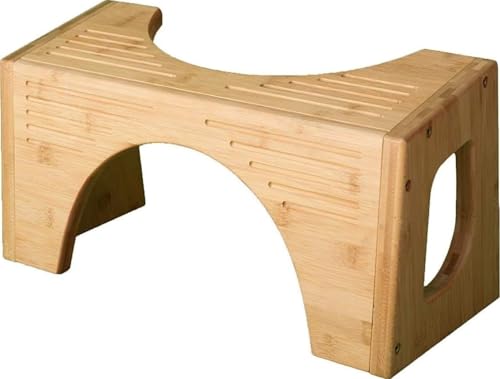
The confirmed health benefits are limited. A 2023 randomized trial involving patients with constipation tested both 7-inch and 9-inch footstools. While higher stools gradually altered posture, neither height resulted in improved balloon-expulsion times or better self-rated ease, urgency, or discomfort during the simulated test. Additionally, a 2025 scoping review concluded that the existing literature on posture and health has significant methodological limitations and does not allow for definitive health conclusions. The manufacturer describes this product as made from natural bamboo, which may be a renewable resource. However, it does not provide an FSC certification, recycled-content documentation, end-of-life disposal instructions, or transparency about its finish and adhesive materials. There are no recalls specific to this bamboo product. In 2017, Squatty Potty recalled a separate children's plastic step stool after its removable top could detach, leading to falls. While this recall does not involve the current product, it highlights the importance of clear information regarding the capacity and stability of bathroom steps.
This product is suitable for an adult household seeking foot support designed for a standard seated toilet. It is recommended to first measure the toilet seat height. The 7-inch option is suitable for toilets with a height of 14 to 16 inches, while the 9-inch option is intended for comfort-height toilets measuring 16.5 to 18 inches. It is ideal for users looking to change their posture and who can safely step onto and off a small, raised platform on a dry, level bathroom floor. The manufacturer’s specified weight capacity should be considered as 250 pounds.
This product is not suitable for individuals who require independently verified stability of a step stool, traction on wet surfaces, or a clearly certified weight capacity. People with poor balance, severe weakness in their lower limbs, significant hip or knee limitations, dizziness, or a high risk of falling should avoid using a footstool unless guided by personalized clinical advice and a secure bathroom environment. Additionally, it is not appropriate for those looking for a medically approved treatment for constipation or pelvic-floor issues. Current randomized studies do not support the effectiveness of 7-inch or 9-inch footstools for these conditions.
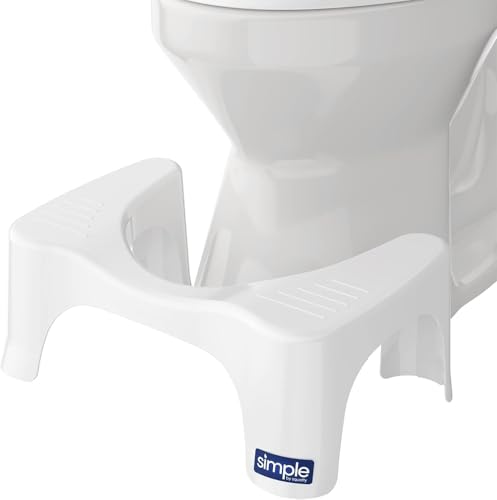
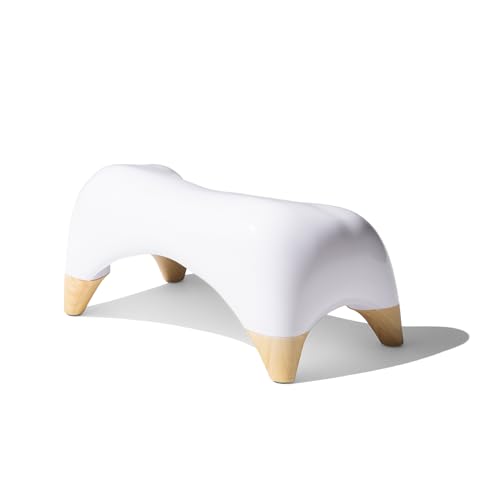
The health benefits of this product are limited. A 7-inch footstool can change the posture when seated on the toilet, which aligns with the product’s intended function. However, the most relevant randomized studies show no improvement in both subjective and objective measures of simulated bowel movements for users with unspecified constipation, whether using a 7-inch or 9-inch stool. The broader evidence regarding toilet posture remains inconclusive and limited by small sample sizes and confounding factors. Therefore, claims that this product improves bowel health should be viewed as marketing rather than scientifically proven. The product is made of plastic, with retail descriptions from Squatty Potty referring to it as being constructed from hard polyurethane plastic. There is no specific chemical testing, recycled-content certification, or guidance on disposal. A federal recall in 2017 involved a different Squatty Potty children's stool that had a removable top, which could detach, but this recall did not involve the fixed Simple Curve model. No recalls specific to this product were identified.
This product is ideal for adults seeking a straightforward, low-profile foot support for a standard seated toilet, allowing them to comfortably elevate both feet by approximately 7 inches. It is best suited for individuals who prefer a fixed, no-assembly design and have sufficient flexibility and balance in their knees, hips, and ankles to reposition their feet while seated. Additionally, its curved shape is designed to fit neatly close to the toilet base, making it suitable for small bathrooms. It should be used primarily as a posture aid rather than a treatment for constipation.
This product is not ideal for individuals requiring a confirmed high weight capacity, a verified non-slip surface, or independently tested step-stool stability. Those with significant fall risk, poor balance, severe knee or hip pain, recent lower-limb surgery, or difficulty lifting their feet should consult a healthcare professional for personalized advice and may need a more supportive bathroom aid. Additionally, it is not suitable for households that need multiple height options, as this model has a fixed height of 7 inches. Do not use it as a solution for constipation or to guarantee complete bowel evacuation.
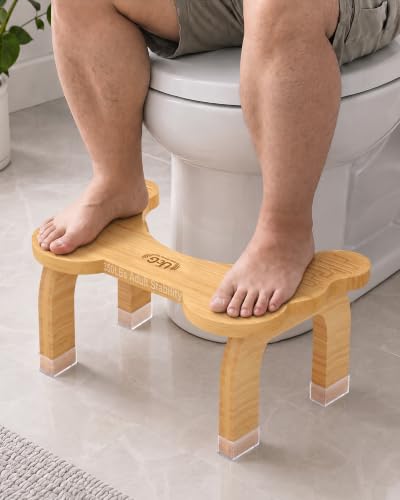
The manufacturer describes this product as Lauan hardwood plywood with rubber on the standing surface and at the points where it contacts the floor. While plywood can be durable, the product page does not specify details about its adhesive, coating, rubber formulation, or whether it has been tested for lead or phthalates, nor does it mention compatibility with cleaning chemicals. This is important because the product is marketed for use by children and in bathrooms. No specific chemical reports, children’s product certificates, or Proposition 65 warning records related to this product were found during the assessment. The manufacturer uses general eco-friendly language but does not provide FSC certification, recycled content certification, or guidance on disposal and end-of-life. Additionally, no relevant CPSC recalls or public safety warnings were identified in the recall search conducted for this assessment. The main concern is the marketing language related to material health rather than an actual material defect. A randomized study indicated that 7-inch and 9-inch footstools affected posture but did not improve outcomes in simulated defecation among patients with constipation, so any broad claims of symptom relief should be approached with caution.
This product is designed for adults or supervised older children who need a straightforward, fixed foot platform for seated toilet use and can comfortably rest both feet on a surface that is 7.2 inches high. It is ideal for households with standard toilets, dry and level bathroom floors, and users who are comfortably under the specified 350-pound weight limit. Its curved design allows it to sit close to the toilet base. Please note, it is a posture support device and not a remedy for constipation or other bowel-related conditions.
This product is not ideal for individuals who require a medically tailored toileting setup, adjustable foot height, transfer assistance, or a proven fall-prevention solution. Those with significant balance issues, dizziness, severe limitations in the knees or hips, recent lower limb surgery, or difficulty stepping onto a low platform should consult a healthcare professional and may need a specifically designed mobility aid instead. Additionally, it should not be used as an unsupervised step stool for children or as a replacement for medical evaluation and treatment of ongoing constipation, rectal problems, or hemorrhoids.
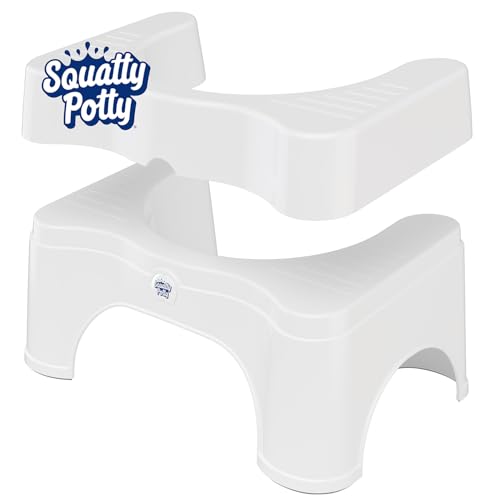
Elevating the feet can alter the sitting position during toileting. A randomized study comparing 7-inch and 9-inch footstools observed changes in posture with increased height but did not find improvements in simulated bowel evacuation or subjective comfort among participants with general constipation. Additionally, a 2025 scoping review suggested potential benefits but highlighted significant methodological limitations that prevent definitive conclusions. Therefore, the product's stronger claims regarding relief from constipation, hemorrhoids, bloating, and straining are not sufficiently supported. The manufacturer states that the product is made from high-density polyethylene (HDPE) and thermoplastic rubber (TPR), and describes the plastic as BPA-free and waterproof. However, there are no available product-specific chemical safety reports, children's product certifications, recycled content certificates, take-back programs, or end-of-life disposal guidance. No recalls or Proposition 65 warnings from California were found in public sources. The product is plastic-based, and its two-piece design may facilitate storage, but there is no verified claim that it uses materials with a lower environmental impact.
This product is ideal for adults looking for a compact foot platform for seated toilet use, especially in situations where a fixed height of 7 or 8.2 inches helps position both feet on a raised surface. It can also be used for potty training, provided there is close adult supervision, a dry and level floor, and a child capable of safely stepping on and off. Buyers should consider the lower 200-pound weight capacity as a conservative guideline, as the product page displays conflicting capacity information.
This product is not appropriate for individuals with a high risk of falling, significant balance issues, or severe limitations in the hips or knees. It is also not suitable for those who require medically prescribed toileting devices. The listing does not include verified information on weight capacity, anti-tip features, or slip resistance on wet floors, nor does it offer clear guidance for such users. Additionally, it is not recommended for households needing a maximum capacity of over 200 pounds. Children should not use this product unsupervised, especially in areas with wet bathroom floors.
The available health evidence supports a limited interpretation. A 7-inch footstool can alter the seated position during defecation, which is relevant since this product is listed at 6.9 inches. However, a randomized study showed no improvement in simulated evacuation or participant-rated outcomes among individuals in a constipation clinic. Additionally, a 2025 scoping review found only limited and mixed evidence across various studies on toilet posture. Therefore, claims that this product can alleviate hemorrhoids, constipation, bloating, or improve colon health should not be regarded as confirmed benefits. The product's primary material is bamboo, supplemented with metal components and a black-coated finish. However, there is no documentation confirming responsible sourcing of the bamboo or low chemical emissions. No FSC certification, recycled-content verification, chemical analysis specific to this product, finish disclosures, or accredited safety testing reports were found. While no CPSC recall notices or public incident reports regarding this product were identified in the sources reviewed, this does not equate to independent safety verification.
This product is ideal for adults seeking a compact, fixed-height foot platform for seated toilet use, who have good balance and can comfortably rest both feet on a surface measuring 17 by 10.6 inches. It is most suitable for individuals aiming to improve hip and trunk posture rather than those seeking relief from constipation or hemorrhoids. With a height of 6.9 inches, it is convenient for users who do not require an adjustable platform and can safely step onto and off a low stool.
This product is not ideal for individuals with impaired balance, recent lower limb surgery, severe arthritis, neuropathy, dizziness, or a higher risk of falling. There is no independent evidence supporting its claimed high load capacity, wet traction, or off-center stability—factors that are important for those who rely heavily on their feet for support. Additionally, it may not be suitable for households that require adjustable height, detailed child-specific safety documentation, or a fully disclosed, easily disinfected waterproof design.
The strongest available evidence for health benefits pertains to posture rather than treatment. A randomized study from 2023 found that using 7-inch and 9-inch footstools significantly changed posture, but neither device improved balloon-expulsion time nor participant-rated ease in individuals with undifferentiated constipation. Additionally, a scoping review conducted in 2025 identified some potential digestive benefits associated with squatting-related postures but also highlighted the limitations of small sample sizes, inconsistent results, and the need for more comprehensive long-term studies. Consequently, the product’s broad claims of symptom relief are not sufficiently supported or qualified. The manufacturer describes the product as being made from solid bamboo with a moisture-resistant finish. AmazerBath claims that the bamboo is FSC-certified; however, no corresponding certification or chain-of-custody documentation could be found through the FSC public database for this product or seller, leaving the environmental claim unverified. There are no available product-specific chemical testing reports, finish disclosures, accredited safety certifications, or public CPSC recalls related to this product. It's important to note that bamboo alone does not guarantee low-impact sourcing, safety of the finish, or recyclability at the end of its life.
This product is ideal for an adult seeking a stable 7-inch high foot platform designed for standard-height toilets within the manufacturer's specified range of 14 to 16 inches. It measures approximately 16.4 by 10.9 inches, making it suitable for bathrooms with sufficient space. It is best suited for individuals who can securely position both feet, check the unfolded legs before use, and operate the platform on a dry, level surface. The foldable design is convenient for situations where the stool needs to be moved out of the way between uses.
This product is not suitable for individuals with significant balance issues, limited leg strength, dizziness, recent lower-limb surgery, or a high risk of falling—particularly without professional guidance or nearby assistance. It lacks verified safety testing for wet conditions or stability, and its folding mechanism introduces potential inspection and pinching hazards. Additionally, it is not appropriate for those requiring clinically approved treatment for constipation, hemorrhoids, or other bowel-related conditions. If you experience persistent, painful, or worsening symptoms, please consult a healthcare professional for an evaluation.
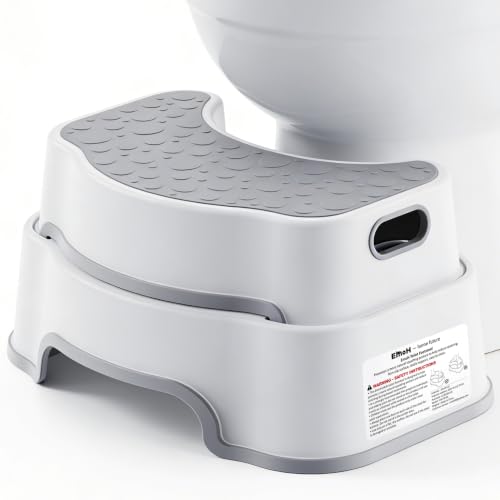
The verified human evidence supports a limited claim. A randomized study tested 7-inch and 9-inch footstools, showing that both heights altered the spine-to-femur angle, with the taller height producing a greater change. However, there was no improvement in balloon-expulsion time or in participants’ reports of ease, urge, or discomfort among individuals with unspecified constipation. This supports the idea that posture change is plausible, but claims of reliably reducing strain, accelerating elimination, or treating constipation require further evidence and qualification. The manufacturer describes the product as made of plastic, but specific details about the resin type, colorants, additives, percentage of recycled content, and chemical testing reports were not found. The retailer referred to the material as recycled, but did not provide any recognized certification for recycled content. A 2017 CPSC recall involved a different Squatty Potty children’s stool with a removable top that could detach and cause falls; this product is not the same. Nonetheless, since this product’s removable topper lacks publicly available retention testing, users should handle it carefully and inspect it regularly.
This product is designed for an ambulatory adult or older child who needs a compact foot platform for seated toilet use and can comfortably position both feet on it. It is especially useful in shared bathrooms where users have varying toilet heights or preferences, as the manufacturer provides two height settings: 7 inches for lower, standard toilets and 9 inches for taller toilets. The user should be able to lift, place, and remove the topper independently, without using it as a handhold or transfer aid.
This product is not a replacement for a bathroom safety step, transfer bench, grab bar, or medically recommended mobility aid. Individuals weighing over 250 pounds should avoid using it, as this is the minimum weight limit specified by the manufacturer’s conflicting capacity claims. Those with poor balance, recent falls, severe leg weakness, limited hand strength, or who require significant pushing through their feet during transfers should select a device with well-documented stability and proper clinical guidance. Additionally, it should not be used as a treatment for constipation or pelvic-floor disorders.
The product is described as made from bamboo, which can be a durable material suitable for a low bathroom footstool. However, the listing does not specify the source of the bamboo, nor does it provide information about adhesives, coatings, or finishes used. Additionally, there is no FSC certification, recycled-content certification, or guidance on end-of-life disposal. Therefore, bamboo should not be assumed to indicate responsible sourcing or low environmental impact. No product-specific recalls, public incident reports, Proposition 65 warnings, or regulatory actions were identified in the searches conducted. However, this does not constitute independent safety verification. No certified laboratory reports were found regarding the product’s load capacity, wet traction, finish chemistry, or resistance to cleaning. The available health evidence suggests that using a footstool of similar height can alter hip and trunk posture, but the limited randomized trial does not substantiate the claim that an 8-inch stool alleviates constipation.
This product is ideal for an adult seeking a compact, fixed 8-inch foot platform for seated toilet use, with sufficient clear floor space in front of the toilet for a 16 by 9-inch stool. It is best suited for individuals who can independently step onto and off a low stool, ensure all assembly hardware is securely tightened, and understand that this posture adjustment is not a proven method for treating constipation. Although the product is rated for a 350-pound weight limit, this has not been independently verified.
This product is not suitable for individuals with poor balance, significant mobility restrictions, neuropathy, recent lower limb surgery, or a history of bathroom falls, particularly on wet tile surfaces. Its fixed 8-inch height cannot be adjusted for shorter or taller users, nor does it accommodate toilets with unusual shapes. Additionally, it is not appropriate for buyers who require certified wet-slip testing, independently verified weight capacity, fully disclosed coatings and adhesives, or specific cleaning guidelines. Those seeking treatment for chronic constipation should not depend on this product’s marketing claims.
The product is described as made from bamboo, featuring rubberized pads on both the standing surface and the bottom. While bamboo is considered a renewable resource, the product page does not provide any FSC chain-of-custody certification, recycled content documentation, finish details, plans for replaceable parts, or end-of-life disposal instructions. Consequently, its environmental benefits are limited to the material claim itself, without verified sourcing or lifecycle performance data. Regarding health claims, the main issue concerns their scope. A randomized trial from 2023 found that 7-inch and 9-inch footstools can alter posture but did not demonstrate improvements in simulated evacuation or participant-reported outcomes within an undifferentiated constipation group. An subsequent review of existing evidence indicated that the broader posture research is too limited to draw definitive conclusions. Therefore, the bowel health benefits advertised should be regarded as marketing claims rather than proven treatment effects. No independent laboratory reports or safety certifications specific to the product are available on the product page.
This product is ideal for adults seeking a compact, fixed-height foot platform for seated toilet use. It is suitable for individuals with sufficient balance and lower-limb mobility to safely position and remove both feet. Additionally, it appeals to those who value a fold-away bathroom accessory. The specified 7-inch height is significant, as research has shown this elevation can positively influence posture. It is most suitable in situations where the user can ensure the platform fits comfortably in front of their toilet and that both feet can sit fully and securely on the standing surface.
This product is not a replacement for clinical evaluation or treatment of constipation, pelvic-floor issues, pain, bleeding, or ongoing bowel changes. Individuals with impaired balance, recent lower limb surgery, severe arthritis, neuropathy, dizziness, or a history of falls should exercise caution when using a foot platform and consult with a healthcare professional for personalized guidance. Additionally, it is not suitable for buyers who require verified high-load capacity, tested traction for wet floors, comprehensive chemical information, or explicit instructions for folding and safety. The product is intended for adult use only and is not designed as a child safety step.
The verified health benefits are less extensive than the marketing claims. A randomized study involving 7-inch and 9-inch footstools showed that elevating the feet gradually altered the angle between the spine and femur. However, it did not demonstrate improvements in faster simulated bowel movements or in ease, urgency, or discomfort ratings among adults with unspecified constipation. Therefore, while the product can be reasonably described as providing posture support, it should not be promoted as a solution for constipation, bloating, inflammation, or straining. Although the product is marketed as made from natural bamboo, the manufacturer does not disclose details about finishing processes, adhesives, coatings, or colorants used. There is no available chemical analysis specific to this product, FSC chain-of-custody certification, recycled content information, or end-of-life disposal guidance. While bamboo can be durable with proper care, the manufacturer's instructions to dry, ventilate, and oil the item suggest that managing bathroom humidity is important. Additionally, a 2026 CPSC recall involved KingPavonini adult bed rails unrelated to this toilet stool.
This product is ideal for adults seeking a compact foot platform for seated toilet use and who have sufficient bathroom space for a stool approximately 17 by 10 inches. Its 7-inch height setting is designed to fit most standard-height toilets, while the 9-inch setting provides an alternative for taller toilets. It is best suited for a stable user who can carefully position both feet, ensure the stool is fully assembled before each use, and keep the bamboo surface dry after splashes. The folding design also makes it convenient for bathrooms where the stool needs to be stored away between uses.
This product is not a replacement for a medically supervised assessment or treatment plan for constipation. Its claims related to overall bowel health are not fully supported by available randomized studies for the 7-inch and 9-inch footstools. Individuals with poor balance, significant weakness, neuropathy, dizziness, recent lower limb surgery, or a high fall risk should not consider a low stool safe without consulting a healthcare professional. Additionally, it may not be suitable for households requiring independently tested slip-resistant performance, verified hinge-lock safety, or confirmed support capacity of 400 pounds. Young children should not use it without supervision.