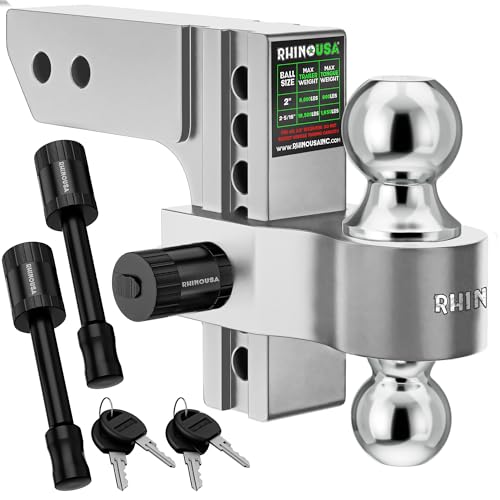
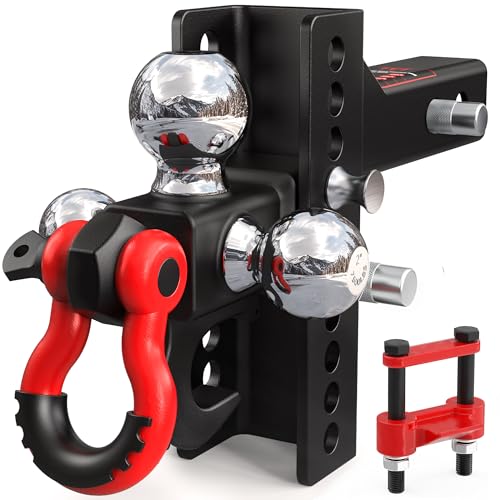
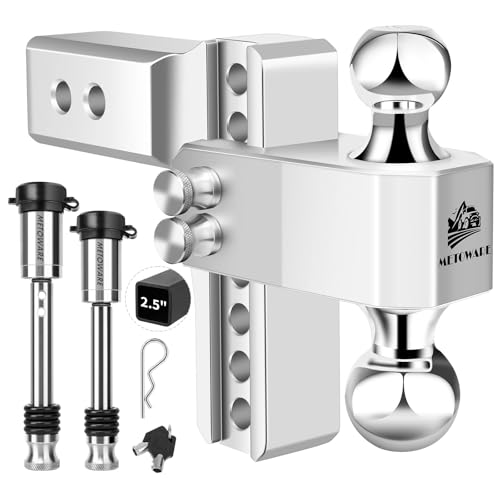
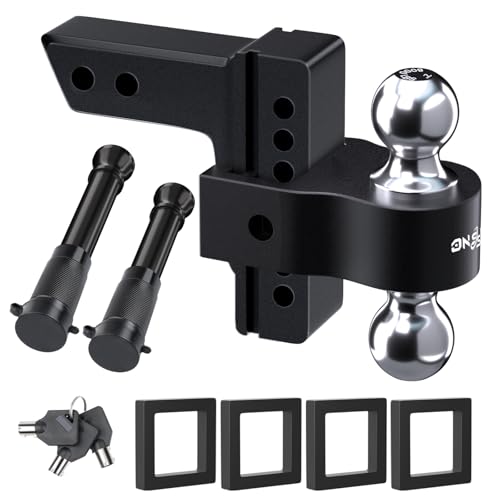
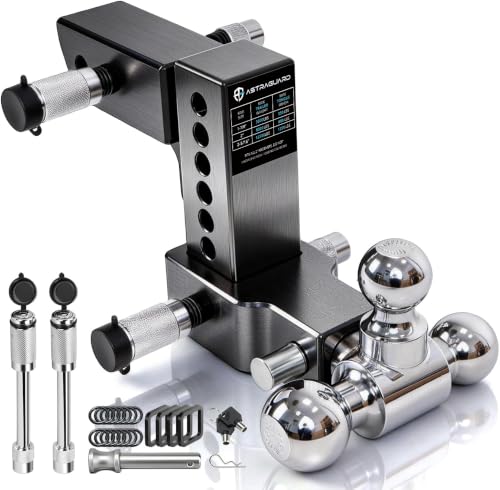
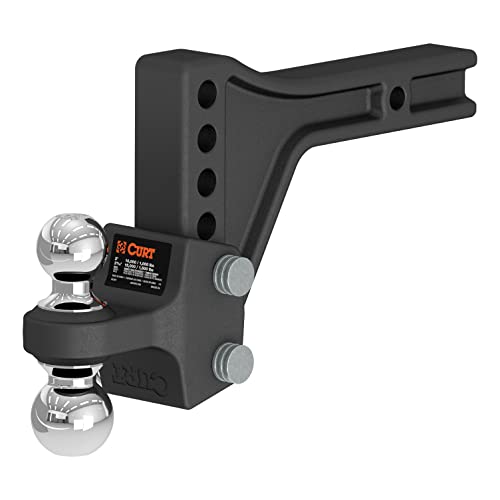
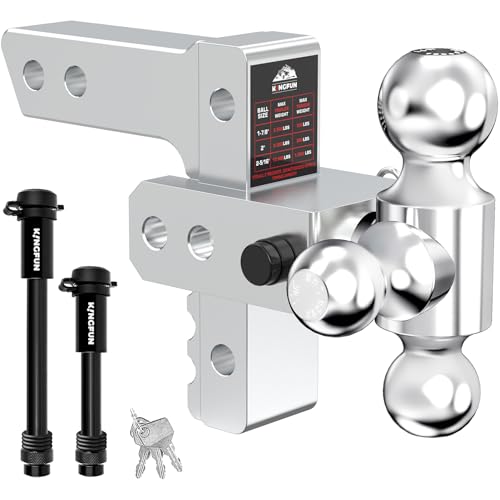
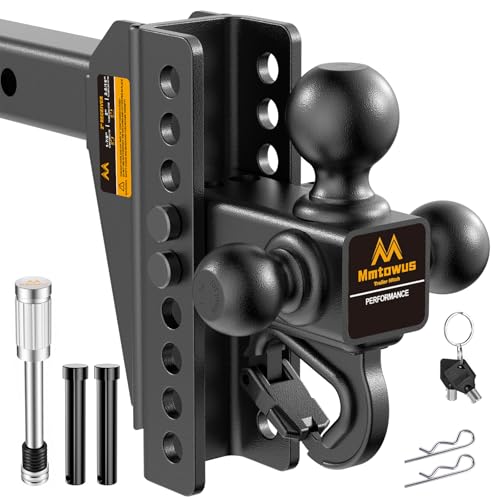
Rhino USA Adjustable Trailer Hitch Silver
Durable aluminum construction ensures long-lasting use.
Offers versatile 6-inch drop/rise adjustment.
Includes weatherproof anti-theft locking pin.
We compared the top Adjustable Hitch products so you can quickly spot the strongest options for value, features, and everyday performance.
Durable aluminum construction ensures long-lasting use.
Offers versatile 6-inch drop/rise adjustment.
Includes weatherproof anti-theft locking pin.
Durable aluminum construction ensures long-lasting use.
Dual ball mount offers versatile towing options.
Includes hitch locks for added security.
Strong aluminum build ensures long-lasting durability.
Double locks provide enhanced security and stability.
Adjustable design offers versatile towing height options.
Durable aluminum build ensures long-lasting use.
Weatherproof design protects against harsh conditions.
Anti-theft features provide added security.
Versatile fitting for multiple towing needs.
High weight capacity for heavy-duty towing.
Adjustable drop/rise for various vehicle heights.
Dual ball design accommodates various trailer sizes.
High weight capacity for heavy-duty towing.
Adjustable height for versatile towing needs.
Versatile with three ball sizes for towing.
Durable aluminum construction ensures long-lasting use.
Anti-theft pin enhances security and safety.
Durable aluminum construction resists rust and corrosion.
Double locks provide enhanced security and stability.
Easy height adjustment for versatile towing needs.
Durable aluminum construction ensures long-lasting performance.
Adjustable design offers versatile towing options.
Double locks provide enhanced security and stability.
Durable aluminum build ensures long-lasting use.
Versatile with adjustable 6-inch drop/rise.
Includes anti-theft pins for added security.
An adjustable hitch allows you to modify the height and, in certain designs, the ball size used to connect a trailer to a vehicle. Its primary function is to keep the loaded trailer level while ensuring proper alignment of the trailer coupler, ball, receiver, safety chains, and vehicle. Some models feature a dual-ball head compatible with 2-inch and 2-5/16-inch couplers; others may also include a 1-7/8-inch ball. Since receiver sizes vary, a hitch designed for a 2-inch receiver won't fit a 2.5-inch or 3-inch receiver.
The towing capacity is not determined solely by the highest number listed on the product. Instead, it depends on the lowest rating among various components and conditions, including the tow vehicle, receiver label, selected ball, coupler, trailer GVWR, tongue weight, safety chains, tires, brakes, and weight-distribution equipment. The gross trailer weight rating does not define the maximum tongue weight. Additionally, ball ratings are crucial: a smaller ball may have a lower weight limit than a larger one, even on the same hitch mount. Therefore, ratings such as 12,500, 18,000, or 20,000 pounds should be considered conditional until the entire setup, including the exact adjustment position, is verified.
Height adjustability is equally critical. Measure the vehicle's receiver height and the trailer's coupler height with the trailer loaded as it will be during towing. Choose a hitch position (rise or drop) that maintains a level trailer without sacrificing ground clearance or causing interference with bumpers, trailer, or equipment. Most adjustable hitches offer a range of about four to six inches, typically in one-inch increments. However, this range does not make a hitch suitable for all towing situations, nor does it correct issues like sway, improper loading, inadequate braking, or incompatible receiver ratings.
For quality assurance, look for products showcasing robust capacity ratings, manufacturer markings, specific part or model numbers, clear installation instructions, positive retention hardware, and pre-tow check procedures. The best evidence includes instructions on leveling, pin and clip engagement, adherence to the lowest-rated component rule, and inspections for cracks, corrosion, wear, or damage. Features like replaceable balls, pins, shanks, bumpers, and locks improve serviceability compared to models with no spare parts or repair support.
Always verify certification claims against the exact product and part number. Independent verification of standards such as AMECA VESC V-5 or SAE trailer-hitch listings—matching manufacturer markings, class, and capacity—is crucial. Terms like “tested,” “certified,” or “heavy-duty” from sellers are not sufficient without supporting documentation. SAE J684 is particularly relevant, especially when reviews mention load capacities around 10,000 pounds; higher-rated models require detailed, model-specific test reports including part number, load conditions, setup, testing methods, and results, rather than general standard references.
Common issues found in reviews include incomplete information on tongue weight and weight distribution, lack of model-specific static or fatigue testing data, and absence of independent VESC V-5 or SAE certification. Many products also lack guidance on inspection intervals, wear limits, retirement criteria, or support for replacement parts. Avoid using any hitch where the load capacity, tongue weight, receiver fit, ball size, adjustment range, or weight-distribution compatibility are uncertain. Conflicting capacity claims—especially those above 10,000 pounds—should be regarded as unresolved until verified by reliable documentation, with the lowest stated limit serving as the controlling figure.

For adjustable hitches, health and environmental considerations are closely linked to mechanical reliability, transparency of materials, lifespan, and the robustness of safety evidence. The scores provided serve as comparative indicators based on the reviewed documentation but do not guarantee that any specific product is safe for use with a particular vehicle or trailer.
This assesses whether the trailer weight and tongue weight limits, receiver size, ball size, adjustment range, and weight-distribution constraints are clearly specified and compatible with the entire towing system. A product with a high score provides buyers with clear, concrete limits to verify. The highest score awarded was 86, whereas lower-scoring products often lacked clear tongue weight limits or presented conflicting capacity information.
This assessment evaluates whether the receiver pin, adjustment pins, clips, locks, and reassembly instructions effectively prevent accidental release and excessive movement. It is important because an adjustable head has more retention points compared to a fixed drawbar. Products that score higher typically feature dedicated locking or retaining hardware and include pre-tow checks. In contrast, lower scores indicate missing instructions, unclear guidance on replacements, or unresolved hardware details.
This assesses protection against corrosion, cracking, deformation, worn pin holes, ball wear, and receiver wear, as well as providing inspection and replacement guidelines. A high score reflects both the specified material or finish and practical care instructions, along with defined damage thresholds. Scores tend to be higher for products that have documented cleaning, inspection, and replacement procedures, while they are lower when coatings and retirement criteria are not specified.
This measure evaluates whether the range of height adjustments and instructions can achieve a level trailer without risking unsafe clearance or interference. It is important because an adjustable hitch is only effective if the loaded setup, as measured, fits within its available adjustment positions. Higher-scoring products provide guidance on how to measure the height and choose the appropriate hole; lower-scoring products simply specify a range without explaining how to maintain adequate clearance or verify the correct position.
This measure evaluates whether relevant coating or material hazards and legally compliant warnings are properly identified, without considering warnings as evidence of unsafe usage. It is particularly important when buyers deal with plated, painted, powder-coated, or anodized towing equipment. Products receive higher scores when no specific disclosure gaps are found, whereas lower scores are given when warnings are generic Proposition 65 statements or fail to specify the chemical or exposure pathway.
This assesses whether the hitch can remain safely functional over time by evaluating factors such as the use of durable materials, resistance to corrosion, replaceable balls, pins, locks, shanks, or bumpers, and availability of repair support. A high score signifies that there are documented methods for maintaining or repairing the product instead of needing to replace the entire assembly. The highest score achieved was 83, which was supported by documented replacement parts. Lower scores were characterized by the absence of parts catalogs or guidance on retirement.
This assessment evaluates model-specific evidence demonstrating that the shank, channel, platform, pins, and balls can withstand specified static and cyclic loads. It is important because a capacity label alone does not indicate fatigue performance. Generally, higher scores in this category corresponded to more comprehensive product documentation. However, none of the products provided a dedicated model-specific laboratory report. Lower scores were particularly linked to unsupported claims of high capacity.
This criterion assesses whether the specific product and part number possess an up-to-date, verifiable independent certification or listing, with consistent markings, manufacturer information, classification, and ratings. It distinguishes between official registry records and claims made by sellers. Overall scores were usually low because the products evaluated were not listed in the latest AMECA VESC V-5 or SAE trailer-hitch compliance documentation.
This evaluates whether claims regarding capacity, tongue weight, ball size, fit, anti-rattle features, theft deterrence, recovery, and weather resistance are accurate and well-supported. Products with higher scores clearly specify ball-specific and system limits, avoiding vague universal-fit statements. In contrast, lower-scoring products tend to present conflicting headline figures, omit tongue weight details, or imply that adjustments alone can resolve sway or loading issues.
This assesses whether buyers can recognize the manufacturer, specific product details, part number, capacity indicators, safety contacts, warranty, and recall procedures. It is important in the event of a defect or safety issue. Products with higher scores are those that provide identifiable manufacturer information, clear part numbers, registration or support options, and warranty details. Conversely, products with lower scores lack direct contact information, parts support, or a visible registration process.
The key health disclosure involves the manufacturer’s warning under California Proposition 65 regarding di(2-ethylhexyl) phthalate (DEHP). California classifies DEHP as a substance that may cause cancer and pose developmental and male reproductive toxicity. This warning indicates a potential exposure risk, but it does not specify the amount of DEHP released during normal use or quantify personal risk. The manufacturer has not provided any material declaration or exposure data to identify the source or concentration of DEHP in this product. The mount itself is made of aluminum, a highly recyclable metal. Rhino USA offers a lifetime defect warranty with a one-time replacement process, which can help reduce premature disposal due to manufacturing defects. However, the manufacturer does not publish detailed information such as a parts catalog, alloy or coating specifications, or specific criteria for determining end-of-life due to issues like pin-hole wear, ball wear, cracking, or corrosion. Therefore, routine visual inspections and the replacement of damaged components are essential for maintaining safe and reliable use.
This product is ideal for owners of properly rated light trucks or SUVs equipped with a 2-inch receiver. It is designed for those who switch between trailers with 2-inch and 2-5/16-inch couplers, and whose measured coupler height requires approximately 6 inches of rise or drop. It is most suitable in situations where the loaded tongue weight, trailer weight, receiver capacity, vehicle towing limits, and safety chain ratings have all been verified prior to each trip. Additionally, the included locking pins are suitable for owners who frequently remove or adjust the ball mount.
This is not suitable for a 2.5-inch receiver, a trailer requiring more than 6 inches of adjustment, or any setup that necessitates a weight-distribution hitch unless explicitly approved by the vehicle, trailer, and hitch manufacturers. It is also inappropriate for applications where any component has a lower trailer weight or tongue weight limit than what is stated by the product. Users who require independently verified compliance or a published model-specific fatigue test report should not consider the manufacturer's rating as the sole evidence of safety. Additionally, do not use mounts or pins that are worn, cracked, corroded, loose, or deformed.
The manufacturer describes the product as made of aluminum with a powder-coated finish and stainless-steel locking pins. These material choices can help resist common outdoor corrosion; however, the manufacturer has not provided details about the specific alloy, temper, coating chemistry, salt-spray testing, or guidance on managing coating wear and damage. Users should carefully inspect the balls, adjustment holes, pins, locks, receiver shank, and pads before towing, and replace any damaged components rather than relying solely on their appearance. The current AMECA trailer-hitch compliance list does not include this product or its manufacturer. No independent test reports, recall notices, or product-specific chemical exposure information were found in the sources reviewed. The only published service-life guarantee is a two-year warranty. While aluminum is generally durable, there are no available replacement parts catalogs or documented repair procedures for the pins, locks, balls, or pads.
This product is suitable for owners of light-duty trucks equipped with a confirmed 2-inch receiver, especially those who switch between trailers with 2-inch and 2-5/16-inch couplers. The user should have already verified all relevant load ratings within their system. It is ideal when the required hitch height is within its specified 6-inch adjustment range and when the trailer remains level with sufficient ground clearance. Before towing, the user must independently verify the loaded trailer weight, tongue weight, receiver label, vehicle payload, coupler rating, safety chain requirements, and brake specifications.
This product is not suitable for anyone requiring an independently certified, model-specific towing component for commercial use, repeated maximum-load towing, or managing a fleet with safety considerations. It is also not appropriate when the vehicle has a 1-1/4-inch, 2-1/2-inch, or 3-inch receiver, when a weight-distribution system is needed but compatibility has not been verified, or when the safe trailer tongue position falls outside the specified range. Do not use this product if the trailer’s loaded tongue weight cannot be measured and verified, as the product’s listed tongue-weight rating has not been established.
The product is a metal towing component rather than a consumer chemical product. The seller describes it as having an aluminum body with an anodized, corrosion-resistant finish, along with stainless steel locking hardware. These materials can ensure long-term use if the hitch, balls, holes, locks, and receiver contact surfaces are regularly checked for cracks, deformation, corrosion, looseness, and wear. The seller provides a one-year warranty; however, there is no documentation regarding replacement balls, pins, locks, repairs, or specific retirement criteria. No details about the product’s chemical composition, coating specifications, safety data sheet (SDS), or California Proposition 65 warning were found in the listing. This absence does not imply that there is no relevant exposure risk. It is advisable to avoid unnecessary handling of damaged coatings, wash hands after installation or maintenance, and recycle any retired metal parts through proper metal recycling channels. Additionally, no product-specific NHTSA recall or regulatory actions were identified during the verification search.
This product is ideal for owners of light trucks, SUVs, or RVs equipped with a verified 2-inch receiver and requiring up to 4 inches of rise or drop to properly level a standard ball-coupled trailer. Buyers should already know the trailer's coupler ball size and verify all weight limits within their towing setup. It is best suited for situations where the actual loaded trailer weight stays below the specified limit for the chosen ball and where a traditional weight-carrying ball mount is suitable.
This product is not appropriate for individuals who require documented third-party certification for a high-capacity towing setup, or who are unable to verify the installed receiver, vehicle tow rating, trailer coupler rating, tongue weight, and loaded trailer weight. It is also not suitable if more than 4 inches of height adjustment are needed, if a weight-distribution hitch is required for the trailer, or if a 2.5-inch or 3-inch receiver is installed. Commercial operators should independently verify the relevant regulations and equipment specifications.
The primary health concern is not regular skin contact with a finished hitch, but rather the incomplete disclosure of chemical information. Although the product mentions using aluminum, steel, anodizing, and coated components, there is no specific material declaration, safety data sheet, or California exposure warning available. A Proposition 65 warning, if present on packaging or at checkout, indicates an assessment of chemical exposure but does not automatically mean that normal use is unsafe. Aluminum and steel are durable metals that are highly recyclable, and anodized finishes can help prevent corrosion, potentially extending the product's lifespan. However, these features do not guarantee a specific service life. No warranty details, replacement parts catalog, inspection schedule, or retirement guidelines were found. Additionally, I did not find any recalls or regulatory actions related to this product in the sources reviewed. Nonetheless, information regarding manufacturer traceability and public safety documentation remains limited.
This product is ideal for owners of a light truck equipped with a standard 2-inch receiver who regularly switch between trailers with 1-7/8-inch, 2-inch, and 2-5/16-inch couplers, and require a modest 6-inch height adjustment. It is most suitable only after the buyer has confirmed that their vehicle, installed receiver, trailer coupler, trailer weight, tongue weight, chains, and ball rating all support the chosen position. Additionally, it is recommended for owners who are willing to inspect pins, locks, ball surfaces, and adjustment holes before each towing session.
This product is not intended for towing configurations that require a certified tongue-weight rating, weight-distribution approval, independently verified compliance certification, or published fatigue-test data. Do not use it with trailers that exceed the lowest component ratings, even if the 2-5/16-inch ball capacity seems adequate. Additionally, it is not suitable where a rise or drop of 6 inches prevents the loaded trailer from being level while maintaining safe ground clearance. Customers needing replacement locks, pins, balls, or official service instructions should choose a product that offers accessible parts and support programs.
The accessible product information indicates that it is made from alloy steel with a black powder-coated finish. Steel is highly recyclable, and a durable coating can help extend its lifespan if it remains intact. The seller offers a two-year warranty; however, there is no evidence of a replacement ball, pin, lock, or repair parts program. Additionally, there are no specific retirement criteria for issues such as corrosion, cracking, bent components, worn pin holes, or ball wear. Users should regularly inspect these load-bearing parts and replace any damaged hardware promptly. No Proposition 65 warning or chemical disclosure related to the coating was found on the Amazon product page. However, the absence of such information does not confirm that exposure is either safe or hazardous. The brand can be traced to a trademark application associated with Foshan Qianyinzhe Technology Co., Ltd., but independent searches did not find an exact AMECA VESC V-5 listing or a model-specific testing report. Furthermore, no product recalls for this item were identified in the NHTSA database.
This product is designed for owners who already have a properly rated 2-inch receiver and frequently tow multiple conventional trailers equipped with 1-7/8-inch, 2-inch, or 2-5/16-inch couplers. It is most effective when the measured coupler height can be adjusted to level within its specified 6-inch range, and when the lowest point in the entire towing setup is clearly identified. Buyers should be comfortable performing a pre-tow inspection, including checking the receiver pin, adjustment pins, ball engagement, safety chains, and clearance.
This product is not appropriate for individuals requiring independently documented compliance or model-specific fatigue testing for commercial, fleet, high-consequence, or frequently heavy towing applications. It is also not suitable for vehicles with a receiver less than 2 inches, trailers that cannot be leveled within the specified adjustment range, or setups that need a weight-distribution hitch unless explicitly approved by the vehicle and hitch manufacturers. Do not use the 12,500-pound capacity as a limit to override lower ratings for the tow vehicle, receiver, coupler, trailer, tires, or chains.
The primary direct health warning related to this product is a California Proposition 65 notice indicating potential cancer and reproductive harm. This warning is displayed on the product page but does not specify the chemical involved, its concentration, or the exposure route. California clarifies that such warnings are intended as right-to-know disclosures and do not automatically mean the product is unsafe. A 2024 settlement in California regarding Curt-branded products mentions DEHP in the prescribed warning language; however, this does not confirm that the specific ball mount contains or exposes users to DEHP. CURT describes the product as made from carbon steel with a powder-coated finish and chrome-plated balls. Steel is easily recyclable, and its corrosion resistance can extend the product’s lifespan. The manual recommends gentle cleaning to preserve the finish and includes information about warranty and replacement pins. However, it does not provide a detailed material declaration, coating chemistry, repair program, or specific criteria for end-of-life or damage retirement.
This product is ideal for an experienced trailer owner whose tow vehicle is equipped with a properly rated 2-inch receiver and whose trailers utilize 2-inch or 2-5/16-inch couplers. It is especially useful when one vehicle tows trailers with varying coupler sizes or different tongue heights, and when the desired level position falls within the specified 5-1/2-inch drop or 4-1/2-inch rise range. Before each use, the user must verify the weight limits of the vehicle, receiver, trailer, coupler, ball, and tongue, and must also provide a suitable receiver pin and clip.
This product is not intended for towing loads over 10,000 pounds with the 2-inch ball, or exceeding the lowest rating anywhere in the entire towing system, even if larger balls and mounts have higher weight limits. It is also unsuitable if the required trailer height is outside its specified rise and drop range, if ground clearance is inadequate, or if the vehicle uses a receiver other than 2 inches. Buyers requiring independently verified model-specific fatigue testing or third-party certification should request documentation before relying on this product.
There was no product-specific Proposition 65 warning, material declaration, or coating safety data sheet found for this item. While aluminum is not listed as a chemical covered by California Proposition 65, this does not provide information about the overall composition or potential exposure risks of the entire product, which includes pins, locks, coatings, and lubricating O-rings. California offers a general warning guideline for handling motor-vehicle parts, such as washing hands after handling, but it cannot confirm whether users are exposed to any risks from this specific product. The manufacturer states that the main body is made of aluminum with a powder-coated finish and provides a 365-day warranty. Aluminum can be valuable for recycling and its corrosion resistance may contribute to a longer lifespan. However, there is no information available regarding replacement balls, pins, locks, repair procedures, or end-of-life management. No product-specific recalls or regulatory actions were identified in the sources reviewed. Nonetheless, the absence of a visible registration process limits the ability to proactively communicate or initiate recalls if necessary.
This product is ideal for owners of tow vehicles equipped with a properly rated 2-inch receiver, who use standard ball-coupled trailers and have already verified the compatibility of their vehicle, receiver, coupler, safety chains, trailer brakes, payload capacity, and tongue weight. Its tri-ball configuration is practical for household or work use, especially for those who frequently switch between small utility trailers, boats, or cargo trailers with the three specified coupler sizes. The 6-inch adjustment range is useful in situations where the measured coupler height requires either raising or lowering the trailer.
This product is not appropriate for towing setups that rely solely on the advertised 12,500-pound capacity without independently verifying the tongue weight and all lower-rated components of the system. It is also not suitable in cases where the vehicle manual prohibits towing, restricts the use of adjustable ball mounts, mandates the use of a weight-distribution system, or features a receiver with insufficient capacity. Customers requiring documented fatigue testing, up-to-date independent compliance certification, replacement parts, or comprehensive corrosion inspection guidance should seek products with more traceable support.
The product is not intended for food contact, skin contact, or respiratory use. Its primary safety considerations include towing capacity, proper fit, secure retention, resistance to corrosion, and regular inspections. The listing states that the product is made from aluminum with an anodized finish, and features stainless steel locks and weather covers. While these materials may enhance corrosion resistance, the manufacturer does not specify any wear limits, recommended inspection intervals, or criteria for retiring worn components such as pin holes, balls, or contact surfaces. On Amazon, the product is marked with a Recycled Claim Standard Blended certification, with Anode listed as the certifying body. This suggests a claim of recycled content, but no independent public record links this certification directly to this specific ball mount. Although aluminum is generally recyclable, the manufacturer has not provided information about a replacement parts or repair program for this product. No specific Proposition 65 warnings, NHTSA recall notices, or regulatory actions were found during the search. The ongoing discrepancy regarding the towing capacity remains the primary safety communication issue.
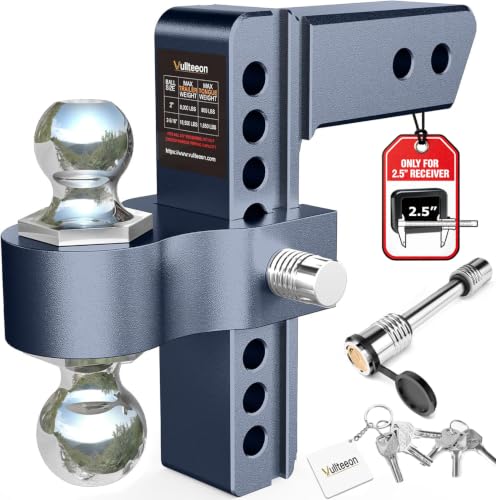
This product is designed for owners of well-equipped heavy-duty trucks with a 2.5-inch receiver who need to switch between 2-inch and 2-5/16-inch couplers. The owner should have measured that a maximum rise or drop of 6 inches is sufficient to level the trailer. Users should verify all towing limits from the tow vehicle, receiver label, trailer, coupler, safety chains, and ball mount. It is more suitable for those who accept the conflicting capacity figures listed as unresolved, rather than relying on the higher capacity claims.
This product is not suitable for anyone towing loads close to 18,000 pounds, as the product page specifically lists an 8,000-pound maximum towing capacity and does not specify a tongue-weight limit. It is also not recommended for applications requiring a weight-distribution hitch, trailers needing more than 6 inches of correction, or trucks equipped with a 2-inch or 3-inch receiver. Customers seeking independently verified safety certifications, published testing data, or formal maintenance and replacement support should choose a product that provides these records.
The product is primarily a machined aluminum towing part equipped with stainless steel locking hardware, as described by the manufacturer and confirmed through third-party listings. Both aluminum and steel are commonly recyclable metals, and their corrosion resistance can help extend the product’s lifespan if it is regularly cleaned and inspected. The catalog states a one-year manufacturer warranty; however, there is no available information on replacement balls, pins, locks, or repair programs. During the review, no specific material declaration, coating details, safety data sheet, or California chemical exposure warning were identified. This represents a disclosure gap but does not indicate the presence of hazardous substances. Additionally, no recalls or regulatory actions relevant to this product were found in available records. Due to the lack of model-specific testing documentation, users should carefully inspect the balls, adjustment holes, pins, locks, and receiver contact surfaces prior to towing. The product should be removed from service if signs of cracking, deformation, severe corrosion, or excessive wear are observed.
This product is ideal for truck, SUV, or RV owners who already have a properly rated 2-inch receiver and frequently switch between trailers with 2-inch and 2-5/16-inch couplers, requiring up to 6 inches of height adjustment. It is best used when the actual loaded trailer weight, tongue weight, receiver label, vehicle towing capacity, coupler rating, safety chains, and ball-specific limits have all been verified. The maximum load capacity of 12,500 lbs for the larger ball reflects the limit specified in available manufacturer specifications.
This product is not suitable for individuals who require a documented 14,000 lb ball-mount system rating, a specified tongue weight limit, compatibility with weight-distribution systems, or independently verified fatigue testing. Do not use it for a trailer with a loaded weight exceeding the rated ball capacity, if the tongue weight is unknown, or if the coupler does not precisely match the chosen ball. Additionally, it does not address tow vehicle payload, receiver capacity, tires, brake controllers, trailer brakes, or clearance requirements. Customers seeking official compliance documentation or replacement parts should choose a product that provides such records.
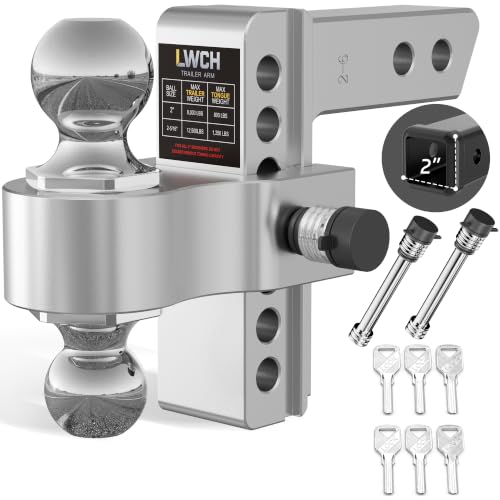
The product is described as an aluminum hitch body equipped with chrome-plated steel balls. While these materials can provide a durable, recyclable construction, LWCH has not disclosed the alloy type, recycled content, plating details, safety data sheet, or a catalog of replacement parts on the reviewed page. The package includes two locks and six keys, but there is no information about sources for replacement locks, pins, balls, or any specified warranty period. This lack of information raises concerns regarding repairability and long-term durability. There is no California Proposition 65 warning present in the reviewed marketplace content. However, the absence of such a warning does not guarantee the product is free from chemical exposure, as no detailed information about coatings or materials has been provided. Additionally, there are no records of NHTSA recall actions, enforcement actions, or independent listings such as AMECA V-5 or SAE hitch certifications related to this product in public records. Before towing, thoroughly inspect the balls, locking pins, adjustment holes, and contact surfaces of the receiver for signs of corrosion, cracking, distortion, or wear.
This product is ideal for owners of light trucks or SUVs equipped with a confirmed 2-inch receiver, who need to switch between trailers with 2-inch and 2-5/16-inch couplers. It is most suitable when the vehicle, receiver, trailer, coupler, safety chains, and ball are all independently confirmed to handle the intended load weight. The seven-position design allows for a minor 6-inch adjustment, helping to level the trailer while maintaining sufficient ground clearance for safe driving.
This product is not suitable for users who are unable to verify tongue weight, receiver capacity, coupler capacity, and loaded trailer weight prior to each towing setup. It is also not ideal for weight-distribution applications unless LWCH or the vehicle manufacturer explicitly confirms compatibility. Customers planning regular towing close to 12,500 lbs, commercial operations, heavy off-road use, or extended exposure to road salt require documented test results, clear inspection guidelines, and readily available replacement options — features that this listing does not provide.