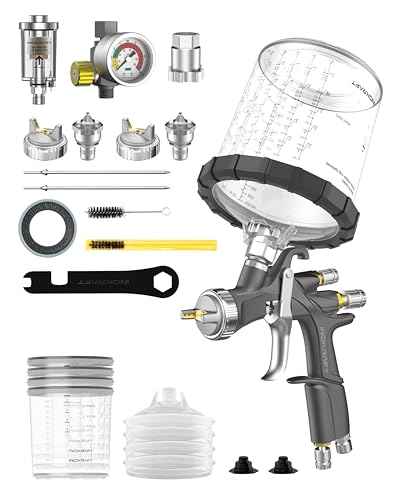
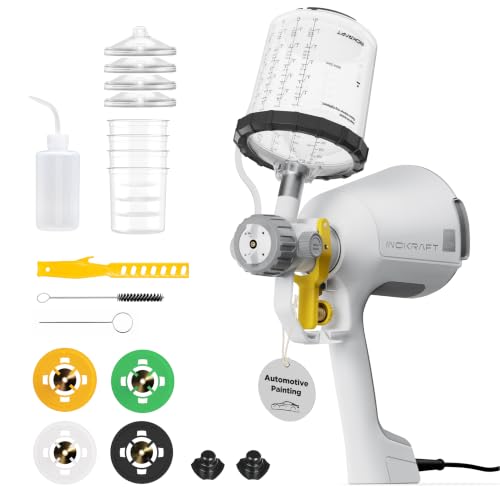
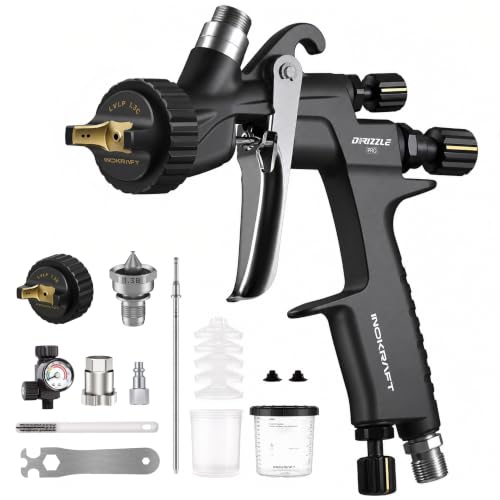
InoKraft D1 LVLP Spray Gun Kit
Easy-to-clean 22-ounce disposable paint cups.
Low volume, low pressure for efficient spraying.
Lightweight design for comfortable extended use.
We compared the top Automotive Paint Guns products so you can quickly spot the strongest options for value, features, and everyday performance.
Easy-to-clean 22-ounce disposable paint cups.
Low volume, low pressure for efficient spraying.
Lightweight design for comfortable extended use.
Lightweight design enhances user comfort and control.
Precise low-overspray reduces material waste effectively.
Versatile nozzle options suit various coating needs.
Versatile nozzle options for different painting needs.
Includes air regulator for precise control.
Comes with disposable paint cups for easy cleanup.
Multiple nozzle sizes for versatile applications.
Includes pressure gauge for precise control.
Comes with four kettles for extended use.
Versatile nozzle sizes for different paint tasks.
Includes air regulator for precise control.
Ideal for primer, topcoat, and touch-ups.
Versatile spray angles for comprehensive coverage.
Suction feed cup ensures consistent flow.
Ideal for rust proofing and undercoating.
Versatile with three fluid tip sizes.
Comes with air pressure regulator gauge.
Includes MPS cup adapter for convenience.
Advanced atomization ensures smooth, even coverage.
Includes precise air pressure regulator gauge.
Ideal for automotive basecoats and clearcoats.
Lightweight design for easy maneuverability.
Consistent spray pattern for smooth finishes.
Compatible with various paint types.
Includes multiple nozzles for versatile use.
Suitable for both large and small projects.
Delivers smooth, professional paint finish.
Automotive paint guns utilize compressed air to atomize various coatings such as primer, basecoat, clearcoat, and undercoating. However, the overall quality of the finish, coating efficiency, exposure risks, and equipment safety depend on several factors beyond just the gun itself. These include the nozzle type, coating viscosity, inlet pressure during spraying, air supply, hoses and fittings, ventilation, spray technique, and cleaning methods.
Choosing the Right Gun:
Begin by matching the gun to the coating manufacturer's technical specifications. The nozzle size is a helpful starting point: typical sizes range from around 1.0 mm for touch-up applications to 1.8 mm or larger for primers and heavier materials. Note that a larger tip isn’t necessarily better for basecoats or clearcoats. The cup capacity influences how often you need to refill, while disposable cups can simplify color changes but may generate more plastic waste.
Checking Compressor Specifications:
Ensure the compressor can meet the air requirements specified. Air consumption is usually given in CFM or L/min and must be available at the required spraying pressure—not just in unloaded or peak conditions. Be aware that there can be conflicting data in reviews and manuals, so look for consistent information. The compressor’s pressure range or maximum pressure doesn’t directly determine the correct spray pressure. Instead, look for documentation that states the inlet pressure, air consumption, fitting size, fan pattern, cup capacity, compatible fluids, and maximum pressure with the trigger pressed.
HVLP and LVLP Labels:
Labels like “HVLP” (High Volume Low Pressure) or “LVLP” are not definitive indicators of low emissions. For HVLP claims, verify the actual dynamic air-cap pressure and the specific test method used by the manufacturer. South Coast AQMD’s standard for HVLP is typically a maximum of 10 psi at the air cap. For improved transfer efficiency, reduced overspray, or VOC/HAP reduction, seek independent laboratory tests that specify the gun, nozzle, cup, and settings used. Tests should reference standards like ASTM D5286 or relevant SCAQMD procedures, ideally performed by ISO/IEC 17025-accredited labs. Producer claims without detailed test conditions are less reliable.
Compliance and Certification:
Authentic compliance claims specify the issuing organization, exact model, scope, and testing basis. Generic CE marks, self-issued badges, or vague “professional” labels do not guarantee U.S. performance standards. Reliable products will have traceability through a reputable manufacturer or importer, clear model information, manuals, warranties, contact details, and availability of replacement parts such as needles, nozzles, seals, or rebuild kits.
Safety Precautions:
A crucial point is that these products are not suitable for unventilated garages, occupied indoor spaces, or areas with ignition sources. Many reviews highlight the importance of proper respirator use—simple masks alone are inadequate. Always follow the coating and cleaner’s Safety Data Sheets (SDS), ensure proper ventilation, and wear appropriate protective equipment for eyes, skin, and lungs. Take measures against static and ignition hazards. When cleaning, prefer non-atomizing, contained methods over spraying solvents through the gun. Special caution is required when spraying isocyanate-containing, two-component, solvent-borne, or unknown coatings—these should only be done with an appropriate exposure-control plan in place.

The scores presented below evaluate the listed products on various frozen topics. Higher scores reflect more thoroughly documented performance in each area; however, they do not guarantee that a product is suitable for every coating or workspace. Claims are limited in cases where reviews reveal missing manuals, conflicting specifications, or the absence of independent testing.
This assesses whether the instructions include information on the coating's SDS, proper booth ventilation, eye and skin protection, and appropriate respiratory safeguards for coating application. It is important because the spray gun produces inhalable mist and solvent vapors. Higher-scoring examples, like DeVilbiss and InoKraft D1, offer more specific guidance on ventilation, personal protective equipment (PPE), and SDS details; lower scores typically indicate vague mask recommendations or the absence of detailed guidance in publicly available manuals.
This includes pressure limits, fitting information, leak and inspection guidelines, grounding procedures, and solvent-fire safety precautions. Failures in these areas can lead to hose or cup issues, ignition risks, or static hazards during solvent-based operations. The highest ratings received were 85 points for the Master Airbrush PRO-33 and 83 points for two other products that provided clear grounding and pressure guidance. Lower scores indicate the absence of certain limits or static-control instructions.
This assessment evaluates whether the design and documented settings effectively minimize overspray and coating waste, thereby reducing emissions and contaminated filter disposal. Achieving a high score involves more than just having an LVLP or "high efficiency" label. The scores assigned range from 56 to 76; higher-scoring products offer helpful guidance on pressure settings or setup procedures. However, none of the products had an independently verified transfer efficiency report specific to their exact configurations.
This measure assesses support for contained, non-atomizing cleaning methods and cost-effective disassembly. It is important because spraying thinner or cleaning solution through a gun can release solvent vapors and paint residues. The highest score awarded was 72 for a disposable cup R500 setup, while several products received scores close to 50 due to their instructions explicitly encouraging atomized flushing rather than closed-container cleaning.
This assessment evaluated wetted materials, corrosion resistance, compatibility with specified coatings, and replaceable wear parts. Improved documentation helps minimize leaks, premature replacements, and equipment disposal. Products from TCP Global and Master Airbrush received the highest scores of up to 80, as their parts and rebuild support were well-documented. Lower scores were given to products with inconsistent material descriptions or lacking information on compatibility and replacement parts.
This assessment determines whether labels like HVLP, LVLP, professional, waterborne-compatible, and low-overspray align with the specified setup and testing conditions. It is important because efficiency claims can impact decisions regarding compressors and work environments. The scores provided range from 57 to 78; higher scores indicate more cautious or well-supported claims, whereas lower scores often lack evidence related to air-cap performance or transfer efficiency.
This evaluates whether key specifications such as the nozzle, inlet pressure, dynamic air-cap pressure (where applicable), air consumption, fan range, cup capacity, fittings, and coating compatibility are consistently provided. These details are important for ensuring safe compressor compatibility and consistent spraying performance. The scores can reach up to 80 for the VEVOR set and the DeVilbiss kit, while lower scores indicate missing information on air requirements, fittings, pressure, or conflicting configuration details.
This indicates whether an independent laboratory has tested the specific gun and its configuration for transfer efficiency or air-cap pressure. It is the most reliable method to differentiate actual performance from seller claims. All products evaluated received scores between 68 and 70, and each review stated that no independent tests confirmed the relevant claims. Simply having a certification logo does not constitute sufficient proof.
This assesses whether a certification or compliance claim specifies the issuer, precise model, scope, and testing basis. It is important because generic CE marks, declarations only provided upon request, and self-issued badges do not confirm approval for spray-gun performance in the U.S. Scores range from 55 to 75; lower scores are associated with unclear use of ISO, GS, and CE symbols, whereas higher scores indicate fewer unsupported certification claims.
This includes information about the manufacturer or importer, model details, contact information, warranty coverage, manuals, recall history, and available replacement parts. Traceability enables defective or leaking spray guns to be repaired or replaced rather than disposed of. Scores range from 62 to 83. TCP Global and Master Airbrush products received high marks because they had documented model-specific parts, manuals, warranties, and support resources; lower scores were given to products lacking these records.
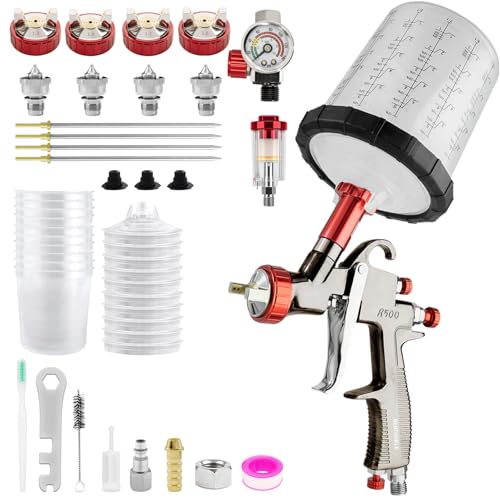
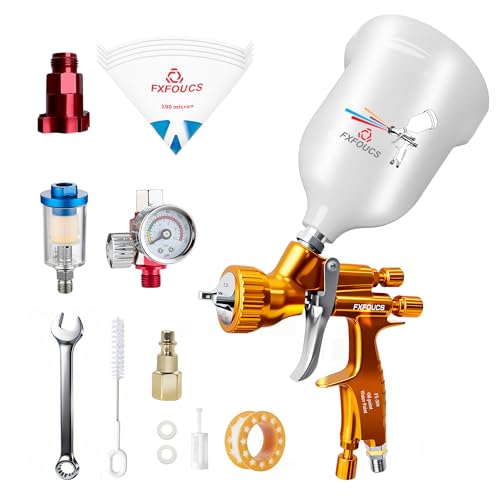
The most reliable health information is found in the manufacturer's manual. It warns that coatings can produce toxic fumes, advises users to review the coating's SDS, mandates the use of a well-ventilated spray booth, and prohibits the presence of sparks and open flames. Additionally, it emphasizes the importance of grounding conductive hoses. These instructions align with recognized hazards in spray finishing, although the respirator guidance remains generic and does not replace coating-specific selection. The included oil-water separator carries a California warning regarding lead compounds and DEHP. Claims about environmental benefits are less well-supported. The manufacturer states that the LVLP design reduces paint waste and environmental pollution, but no independent transfer efficiency tests have been found. The spray gun features replaceable stainless-steel nozzle sets and a repair-friendly parts diagram, which can help extend its service life. However, its cleaning instructions recommend spraying cleaning solution until the fluid runs clear, a method that may increase solvent emissions compared to contained, non-atomizing cleaning techniques.
It is ideal for a hands-on DIY enthusiast who already owns an appropriate compressor capable of delivering the required 9.7 to 10.2 CFM airflow. It is suitable for working on panels, furniture, cabinetry, or other small to medium-sized coating projects that require controlled application. Additionally, it is beneficial for users who need multiple nozzle sizes and want to ensure replacement nozzle sets are readily available. Safe operation relies on using a properly ventilated spray area, reviewing the coating-specific SDS, and wearing appropriate protective equipment—not just an open garage or a basic dust mask.
This equipment is not suitable for anyone intending to spray solvent-based automotive coatings indoors without a properly ventilated enclosure, appropriate ignition controls, and respiratory protection specified in the coating's SDS. It is also not recommended for users whose compressors cannot provide the required air demand, as pressure loss can impact atomization and the quality of the finish. Commercial or regulated refinishing facilities that require documented transfer efficiency, verified air-cap pressure, or third-party accredited testing should use equipment that has those records. Additionally, do not use this equipment to atomize cleaning agents.
The primary health concern is not the gun itself, but the aerosol and vapor from coatings and solvents it can generate. OSHA's spray finishing regulations focus on proper ventilation, fire safety, grounding, and respiratory protection. While product instructions typically include pressure settings and assembly guidance, they often do not explicitly advise users to review the coating’s Safety Data Sheet (SDS) or to implement coating-specific measures for respiratory, eye, skin, ventilation, and ignition control. InoKraft claims that its stainless-steel fluid passages and an O-ring-free design enhance corrosion resistance and facilitate easier cleaning. However, its instructions recommend flushing the gun with solvent until it sprays clear, which is less ideal. A contained, non-atomizing cleaning method is preferred to minimize solvent vapor exposure and hazardous waste. No independent transfer-efficiency testing, certification, CPSC recalls, or regulatory actions related to the product were found during the review. The brand offers accessible support contacts, listed accessories, and a one-year warranty.
This product is ideal for experienced DIY automotive refinishers or small shop operators performing tasks such as panel work, part refinishing, blending, or applying basecoat and clearcoat, using a compressor that can consistently provide the specified airflow. It is best suited for situations where the user can confirm coating compatibility through the manufacturer's technical sheet, operate within an enclosed and well-ventilated spray area, and establish a dedicated cleaning process. The lightweight design may be beneficial for users who spray for long durations, although this weight is provided by the manufacturer and not independently verified.
This product is not suitable for individuals intending to spray solvent-based automotive coatings in an attached garage, occupied living areas, or any other unventilated space. The provided documentation does not replace a coating Safety Data Sheet (SDS), proper spray booth ventilation, eye and skin protection, grounding procedures, or respiratory protection tailored to the specific coating being used. Additionally, it is not appropriate for users who require independently verified transfer efficiency, regulator-approved HVLP certification, dynamic air-cap pressure data, or fully detailed fittings prior to selecting a compressor and coating system.
Spray finishing poses health and safety risks such as hazardous mists, solvent vapor exposure, skin and eye contact, and potential ignition hazards, primarily depending on the specific coating used. OSHA mandates the use of effective mechanical ventilation in spray areas where flammable vapors or mists are present. Additionally, the coating’s Safety Data Sheet (SDS) should be consulted to determine appropriate gloves, eye protection, protective clothing, and respiratory gear. However, no publicly available product manual was found that provides coating-specific guidance for this spray gun. The single-use cup system may help reduce solvent waste and leftover coating during color changes, but it also generates plastic waste and contaminated paint disposal issues. Claims of low-volume, low-overspray performance were found in seller materials, yet no independent transfer efficiency tests for this configuration are available. Furthermore, no significant certification claims or public recall records were identified during verification. Conflicting descriptions found in public materials also leave long-term corrosion resistance and coating compatibility uncertain.
This product is ideal for skilled hobbyists or occasional repair users who already possess a compatible compressor, a ventilated spray environment, and the knowledge to select nozzles and pressure settings based on the coating manufacturer's technical specifications. The disposable cup setup is convenient for small projects, color changes, and minimal cleanup. It is best suited for users who can independently verify compatibility, test spray patterns and atomization on panels, and utilize the coating’s SDS to implement appropriate safety measures.
This product is not appropriate for first-time users who require comprehensive setup instructions, confirmed compressor specifications, or clear guidance on respirator and fire safety. It is also not suitable for use in occupied garages, indoor home spaces, or any poorly ventilated areas, particularly when applying solvent-based, isocyanate-containing, or flammable coatings. Users who need documented compatibility with waterborne products, consistent production settings, replacement fluid parts, or independently verified transfer efficiency should select equipment that provides those documented records.
Spray finishing can generate flammable vapors, airborne mist, skin and eye exposure risks, and contaminated solvent waste. OSHA mandates the use of mechanical ventilation to control vapors and mist during spraying, restricts ignition sources near the spray area, and requires suitable controls for respirator use. The appropriate protective equipment and cleaning procedures are determined by the coating manufacturer's Safety Data Sheet (SDS), not just the spray gun itself. This product offers specified inlet-pressure ranges and basic cleaning accessories; however, available information does not include static control instructions, maximum rated pressure, compatibility of hoses and fittings, or a contained non-atomizing gun cleaning method. This is important because atomizing solvent during cleanup increases vapor exposure and emissions. The claim that the product is made of aluminum alloy is helpful but incomplete, as it does not specify the wetted alloys, seals, cup materials, or compatibility with waterborne or solvent-based coatings. Additionally, no independent transfer efficiency data, certification records, or CPSC recall notices were found during the review.
This product is ideal for hands-on users who already have a clean, dry compressed air supply and are seeking an affordable gravity-feed kit for small touch-ups, furniture, test panels, or occasional panel work. The specified nozzle range and cup options are convenient when working with multiple materials on a single project. It is best suited for situations where the user can independently verify the coating manufacturer's recommendations regarding tip size, pressure, thinning, ventilation, and respiratory protection before beginning to spray.
This product is not suitable for users lacking a properly sized compressor, moisture control, regulated air supply, or a controlled spray environment. It is also not recommended for spraying isocyanate-based automotive coatings, solvent-heavy coatings, or other hazardous materials without thorough review of the coating-specific SDS, adequate mechanical ventilation, and properly selected respiratory protection. Commercial refinishers and buyers requiring documented HVLP compliance, consistent transfer efficiency, access to repair parts, or formal service support should seek more comprehensive product documentation.
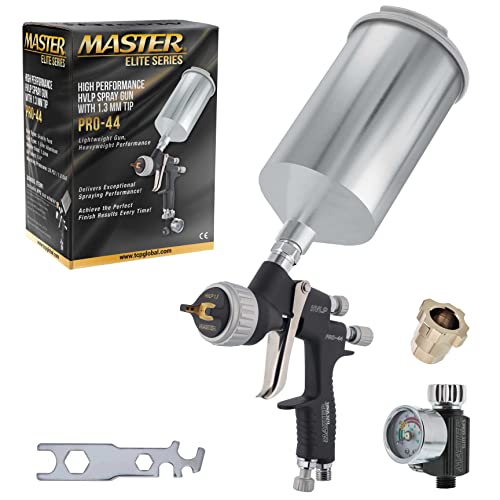
The most comprehensive safety guidelines are found in the published mini-gun manual. It recommends wearing safety glasses, gloves, and a respirator, advises that spraying should be done in a well-ventilated area, and instructs users to review the safety data sheet for the sprayed material. The manual also warns against ignition sources, flammable bottled gases, damaged hoses, excessive pressure, and incompatible halogenated solvents. These measures provide essential safety controls, though the respirator recommendations are not tailored to specific coating hazards. TCP Global offers stainless steel needle and nozzle sets, separate aluminum and stainless steel cups, a one-year warranty, and replacement tips and rebuild kits, emphasizing repair over disposal. The manufacturer also displays a California Proposition 65 warning on its product page, though it does not specify the chemical or exposure route. No independent verification of transfer efficiency or certified product record was found, so claims of lower overspray and high efficiency remain unconfirmed. Users should also incorporate contained solvent cleaning practices to reduce VOC emissions and hazardous waste.
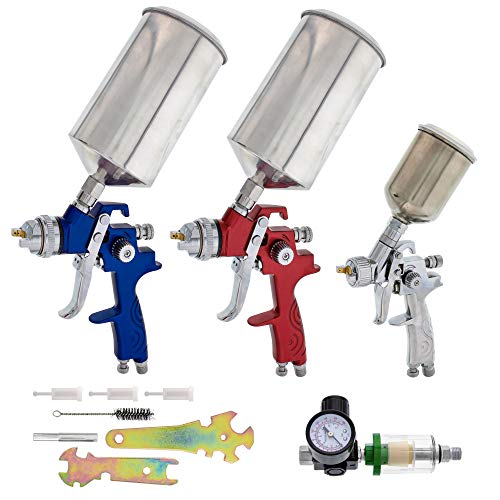
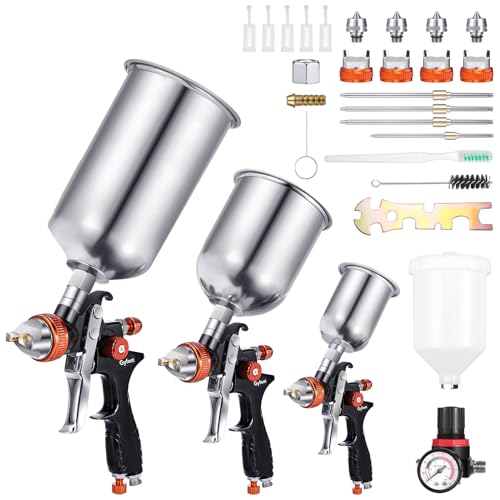
This product is ideal for experienced hobbyists, restoration enthusiasts, or small-shop operators who already have a supply of clean, dry, regulated compressed air and a well-ventilated spray area. The set includes three guns, making it easier to switch between small repairs, finish coats, and primer applications without the need to constantly change tips. It is also suitable for users willing to review each coating manufacturer's technical and safety data sheets, check the gun's pressure during operation, and clean the equipment promptly after use.
This product is not suitable for indoor household use unless there is effective mechanical exhaust, a controlled spray area, and specific exposure controls tailored to the coating. It is also not appropriate for those requiring independently verified transfer efficiency, officially documented HVLP air-cap pressure, or certified compliance for regulated shop programs. Users sprayings materials that contain isocyanates, are highly flammable, corrosive, or otherwise hazardous should not rely solely on the generic respirator warning provided as their complete safety measure. Instead, they should choose appropriate respiratory protection and ventilation based on the coating's SDS and workplace safety requirements.
The published manual provides essential safety precautions. It states a maximum pressure of 130.5 psi and advises users to avoid sparks, open flames, cigarettes, and non-explosion-proof electrical devices. Additionally, it recommends proper ventilation, wearing gloves, eye protection, and masks. While these measures are important, the guidance remains general; it does not refer users to the coating's Safety Data Sheet (SDS), specify the type of respirator needed for chemical hazards, or explain static grounding procedures. Environmental information is limited. The spray gun features adjustable pressure and flow settings, but there is no verified data on transfer efficiency or overspray, making it impossible to determine paint waste reduction or emission levels. Cleaning procedures include solvent cleaning and rinsing the gun with water into a bucket. EPA guidelines suggest using non-HAP (hazardous air pollutant) cleaners or implementing contained, non-atomizing cleaning methods to prevent solvent and paint-residue mist from escaping into the environment. No product-specific certifications or independent laboratory performance reports have been found. The product comes with a one-year warranty and manufacturer support, but the availability of replaceable wear parts is unclear.
This product is ideal for vehicle owners or small garage operators who perform rustproofing or rubberized undercoating on limited areas. It requires a compressor capable of delivering approximately 4.6 to 5.3 CFM at 58 psi. The cup-style model is convenient for short, refillable applications, while the two extension wands are helpful for treating frame cavities and underbody recesses. Users must choose the appropriate coating based on its technical data sheet and SDS, and then establish suitable ventilation, PPE, and cleanup procedures according to the material's specifications.
Spraying in enclosed garages, near ignition sources, or without proper respiratory and ventilation controls specific to coating materials is unsafe. This product is not suitable for production refinishing or regulated spraying processes that require high-transfer-efficiency equipment, verified spray parameters, and contained gun cleaning. Users applying waterborne products, aggressive solvents, acids, or coatings with uncertain compatibility should not assume this product is appropriate, as its wetted materials and full fluid-compatibility limits are not disclosed.
The manual includes important safety instructions regarding fire, pressure, and static controls. It explicitly prohibits sparks and open flames, emphasizes grounding through a conductive air hose, specifies a maximum pressure of 98 psi, and mandates pressure release before performing maintenance. Additionally, it warns against using certain chlorinated solvents that can damage the aluminum body. The manual also advises using a well-ventilated spray booth and proper personal protective equipment such as eye protection, gloves, and masks. While these instructions are helpful, the respiratory safety guidance is generic and does not direct users to the specific Safety Data Sheet (SDS) for the coating. Regarding emissions, the manual states that excessive inlet pressure can cause overspray and decrease transfer efficiency, recommending a 29 psi setting for HVLP systems. However, no independent efficiency testing has been documented. The instructions for solvent cleaning are less comprehensive; they suggest spraying thinner through the gun but do not clearly specify safe, contained, or non-atomizing cleaning methods. EPA guidance for automotive refinishing operations recommends cleaning methods that prevent atomized solvent and paint residue mist from escaping outside a containment system. No product-specific recalls or safety warnings related to this item were found in the publicly available recall resources checked.
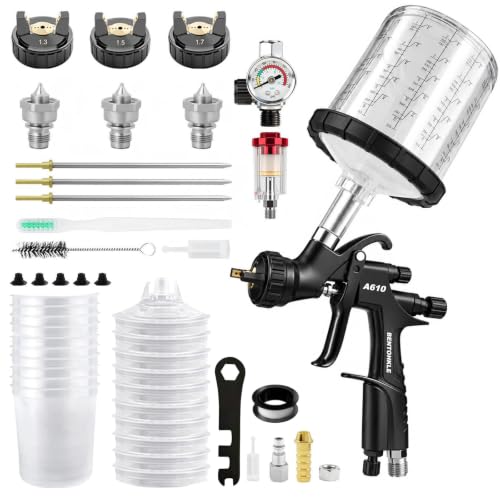
This product is ideal for experienced hobbyists or small-scale automotive refinishing enthusiasts who have access to clean, dry compressed air, a proper spray area, and the ability to adjust pressure at the gun while in use. Its main practical advantage is the included sets of nozzles in sizes 1.3 mm, 1.4 mm, and 1.8 mm, which are recommended for various applications such as finishing coats and thicker primers. It is also suitable for users who are willing to inspect packing and seals regularly, clean components promptly, and source genuine replacement parts as needed for maintenance.
It is not suitable for individuals who intend to spray solvent-based, isocyanate-containing, or other hazardous coatings in a garage or enclosed area without adequate spray booth ventilation and appropriate respiratory protection for the specific coating. The general mask instructions provided in the manual are not a replacement for the coating’s Safety Data Sheet (SDS) or a comprehensive respiratory protection program. Additionally, this product is not designed for users who require independently verified transfer efficiency, documented low-emission cleaning procedures, exact fitting specifications, or third-party certification before operating a spray gun in regulated environments.
The manual emphasizes safety precautions for immediate spray hazards, including the need for a well-ventilated spray booth, protective eyewear, gloves, a mask, proper grounding via a conductive air hose, and the avoidance of sparks or open flames. It also advises taking precautions against static buildup when dry wiping the cup. Additionally, it warns against using certain halogenated solvents that can damage the aluminum gun body. As these are manufacturer instructions, it’s essential to also consult the product's Safety Data Sheet (SDS) to ensure solvent compatibility and appropriate respiratory protection. From an ecological perspective, the manufacturer states that increasing inlet pressure leads to more overspray and lower transfer efficiency, recommending a setting of 26 psi. No independent transfer efficiency tests for this specific product were found. Importantly, the cleaning instructions involve atomizing thinner through the gun, which contradicts EPA guidance that advises against open-air pressure spraying of solvents. Instead, a contained gun-cleaning system should be used to collect solvent waste. As of August 9, 2026, there are no known CPSC recalls or public safety warnings related to this product in the U.S. databases.
This product is ideal for an experienced automotive refinisher or a dedicated hobbyist who has a clean, dry compressed-air system capable of delivering the manufacturer-specified 12.2 cfm airflow. Designed for light to medium-viscosity coatings and equipped with a 1.3 mm tip, it is well-suited for basecoats, clearcoats, and similar finishing tasks. Additionally, it is suitable for users who are willing to inspect seals, clean the gun regularly, and utilize the recommended replacement parts instead of discarding it after normal wear.
This product is not suitable for use in garages, basements, shared workshops, or other areas lacking proper spray booth extraction and fire safety measures. The spray gun can aerosolize hazardous coating components and flammable solvents, so a simple mask recommendation is insufficient for choosing appropriate respiratory protection. Additionally, it is not intended for users who require independently verified transfer-efficiency data, specific certification, or comprehensive compliance documentation for regulated applications.
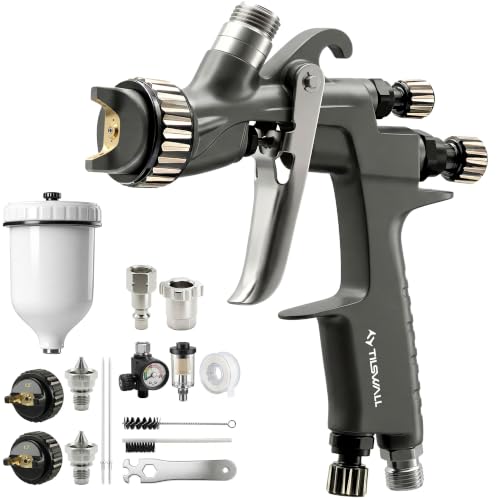
The primary positive aspect of the product is the manufacturer's claim of a stainless steel fluid pathway, which is likely more resistant to corrosion compared to unprotected steel passages and may help reduce the need for early replacement. Tilswall provides a 12-month warranty along with direct customer support. During the review, no product-specific recalls, regulatory actions, or independently verified certifications were identified. However, a significant safety concern is the absence of operating and safety documentation. OSHA highlights spray mist, solvent vapors, fire, and explosion hazards associated with spray finishing equipment, emphasizing the importance of effective controls such as proper ventilation and personal protective equipment. Although the product states compatibility with both water-based and oil-based coatings, the actual risk varies depending on the specific coatings and cleaners used. Users should adhere to the coating and solvent Safety Data Sheets (SDS), manage ignition and static risks, regularly inspect hoses and fittings, and perform cleaning in a contained, non-atomizing manner whenever possible.
This product is ideal for a mechanically skilled hobbyist or small workshop user who already possesses a suitable compressor, a clean, dry, and regulated air supply, appropriate hoses, coating technical data, and a well-ventilated spraying area. Featuring three nozzle sizes and a 600 ml cup, it is versatile for applying coatings on smaller automotive panels, metal parts, cabinetry, and similar detailed work. It is best suited for users who can independently determine the correct pressure, fluid flow settings, coating thinning, and personal protective equipment according to the manufacturer's instructions.
This product is not ideal for first-time sprayers who require a comprehensive, step-by-step setup guide, particularly when working with solvent-based, two-component, or isocyanate-containing automotive paints. Additionally, it should not be used in indoor living areas, attached garages lacking proper ventilation, or any environment where occupants, children, pets, ignition sources, or bystanders could be exposed to overspray or fumes. Users who do not have a compressor capable of meeting the spray gun’s actual air demand should select equipment with clearly documented air consumption specifications.
The product is an air-powered paint gun, and its health risks largely depend on the type of coating, thinner, and cleaning solvent used, rather than the gun itself. OSHA spray-finishing standards emphasize controlling ignition sources, ensuring proper ventilation, and grounding equipment during related operations. Respiratory protection must be selected based on the actual hazards encountered, rather than as a generic accessory. No product-specific guidance was found linking usage to coating SDS instructions, spray booth ventilation, protective clothing, eye protection, or respirator selection. The HVLP features listed are not supported by published data on dynamic air-cap pressure measurements or transfer efficiency tests for this specific setup. Consequently, its effectiveness in reducing overspray and VOC emissions remains unverified. While a cleaning kit might simplify maintenance, no documented cleaning procedures were provided. Solvent should not be atomized during cleaning, and waste solvent must be collected in a closed container. No certification claims, independent test results, product recalls, or regulatory warnings were identified during the verification process.
This product is designed for users who already have a compatible compressed-air system, understand how to reduce paint and adjust spray guns, and require both small and larger gravity-feed spray guns for occasional projects such as vehicle parts, furniture, or household tasks. The nozzle size options, ranging from 0.5 mm to 1.7 mm, help in selecting the right gun for a specific coating system, provided the user reviews the technical specifications from the coating manufacturer. It is best suited for users who can independently set the appropriate pressure, airflow, fitting compatibility, and ensure proper ventilation safety before starting to spray.
This product is not suitable for first-time users who require comprehensive, product-specific setup and respiratory guidance. It should not be used in enclosed garages, occupied homes, or other spaces lacking proper exhaust ventilation and ignition controls, especially when working with solvent-based coatings. Users who need documented HVLP compliance, confirmed air flow specifications, verified compatibility with waterborne or solvent-based coatings, or easy access to replacement needles, nozzles, seals, and cups will find that this product does not meet those documentation requirements. Additionally, it is not appropriate for workplace spray operations unless a proper safety program is already in place.