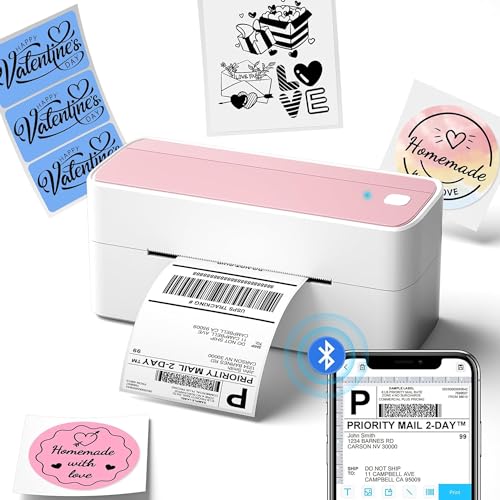
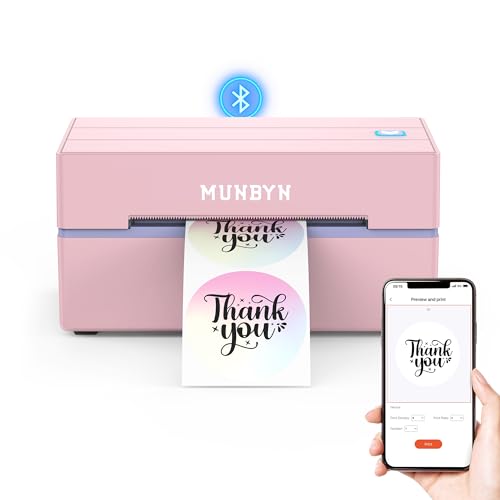
Phomemo 241BT Bluetooth Thermal Label Printer
Easy wireless printing with Bluetooth connectivity.
Compact and portable for small business needs.
Compatible with major shipping platforms.
We compared the top Label Printer products so you can quickly spot the strongest options for value, features, and everyday performance.
Easy wireless printing with Bluetooth connectivity.
Compact and portable for small business needs.
Compatible with major shipping platforms.
Easy wireless setup for Android, iPhone, and Windows.
Supports various e-commerce platforms like Amazon, Ebay.
Reliable 4x6 thermal printing, no ink needed.
Easy wireless printing via Bluetooth on Android and iPhone.
Compatible with multiple e-commerce platforms like Ebay and Amazon.
High-quality thermal printing, no ink required.
Easy Bluetooth connection for quick label printing.
Multiple templates for diverse labeling needs.
Compact design, perfect for home and office.
Wireless printing makes it highly convenient.
Compatible with major shipping platforms.
Compact design perfect for small spaces.
Compatible with multiple devices and platforms.
Supports major shipping carriers effortlessly.
Compact design, ideal for small spaces.
Compact design, perfect for small spaces.
Easy-to-use interface simplifies label creation.
High-quality thermal printing, no ink needed.
High-resolution 300DPI for crisp, clear labels.
Compact design makes it easy to carry.
Built-in label roll for immediate use.
Inkless printing for hassle-free label creation.
Bluetooth connectivity for easy wireless printing.
Compact design ideal for small business needs.
Easy compatibility with major e-commerce platforms.
High-quality thermal printing saves on ink costs.
Compact design ideal for small business spaces.
A label printer is used to produce text, barcodes, symbols, or simple graphics on adhesive label sheets. Most of the products discussed here utilize direct thermal printing technology: a heated printhead creates an image on heat-sensitive material, meaning that regular printing does not require ink, toner, or ribbons. This reduces handling of cartridges but does not eliminate consumable waste or guarantee that the label coating is safer. The suitability of a setup depends on the printer, label stock, power supply, software, and intended application.
Begin by considering the label format. Desktop shipping printers typically support media up to approximately 4 by 6 inches, while smaller models use narrower rolls, generally around 20 to 50 mm in width. Verify the actual supported width, compatibility with roll or fan-fold media, feeding method, and whether the printer is compatible with your specific label stock. Resolution ratings such as 203 or 300 dpi refer to the print grid and do not necessarily indicate reliable barcode scanning. Similarly, claimed labels-per-minute speeds are often manufacturer estimates; they may apply only to specific formats, exclude setup time, or represent maximum rather than continuous output.
For barcode applications, look for independent testing results on the exact printer and label stock, reporting compliance with ISO/IEC 15416 for linear barcodes or ISO/IEC 15415 for 2D codes. Simply claiming barcode capability, advertising high DPI, or showing a successful test print does not guarantee proper performance. Durability claims, such as waterproof, fade-resistant, scratch-resistant, or permanent labels, should be supported by repeatable testing results—such as abrasion resistance, aging tests, legibility over time, and adhesion strength. Certified tests from standards like ASTM D3330/D3330M, ANSI/UL 969 recognition, or ISO/IEC 17025-accredited laboratories carry more weight than marketing descriptions alone.
When evaluating powered devices, distinguish between wireless certification and electrical safety. An FCC Equipment Authorization confirms wireless function but does not imply safety compliance. To ensure safety, verify the specific model and power adapter through recognized agencies like UL Product iQ, Intertek ETL, CSA, or OSHA-approved NRTL listings. For rechargeable units, check for model-specific battery certifications such as IEC 62133-2, UL 2054, and transport safety approvals like UN Manual of Tests and Criteria Part III, subsection 38.3. Also, review CPSC Recalls and SaferProducts.gov records for safety history.
Direct thermal labels require particular scrutiny. "BPA-free" labeling alone does not specify the chemicals used or confirm the absence of phenolic developers like BPS, nor does it clarify adhesive safety. Obtain detailed technical or safety data sheets and seek independent laboratory analyses using validated methods. Additionally, assess whether a dedicated app is required, which devices are supported, what permissions are requested, whether ongoing updates occur, and if data can be erased. USB connectivity can serve as a wired fallback, but compatibility details should be documented for each specific model.
Review analysis reveals common issues across products: many lack model-specific NRTL safety listings for printers and adapters, independent barcode or throughput testing, or detailed information on the thermal developer or adhesive chemistry of labels. Durability claims are often unsupported. Several mobile workflows have been found to collect or share user identifiers, usage data, location information, files, print content, or diagnostics, often with inconsistent disclosure in app store descriptions. Rechargeable devices frequently lack documented battery safety or transport certifications. None of the reviewed products offer a verified combination of repair parts, battery servicing, electronics recycling, or label liner recovery. Without additional evidence, these products should not be considered validated for regulated environments, medical, food-contact, archival, outdoor, high-consequence, or scan-critical labeling applications.

A: When selecting a label printer, evaluate the volume of labels you need to produce, the types of materials you'll be printing on, and the connectivity options available such as USB, Wi-Fi, or Bluetooth. Also, ensure compatibility with your existing software and verify that the printer's resolution meets your professional labeling requirements.
A: Thermal label printers are advantageous due to their rapid printing speeds, minimal maintenance requirements, and the absence of ink or toner. They are excellent for creating clear, durable labels, making them suitable for shipping, warehousing, and retail applications.
A: Yes, many label printers support various label sizes and materials. It's important to check the printer's specifications to ensure it can handle the dimensions and types of materials you plan to use, such as paper, polyester, or other synthetic options tailored to your specific needs.
A: A label printer integrates with business systems through compatible software or drivers, enabling easy creation and printing of labels from your computer or network. Many modern printers also offer cloud-based integrations and APIs for advanced connectivity and automation within your business workflows.
A: If your label printer isn't working correctly, first check that it is properly powered and turned on. Make sure the label roll is correctly installed and that there are no paper jams. Confirm that the printer drivers are up to date and that the device is properly connected to your network or computer. If issues persist, refer to the user manual or contact customer support for further help.
The scores listed below evaluate the provided products based on the category’s health, environmental, and evidence standards. These scores reflect the amount of supporting information found; however, a higher score does not convert a marketing claim that lacks verification into confirmed evidence of performance or safety.
This assessment evaluates the transparency and documentation regarding heat-reactive developers and adhesives used in direct-thermal labels, including substances such as BPA, BPS, and other phenolic developers. It is important because these consumables—not just the printers—are handled multiple times and may be used in sensitive environments. Products that receive higher scores generally feature more comprehensive manufacturer claims, although none provide precise chemical disclosures or independent laboratory verification. Lower scores indicate less traceability and transparency.
This includes information on overheating, shocks, battery failure, charging instructions, and shipping documentation for rechargeable devices or supplied adapters. Corded printers do not have built-in rechargeable batteries, whereas portable devices include a battery and charger that require model-specific documentation. Products that received higher scores typically provided clearer instructions or safety precautions, while lower-scoring items often lacked certification or shipping summaries. The absence of evidence should not be interpreted as proof that an uncertified product is unsafe.
This assessment evaluates the disposable label face stock, adhesive, release liner, packaging, and misprints, including any evidence of recycled content or responsible fiber sourcing. While direct thermal printing eliminates the need for ink and toner, it still relies on single-use labels. The products analyzed tend to cluster closely in their reviews, primarily because most lack specific FSC or SFI certification, recycled content details, liner recovery information, or packaging documentation. Consequently, a higher score indicates relatively better material transparency, rather than a completely waste-free system.
This assesses the product's service life, availability of replacement parts, battery maintenance, ongoing access to labels, and options for electronics take-back or recycling. It is important because replacing a small printer can be more costly than the material savings from not using cartridges. Products with higher scores typically offered clearer warranties, better support, or consistent availability of software and consumables. In contrast, lower-scoring products lacked proper documentation for repairs or recycling processes. Overall, none of the products had a fully documented pathway for repairs, battery servicing, and electronics take-back or recycling.
This evaluates whether the specific printer and its wireless functionality can be linked to independent NRTL and FCC records. FCC authorization confirms legal radio operation but does not constitute comprehensive electrical safety certification. Products with higher safety scores typically had FCC documentation matching their models, sometimes including radio testing materials. In contrast, lower-scoring products only had records for related models or lacked any identifiable authorization. None of the products provided documentation with model-matched NRTL evidence for both the printer and the adapter.
This provides independent confirmation that the output remains clear and that barcodes can be scanned accurately at the specified size, resolution, and speed. Higher ratings would necessitate a precise model and stock report, including ISO/IEC 15416 or 15415 grades and actual throughput measurements. The products evaluated received similar scores because no independent barcode grading reports were available for any of them. Simply stating the DPI, speed, or producing a successful sample print does not constitute verification.
This includes testing for fading, smudging, curling, abrasion, environmental aging, and peel adhesion specific to a particular printer and label combination. These factors are important when shipping, inventory management, or asset labels need to withstand handling or storage conditions. The scores provided are fairly similar, as reviews typically only confirmed manufacturer claims without independent durability or peel testing. Products with more detailed instructions or verified durability claims tend to score higher, but none showed proven long-term performance in this evaluation.
This assessment evaluates whether the compatibility, width, resolution, speed, battery life, waterproof features, and inkless claims are clearly specified and traceable to the model documentation. Products that scored higher typically provided manuals, support pages, or more detailed technical specifications. In contrast, lower-scoring items often displayed inconsistent dimensions, speeds, brand names, or connection claims. It's important to note that a documented specification is still a manufacturer claim unless independently verified through testing. Therefore, this evaluation focuses on traceability of information rather than certified performance.
This assesses the claimed device compatibility, app support and updates, permissions, data management, and reliance on an account or cloud service. It is important because many compact printers depend on a mobile app, whereas some desktop printers provide USB connectivity as an alternative. Higher scores indicate ongoing support and clear compatibility information, while lower scores suggest conflicting statements, issues with tracking or data collection, encryption concerns, or limited connection options.
This assesses whether the responsible manufacturer or seller can be identified, if warranty and safety contact information is accessible, and whether recall or incident details are transparent. Products with higher scores typically provided published support contacts, model-specific documentation, or clearer warranty terms. Conversely, lower scores indicated unclear branding or less comprehensive documentation. Although most examined products did not have any specific recall notices available, the absence of such recalls does not necessarily indicate a perfect safety record.
The primary health concern concerns the label stock rather than the ink, since the printer employs direct-thermal media. While Phomemo offers some compatible shipping labels claiming to be BPA and BPS free, publicly available product information does not specify the thermal developer, adhesive chemistry, or testing methods. This is important because EPA’s assessment of thermal paper indicates that replacement developers often involve trade-offs, and no universally safe option has been identified. For frequent label handling, selecting labels supported by detailed model-specific technical sheets and independent chemical testing would offer more reliable safety evidence. The printer operates with an external power adapter rated at 24 V and 2.5 A, rather than an internal battery. Its Bluetooth capability is included in an FCC-certified model family, but no independent NRTL certification for electrical safety was found for the specific printer and adapter. Although direct thermal printing eliminates the need for cartridges, it still relies on disposable coated labels, adhesives, and release liners. There is no available information on product-specific recycling programs, recycled content, or take-back initiatives.
This product is ideal for home sellers, small offices, or shipping stations that require compact monochrome labels, utilize standard direct-thermal media, and prefer connectivity via phone or computer. It is particularly suitable for printing routine carrier labels, inventory labels, or address labels that do not demand color, long-term archival quality, or weather resistance. Additionally, the FCC certification for the Bluetooth model family provides independent assurance for buyers intending to print wirelessly within the United States.
This product is not ideal for buyers who require independently verified barcode grades for regulated, high-volume, or scan-critical applications. It is also unsuitable for long-term outdoor labeling, labels exposed to heat, abrasion, oils, or solvents, or for records that need to remain legible for many years, as the durability of direct thermal printing with this specific printer and label combination has not been independently confirmed. Consumers looking for certified phenol-free consumables, approved adapter safety, repair options, or a manufacturer take-back program should request documented proof of these features before making a purchase.
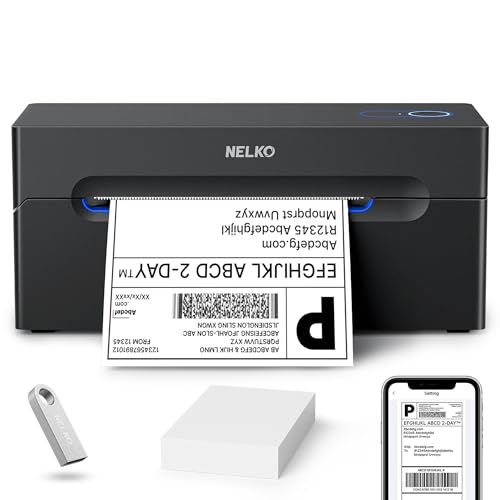
The primary health concern centers on the direct-thermal label stock rather than the ink itself. Nelko's marketing for their compatible 4 by 6 labels claims the material is BPA-free but does not specify the alternative thermal developer used, nor does it disclose if BPS or other phenols are present. Additionally, there is no independent lab report provided for the supplied labels. This is significant because the EPA’s assessment of thermal paper indicates that potential BPA substitutes may carry their own health or environmental risks. To reduce chemical uncertainties, it is advisable to use labels that are independently verified as phenol-free, BPA-free, and BPS-free. The printer is confirmed to have FCC-compliant evidence for its Bluetooth radio, and its manual notes that the printhead can become hot during operation. There are no records of recalls or public safety actions related to this product in the U.S. sources checked. While direct thermal printing eliminates the need for cartridges, toner, and ribbons, each label still involves single-use face stock, adhesive, and often a release liner. Nelko does not provide information on FSC certification, recycled content, take-back programs, repair parts, or end-of-life recycling options for this product.
This product is ideal for home sellers or small businesses that primarily print standard shipping labels and require a compact wired desktop printer with optional mobile phone printing capabilities. It is best suited for users who generate labels as PDFs from a computer, as Nelko recommends using USB for more reliable printing from a computer. Additionally, it is suitable for those needing flexible media widths up to 4.1 inches and who prefer to choose their own compatible direct-thermal labels. The product comes with a one-year defect warranty and clearly listed support contacts, offering a straightforward support pathway for basic setup and troubleshooting.
This product is not ideal for operations needing certified electrical safety documentation for procurement, workplace policies, or insurance purposes, as no matching NRTL listing was found. It is also not suitable for medical, food-contact, archival, outdoor, or high-temperature labeling applications where chemical disclosure, long-term fade resistance, adhesion testing, and barcode quality are critical. Customers who cannot accept app-dependent Bluetooth setup, outdated previews, or unreliable reconnection should opt for the USB setup method or choose a product with more up-to-date, independently verified mobile software support.
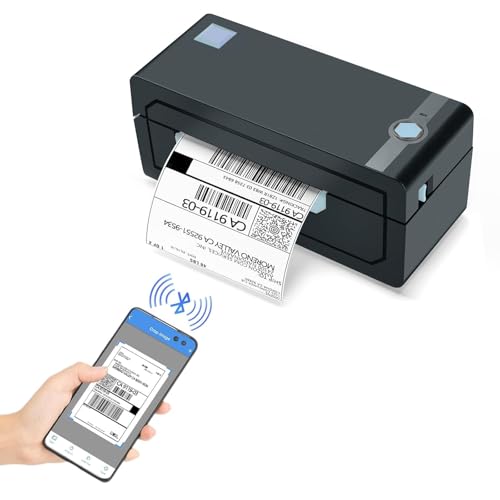
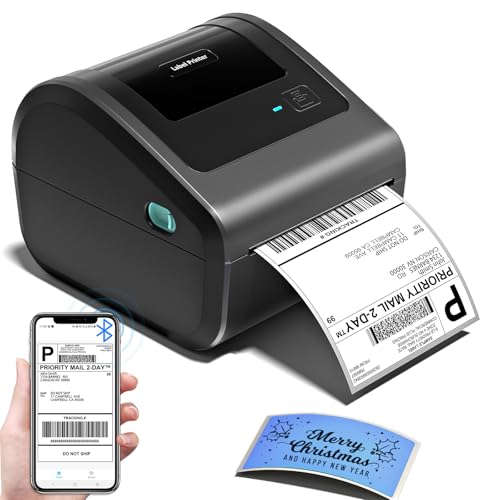
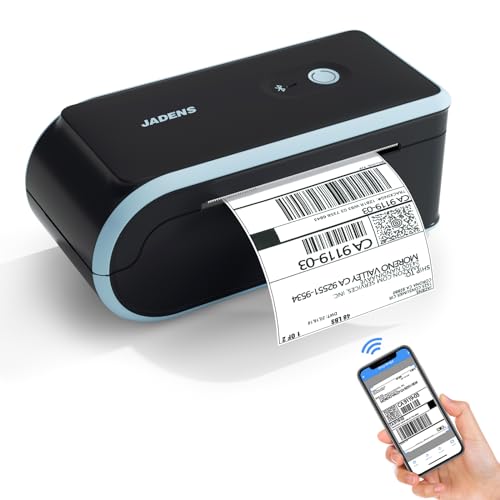
The printer itself does not contain a battery and requires an external power adapter specified by JADENS as 24 V, 2 A. Its Bluetooth functionality corresponds to a model-specific FCC authorization, but no separate North American electrical safety listing has been found for either the printer or the adapter. No recalls related to JADENS were identified in the U.S. recall databases reviewed. The manufacturer offers a one-year warranty and provides support contact information; however, warranty coverage does not extend to certain wear and tear or damage caused by third-party labels. The printer employs direct-thermal printing, which eliminates the need for ink and toner cartridges, helping to reduce packaging waste and cartridge disposal. However, it still depends on single-use adhesive labels and release liners. Both the manufacturer and a label document claim that the thermal labels are BPA-free and waterproof, but neither source discloses information about the developer chemistry, adhesive composition, safety data sheets, or independent testing for BPA, BPS, or other phenolic developers. Additionally, there are no published programs for take-back, electronics recycling without batteries, or replacement parts for this product.
This product is ideal for home sellers, small online stores, or offices that primarily print standard black-and-white shipping labels in the common 4x6 inch size. It is best suited for users who are comfortable connecting via USB with a Mac or Windows computer, or using Bluetooth from an iPhone, iPad, Android device, or Bluetooth-enabled Windows laptop. Additionally, it caters to those who prefer to avoid ink and toner costs and are willing to rely on manufacturer-provided performance specifications rather than independently verified barcode readability and durability outcomes.
This product is not suitable for operations that require certified UL, ETL, or CSA electrical listings for procurement, insurance, workplace policies, or risk management. Buyers dealing with pharmaceuticals, food-contact packaging, sensitive items, or labels that involve high heat or long-term storage should request information on the thermal label's chemical composition and ensure the adhesion and readability have been independently tested. Mac users who specifically need Bluetooth printing should consider a different setup, as JADENS states that macOS Bluetooth printing is not supported. Additionally, this product is not ideal for buyers in need of repair parts or a documented electronics recycling program.
This direct-thermal printing system does not require ink, toner, or ribbons. However, it still uses single-use labels, adhesive, backing material, and a rechargeable battery. Labels compatible with Nelko claim to be BPA-free and non-toxic for certain rolls, but no technical data sheets specify the thermal color developer or adhesive used, and no independent analyses have been found. This is important because BPA and BPS can serve as developers in thermal paper. Do not affix labels directly onto food. The Bluetooth radio in this model has a publicly available FCC authorization record. However, there is no model-specific NRTL electrical listing, battery transportation summary, or safety certification for the battery. Additionally, no relevant CPSC recall information was found. Nelko provides warranty and support contact details, but there is no documented program for battery replacement, parts catalog, manufacturer take-back, or electronics recycling. When the product reaches the end of its life, it is recommended to recycle the battery and electronic components through a reputable recycler.
This product is ideal for individuals needing occasional, small black labels for household trash bins, school supplies, folders, jars, gift tags, or basic inventory tracking. It is suitable when label creation from an iPhone or Android device is convenient, Bluetooth connectivity is available, and using a manual cutter is not an issue. It also works well for users who prefer to test a label on the intended surface first, particularly for items exposed to moisture, oil, curved surfaces, or frequent handling.
This device is not ideal for tasks such as shipping labels, full-page printing, color printing, or for buyers requiring computer-based printing. It is also unsuitable for safety-critical applications like barcode printing, laboratory labeling, asset tracking, food-contact labels, medical documentation, archival purposes, freezer labels, or outdoor labeling, where independent verification of scan quality, chemical composition, adhesion, and long-term readability is essential. Users concerned with privacy should be aware that printing requires an app that, according to its disclosed data practices, collects tracking identifiers and may gather user content or files.
The primary health concern relates to the label stock rather than the battery. This product is marketed as a mains-powered thermal printer supplied with a power adapter; no battery pack is indicated or advertised. However, there is no publicly available model-specific NRTL listing for either the printer or the included adapter. Additionally, the manufacturer has not provided safety data sheets, technical data sheets, or independent chemical analyses for the exact thermal labels used. Consequently, it is not possible to assess potential chemical hazards such as BPA, BPS, alternative color developers, or adhesive constituents based on available information. While direct-thermal printing eliminates the need for toner and ink cartridges, each label still involves the use of disposable face stock, adhesive, and release liner. There is no evidence of efforts to incorporate recycled materials, FSC certification, liner reduction, sustainable packaging, product take-back programs, replacement parts, or electronic recycling initiatives for this product. The support system is identifiable, with published email and phone contact information, and no recalls or warnings specific to the product have been found during verification. The Labelife app requires permissions including Bluetooth, file access, camera, and location, depending on the platform and usage.
This product is ideal for home sellers or small businesses that print standard shipping labels from a desk. It accommodates a compact wired printer and offers USB connectivity as an alternative if Bluetooth setup is challenging. It is especially suitable for users who switch between roll labels and fan-fold shipping label stacks, as the manufacturer provides instructions for both loading methods. Additionally, it is suitable for users who can confirm their device and operating system compatibility beforehand and do not require independent barcode certification for regulated or high-stakes shipping processes.
This product is not ideal for buyers requiring independently certified electrical safety, official FCC approval, or verified barcode printing quality for regulated, safety-critical, warehouse, healthcare, or high-volume fulfillment environments. It is also unsuitable for users who need confirmed Bluetooth printing from a Mac, as the brand's own documentation conflicts on this feature. Consumers seeking low-chemical consumables should not assume that the included or recommended thermal labels are safer, since details about the manufacturer and adhesive chemistry are not disclosed. Privacy-conscious mobile users should review the app’s data handling policies before granting permissions.
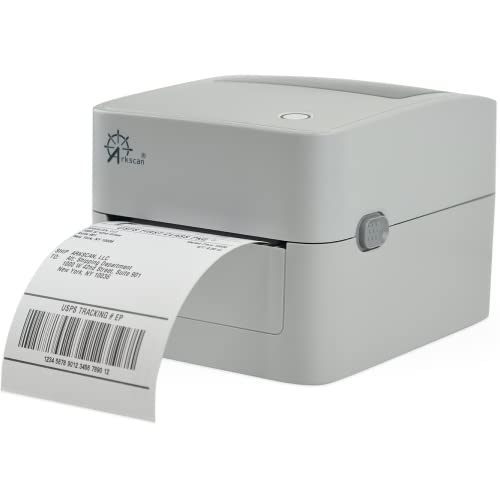
The product is a desktop printer that needs to be plugged in; it is not a portable device powered by a battery. Its wireless functionality has FCC authorization matching its model, enabling compliant radio use in the U.S. However, this FCC approval does not indicate electrical safety certification. There are no model-specific UL, ETL, or CSA safety listings for either the printer or its power adapter. A review of CPSC recall databases did not reveal any product-specific recalls. Arkscan provides a U.S. business contact and offers a one-year limited warranty. The printer employs direct thermal printing, which eliminates the need for ink and toner cartridges but requires heat-sensitive labels and a release liner as consumables. Arkscan describes its labels as direct thermal with strong adhesive, but there is no available information on the specific chemical composition, BPA or BPS testing reports, adhesive technical specifications, recycled material content, or FSC certification. Replacement mainboards are available from the manufacturer, indicating a potential for repair. However, there is no evidence of a formal electronics take-back or recycling program.
This product is ideal for small online sellers, stockrooms, or home-based businesses that require a reliable desktop printer for standard shipping and inventory labels. It needs access to mains power and offers both USB and local Wi-Fi connectivity. It is particularly suitable when labels are produced in various widths rather than solely the 4x6 inch shipping format. Buyers should be comfortable following setup instructions, including the manufacturer’s documented USB procedure to connect the printer to a Wi-Fi network.
This solution is not ideal for buyers who require third-party verification that each barcode will meet specific scan-grade standards, or for those needing labels proven to withstand abrasion, sunlight, freezer conditions, chemicals, or extended archival periods. It also does not suit purchasers with stringent procurement policies that mandate a model-specific NRTL electrical listing. Additionally, organizations seeking transparency regarding thermal paper chemistry, low-phenol content, recycling commitments, or a documented end-of-life take-back program will find this offering lacking in the necessary documentation.
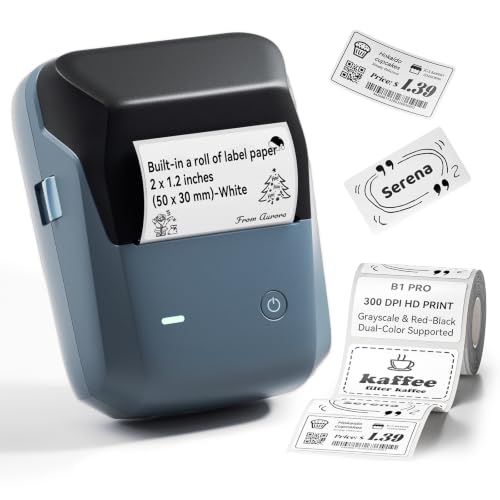
The printer operates using direct thermal printing technology, eliminating the need for ink or toner cartridges. This reduces cartridge waste; however, it increases the reliance on pressure-sensitive labels and their release liners as recurring materials. No detailed technical specifications for the label stock, evidence of recycled content, certificates for responsibly sourced paper, liner reduction programs, or recycling pathways were found. NIIMBOT promotes its relevant labels as BPA-free and RoHS certified; however, the available material does not specify the thermal color developer, adhesive formulation, or test results for BPS and other phenolic developers. As a result, the claims cannot confirm low chemical concern for the supplied roll. The B1 manual indicates that the device uses 5 V, 1 A USB-C charging and has a 1500 mAh battery; support warnings advise against using high-power SuperCharge adapters. No recall related to the B1 model was identified in the CPSC database, and there is no evidence of model-specific NRTL listings or battery testing documentation.
This product is ideal for home organizers, educators, office users, or small-scale sellers needing short-run monochrome labels for bins, folders, cables, jars, shelf tags, or basic inventory management. It is best suited for indoor labeling within the specified 20 to 48 mm print width, where direct thermal printing is convenient and replacing ink cartridges is unnecessary. Additionally, it is suitable for users who can utilize the NIIMBOT mobile app or install the provided Windows driver, and are comfortable following the recommended low-power USB charging instructions.
This product is not ideal for buyers who require labels that stay readable in direct sunlight, high temperatures, outdoor conditions, or over long periods of archival storage. Brand support recommends using B-series labels indoors, except for the thermal-transfer B18 line. It is also not suitable for applications that require independently graded barcodes, validated chemical disclosures, verified NRTL electrical listings, documented battery transportation testing, or replacement battery services. Privacy-conscious users who wish to avoid apps that may collect location data, identifiers, usage information, diagnostics, or purchase-related data should carefully consider these disclosures.
The primary health concern relates to the consumable materials rather than the printhead. NIIMBOT and a regional retailer describe compatible labels as BPA-free; however, there is no available safety data sheet, information about the developer, adhesive composition, or independent laboratory reports to confirm this. This is important because direct-thermal papers contain chemical developers, and the EPA’s assessment of thermal papers indicates that replacing BPA does not automatically guarantee low health or environmental risks. Therefore, do not assume that a BPA-free claim is proof that the labels are free of BPS or other phenolic developers. Regarding the B1 Pro model, its Bluetooth functionality is supported by FCC authorization documentation specific to the model. However, there is no publicly available evidence of UL, ETL, or CSA certification, nor any certification for the battery, a battery recycling or take-back program, or options for battery replacement or electronics recycling. While thermal printing eliminates the need for cartridges, the system still uses coated label stock, adhesive, release liners, packaging, and can produce misprints. No verified information was found regarding recycled content, FSC certification, liner reduction, or end-of-life disposal programs.
This product is ideal for home organizers, small retail shops, classrooms, or office users who require compact labels rather than large-volume shipping labels. It is best suited for indoor use on bins, files, price tags, basic inventory labels, and short barcode labels within the specified 20 to 50 mm label width range. Additionally, it is suitable for users comfortable with designing labels using NIIMBOT software on a smartphone or Windows device, and who can provide the manufacturer's recommended 5 V, 2 A power supply for charging. The Bluetooth feature, verified by FCC documentation, is beneficial for wireless printing needs.
This product is not suitable for buyers who require independently verified barcode grades for regulated, fulfillment, healthcare, or high-throughput inventory processes. It is also not ideal for applications where labels need to remain legible outdoors, after prolonged UV exposure, repeated abrasion, immersion, or exposure to harsh chemicals, as product-specific durability testing has not been conducted. Individuals aiming to minimize contact with phenolic thermal paper developers—such as households with children frequently handling labels—should choose label stock with an exact safety data sheet and an independent chemistry report. Privacy-conscious users may prefer a printer with less data-intensive companion software.
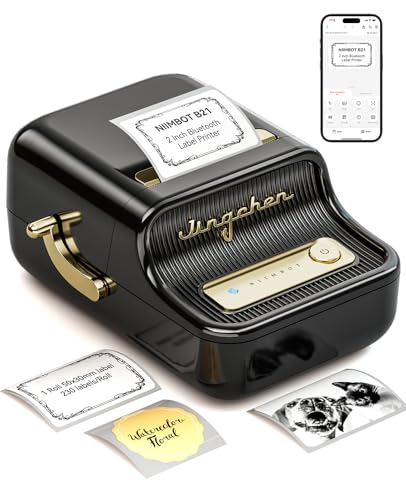
The traceable safety indicator for the B21-C family radio hardware is its FCC authorization. The user manual provides practical precautions related to charging, heat management, moisture, damaged cables, battery leakage, and hot printheads, along with details of several automatic protective measures. However, there is no available information on a model-specific North American NRTL listing or detailed records concerning battery transport and cell safety. The manual states that Wuhan Jingchen Intelligent Identification Technology is the manufacturer and mentions a 12-month parts warranty, with a shorter warranty specifically for the printhead. The printer utilizes direct thermal adhesive labels, eliminating the need for ink cartridges and ribbons, but it still produces waste in the form of spent label stock and release liners. NIIMBOT advertises B-series labels as BPA-free and RoHS-certified; however, no publicly accessible technical datasheet or independent lab report reveals the precise thermal developer used, BPS status, adhesive formulation, recycled content, or forestry certifications. The brand recommends these labels for indoor use only, which is significant because direct thermal printing may degrade in readability when exposed to harsh conditions.
This product is ideal for home organizers, hobby vendors, pantry labelers, or small offices that require short-run black labels no wider than 2 inches and need the convenience of printing from a phone. It is especially suitable for indoor container labels, temporary inventory tags, filing labels, and routine retail or address labels where direct-thermal printing is sufficient. Additionally, it caters to users who appreciate a compact, rechargeable device and enjoy designing labels through an app, with USB Windows support available and documented for the B21 model.
This product is not suitable for buyers requiring independently verified barcode grades for shipping, inventory management, healthcare, or point-of-sale operations. It is also not ideal for outdoor use, especially in sunlight, heat, or for long-term identification purposes, as the B-series guidance restricts these direct-thermal labels to indoor environments. Additionally, avoid using it where a third-party-certified battery and charger are mandatory, where documentation of consumable chemistry is necessary, or where an app collecting location and device data is not permitted.
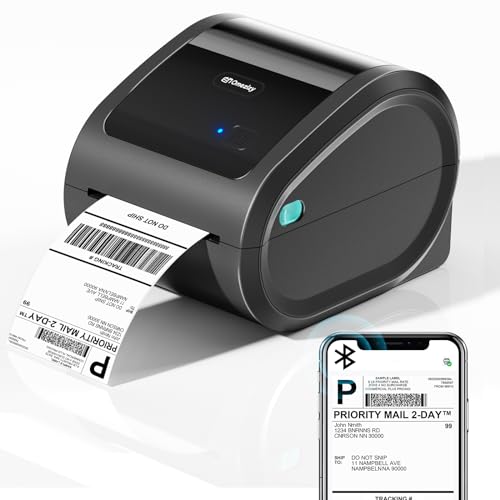
The primary health concern is related to the consumables rather than the printhead. This direct-thermal product includes sample labels but lacks a material safety data sheet, thermal developer disclosure, or independent analysis for their BPA, BPS, other phenolic developers, adhesives, or liner chemistry. This is significant because BPS is listed under California Proposition 65, and thermal label materials can contain BPS or other color developers. No product-specific California warning or recall has been identified. Using direct thermal printing eliminates the need for ink and toner cartridges, reducing those consumables. However, it still relies on single-use adhesive labels, and there is no evidence of recycled face stock, liner reduction, responsible fiber certification, reusable parts, repair options, or a manufacturer take-back program. The product comes with a two-year warranty and accessible support contacts, but there is no information on end-of-life recycling instructions or the availability of replacement parts.
This product is ideal for home sellers or small businesses that print standard indoor shipping labels, mailing labels, or inventory labels in small quantities. It is most suitable for users who can connect via USB when necessary, have space for a compact desktop device, and prefer to store a 4-by-6-inch label roll directly inside the printer instead of using an external holder. It is also suitable for buyers who recognize that the 203 dpi direct thermal printing is designed for basic logistics labels, not for long-term archival purposes or high-resolution photographic printing.
This product is not suitable for operations that require independently certified electrical safety, validated barcode grades, or tested label performance under conditions such as heat, sunlight, moisture, abrasion, or chemical exposure. It is also not ideal for food-contact or high-handling labeling unless the purchaser provides label stock with its own chemical and compliance documentation. Mac users who need Bluetooth printing for computers should not assume compatibility, as Omezizy's support instructions specify Bluetooth computer use is limited to Windows. Privacy-conscious Android users should review the Labelife disclosures before relying on mobile printing capabilities.