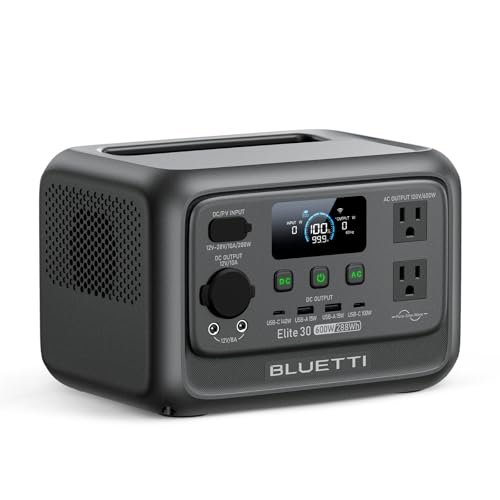
BLUETTI Elite 30 V2 Solar Generator
Fast charging, fully recharges in 70 minutes.
High power output with 1500W surge capability.
Durable LiFePO4 battery ensures long-lasting performance.
We compared the top Powerstation products so you can quickly spot the strongest options for value, features, and everyday performance.
Fast charging, fully recharges in 70 minutes.
High power output with 1500W surge capability.
Durable LiFePO4 battery ensures long-lasting performance.
Fast charging with 140W two-way capability.
Durable LiFePO4 battery for longer lifespan.
Compact design ideal for travel and camping.
Long-lasting 2,010Wh LFP battery for emergencies.
Provides up to 35-hour fridge backup.
Suitable for home use and camping adventures.
Fast 1-hour charging for quick power access.
High 1800W output suitable for many devices.
Versatile with solar and home backup options.
Long-lasting LiFePO4 battery for reliable power.
Compact design with a versatile AC outlet.
Optional solar charging for eco-friendly use.
Reliable 110V pure sine wave for sensitive electronics.
Convenient foldable 60W solar panel for easy setup.
Lightweight design perfect for outdoor adventures.
Fast 1-hour charging for quick power.
High 1500W AC output for heavy-duty use.
Durable LiFePO4 battery for extended lifespan.
Fast USB-C PD 100W charging.
20ms UPS for uninterrupted power.
High-capacity 2042Wh LiFePO4 battery.
Rapid 58-minute full charging capability.
High 1800W output with 2400W peak power.
Durable 1056wh LiFePO4 battery for longevity.
Compact design for easy portability.
High power output with multiple AC outlets.
Efficient LFP battery for reliable backup.
A portable power station stores electrical energy in a rechargeable battery and provides power through AC outlets, USB ports, and sometimes 12V outputs. It can serve as a substitute for a fuel generator for certain portable applications, but it is not typically suitable as a comprehensive home battery system or as a safe method to energize building wiring. Choosing the right unit depends on the devices you intend to power, their continuous and startup wattage, duration of use, recharge speed, and portability in terms of weight.
Prioritize usable energy over the mere watt-hour rating. The capacity specified by manufacturers is often measured internally within the battery pack; however, the actual energy available at the outlets is reduced due to inverter and charging losses. For example, tested units with ratings between 768Wh and 1,152Wh delivered approximately 600Wh to 1,030Wh via AC, depending on load conditions and measurement methods. Seek independent testing results that detail load levels, temperature conditions, cutoff points, and specify whether AC, USB, or DC output was measured. Both continuous output capacity and surge performance are critical; a 1,800W rating does not guarantee all appliances will start simultaneously, and some units may have limited boost modes suitable only for resistive loads or with reduced voltage.
Charging capabilities must also be evaluated under specific conditions. The term “fast charging” can refer to specific wall outlet charging modes, temperature ranges, or charge percentage ranges. Independent tests have shown full AC recharges ranging from about 55 minutes up to nearly two hours, with solar charging generally being slower, especially for larger batteries with limited solar input. Expectations for runtime, solar compatibility, uninterruptible power supply (UPS), expandability, and cycle life should be verified against the detailed manual and specifications rather than relying on generic claims.
For electrical safety, the most reliable evidence is a current, model-specific certification from an OSHA-recognized Nationally Recognized Testing Laboratory (NRTL). Check the exact model in databases such as UL Product iQ for UL 2743, Intertek ETL listings, or the CSA Group database. General claims that a product “meets” safety standards or logos that are not independently verifiable are less trustworthy. Battery safety documentation should specify the chemistry used, protective features, charging and discharging limits, and include a model-specific UN 38.3 transportation test summary. Safety features should address overheating, short circuits, overcurrent, overvoltage, overload conditions, and low-temperature charging, with clear fault response procedures.
A UPS or home backup label does not automatically permit connection to household wiring. Always consult the specific manual for transfer switch requirements and installation procedures; never backfeed through a wall outlet. Many reviews exclude critical equipment like servers, workstations, medical devices, or safety-critical systems due to transfer delays of several milliseconds. Additionally, verify if there have been any recalls or safety notices for the specific product through databases like CPSC.
Common limitations of these units include lack of weatherproofing—keeping them dry and well-ventilated is essential, and they should not be used if damaged, swollen, hot, or wet. Smaller units cannot power devices for extended periods, while larger units may be heavy and have significant idle power consumption. Gasoline generators, on the other hand, pose additional hazards such as carbon monoxide poisoning, exhaust fumes, fire risk, and hot surfaces, and must only be operated outdoors. Lastly, lithium batteries should not be disposed of in household trash or curbside recycling; they require proper recycling or disposal at designated hazardous waste facilities, especially if damaged.

Health and Ecological Impact The review scores below indicate the quality and thoroughness of the evidence provided for each product. A higher score signifies more comprehensive and model-specific documentation or testing. However, it does not imply that the product is risk-free or appropriate for all applications.
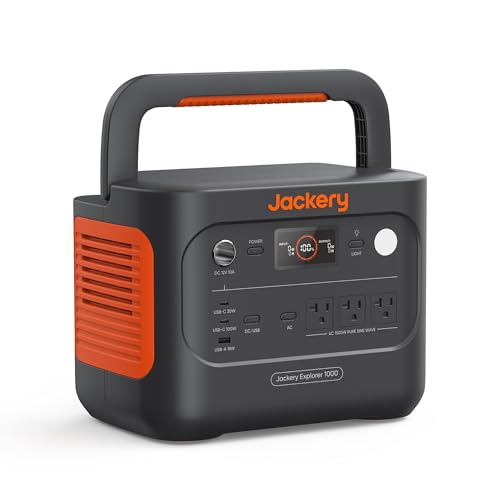
This assesses whether the specific product has been listed by an OSHA-recognized testing laboratory according to the relevant portable power pack standards, such as UL 2743. It is important because having an active, verifiable listing is more reliable than a self-issued certification. Among the products evaluated, the Jackery Explorer 1000 v2 received a score of 94, whereas several others scored between 62 and 74 due to the absence of confirmed public UL, ETL, or CSA records.
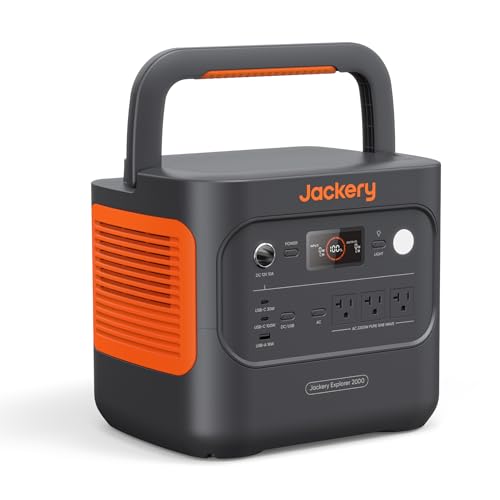
This evaluates whether documentation exists for chemistry information, packaging protections, operating limits, and a transport summary aligned with UN 38.3 standards. Lithium stations require this documentation for fire risk assessment and transportation purposes. The Jackery Explorer 2000 Plus received a score of 87 due to the availability of an exact transport report, whereas many others scored between 68 and 75 because no publicly available model-matched summary was identified.
This assessment details the implemented safety measures for issues such as overheating, short circuits, overcurrent, overvoltage, low-temperature charging, and overload, including the product’s response to faults. Precise, clearly defined limits in the manual are more valuable than vague claims by the BMS. Scores ranged from 54 for the EcoFlow Delta 3 Plus, which experienced reports of thermal concerns during high loads, to 87 for the Jackery Explorer 1000 v2.
This assessment determines whether backup and UPS claims clarify transfer time, output capacity, compatible transfer equipment, and installation requirements, without suggesting that a station can safely backfeed a building. Most products are portable backup sources rather than grid-connected systems. Higher scores were awarded to products with well-defined limits, such as the Jackery Explorer 2000 Plus, which scored 78. It is also important to consider exclusions related to medical equipment, servers, workstations, and home wiring.
This assesses whether any pertinent recalls, regulatory warnings, or unresolved defect actions impact the specific brand or product. A higher score indicates that no relevant unresolved issues were found and that the situation was handled transparently where applicable. Overall scores typically ranged from 70 to 78, as no specific recalls for the exact product were identified. However, EcoFlow reviews mentioned a separate recall for the Delta Max 2000, highlighting the importance for buyers to verify the exact model rather than relying solely on the brand's reputation.
This assesses expected cycle life, warranty coverage, service availability, firmware support, spare parts, and the possibility of repairing or replacing components. Extended usage can help decrease early electronic waste, but manufacturer cycle claims may not align with independent testing results. The Anker SOLIX C300 DC achieved a score of 82, backed by a three-year warranty and documented support. In contrast, sealed products with limited repair information scored between approximately 69 and 73.
This measures the energy lost during charging, including AC or DC conversion and standby. Efficiency is important because these losses decrease battery runtime and increase the amount of electricity needed to recharge. Independent testing clearly distinguishes between products: the Jackery Explorer 500 v2 achieved a score of 89 and an overall AC charging efficiency of 73% in its test, while the Anker SOLIX C300 scored 69 for overall AC efficiency.
This metric assesses whether the brand provides U.S. consumers with a practical collection or return option and clear safety instructions for damaged batteries. Lithium products should not be disposed of in household trash or curbside recycling. Most scores ranged from 69 to 75; for example, Anker’s C300 DC received a score of 74 for offering recycling options and a mail-back program, whereas many other brands only provided generic recycling instructions without specifying a designated U.S. collection partner.
This assesses whether claims regarding solar usage, recyclability, recycled content, or environmental benefits are concrete and substantiated, rather than implying that the battery has no environmental impact. Scores ranged from 64 to 74. Having a solar-input feature alone does not constitute lifecycle evidence, and reviews generally found no specific product lifecycle assessments or verified recycled content. Even the higher-scoring claims were typically qualified and not presented as definitive proof of zero impact.
This assesses the device's outlet-level watt-hours, continuous output, surge performance, voltage stability, and recharge efficiency under specified conditions. It is a highly effective method for differentiating between nominal capacity and actual delivered energy. The scores varied from 60 for the ALLWEI product, which lacked reliable independent capacity testing, to 91 for the Jackery Explorer 500 v2, which was evaluated through independent measurements across AC, USB-C, DC, and continuous output.
This assesses whether headline claims specify the conditions and limitations that validate them. High-quality evidence differentiates between a temporary surge mode and sustained output, cell capacity and outlet energy, as well as a UPS transfer time of a few milliseconds versus zero interruption. Scores ranged from 50 to 57 for products with conflicting or minimally supported specifications, while the Jackery Explorer 500 v2 scored an 82, reflecting claims that more accurately matched testing results and manual specifications.
This metric assesses the quantity of third-party evidence specific to the model, beyond basic brand marketing. It includes certifications, test reports, warranty details, and technical documentation. The Jackery Explorer 1000 v2 received a score of 84 because its exact model is listed in a publicly available SGS certification record and has undergone independent efficiency testing. Products lacking accessible certification, shipping documentation, or calibrated performance reports typically receive scores ranging from 66 to 76.
The product features a LiFePO4 battery, with the manufacturer specifying charging temperatures between 32°F and 104°F and discharging temperatures from -4°F to 104°F. Proper ventilation, grounding, and storage away from flammable materials are also recommended. The user manual includes procedures for handling overloads, short circuits, inverter overheating, PV overvoltage, and faults related to charging or discharging temperatures. These safety measures are documented by the manufacturer but are not part of a specific model’s public NRTL listing. Additionally, no publicly available UN 38.3 test summary matching this model was found. BLUETTI claims the battery can provide over 3,000 charge cycles, with an expected lifespan of up to 10 years, and offers a 5-year warranty. The manual advises users to dispose of the battery by taking it to designated recycling centers instead of household trash and to consult professional battery recyclers for malfunctions. However, it does not specify a U.S. product take-back program or identify a particular collection partner. A review of CPSC recall records up to August 10, 2026, revealed no recalls or safety warnings specific to this product.
This device is ideal for individuals needing a portable power source for phones, laptops, cameras, routers, small lights, tool battery charging, or short outage tasks, with a combined AC load capacity of up to 600W. Its lightweight design and versatile ports make it convenient for car trips, camping, job sites, and moving around the home during a blackout. It also appeals to buyers who appreciate a documented LiFePO4 battery and a manufacturer-provided 5-year warranty, understanding that the runtime for AC appliances may be limited.
This device is not suitable for providing backup for an entire home, extended refrigerator operation, medical equipment that requires a continuous power supply, data servers, or workstations. BLUETTI explicitly states that the UPS mode is not designed for high-performance UPS applications. It should not be used outdoors in rain or high humidity environments, as its enclosure is rated IP20. Do not connect it to household wiring or attempt to backfeed through an outlet. For building circuit backup, a properly selected transfer setup and guidance from a qualified electrician are essential.
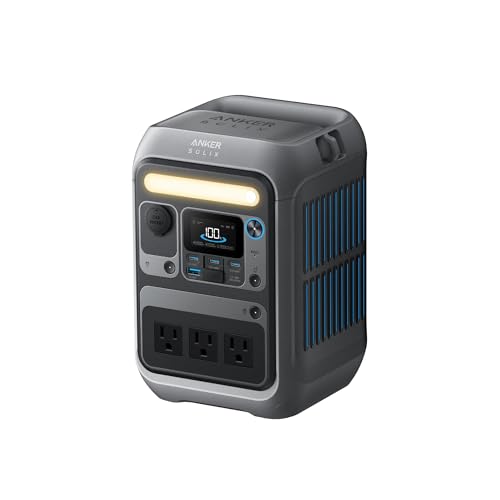
The battery is identified as lithium iron phosphate, a chemistry typically chosen for its long cycle life. However, the publicly available records reviewed did not include a model-specific UN 38.3 transportation test summary or an independently verifiable UL, ETL, or CSA listing for this particular product. The user manual offers important safety features, such as overload shutdown and alerts for high and low temperatures. It recommends charging only within a temperature range of 32°F to 104°F and discharging between -4°F and 104°F. No recalls for this specific product were found in the CPSC search results reviewed. However, it is worth noting that in June 2025, Anker recalled a different PowerCore 10000 power bank due to reports of fires and explosions, so it remains advisable to check the brand’s recall notices regularly. Anker provides a recycling program for damaged and end-of-life devices via mail-in in certain areas, although their published U.S. replacement parts policy primarily covers charging accessories and does not clearly specify parts availability for this power station. While solar charging can help reduce reliance on grid electricity, actual performance depends on factors such as panel size, sunlight conditions, angle, and weather.
This product is ideal for campers, road travelers, field workers, photographers, and renters who require a portable power source for phones, laptops, cameras, lights, fans, projectors, or other devices that generally draw under 300W. Weighing only 9.1 pounds and featuring a compact design, it is convenient for situations where space and portability are important. It is also suitable for short-term tasks during power outages, such as keeping communication devices charged. Buyers should estimate runtime based on the actual usable capacity, approximately 230Wh when used through AC outlets and even higher via USB-C, rather than relying solely on the 288Wh label as the total available energy.
This product is not suitable for households that require refrigerator operation, microwave use, space heating, cooking appliances, medical equipment needing dedicated backup certification, or multi-day emergency power. Its continuous output of 300W can be quickly exceeded, and its small battery provides limited AC runtime. It should not be used to power building circuits, RV shore-power wiring, or any outlets connected through improvised cords. Such applications require properly rated, certified transfer equipment and, if necessary, installation by a qualified professional. Buyers who need verifiable electrical certification or a public transport safety test summary should request documentation before depending on this product.
The product utilizes LiFePO4 cells, a chemistry commonly chosen for stationary and portable backup applications. The available documentation covers features such as overload shutdown, high and low temperature alerts, a defined charging temperature range of 32°F to 104°F, and limits for solar input. These safety features are helpful; however, public verification does not confirm a model-specific U.S. NRTL electrical listing or a publicly available UN 38.3 test summary. No specific model of this product has been found to be subject to a CPSC recall, although Anker has issued separate power bank recalls in 2024 and 2025 related to other models and overheating risks. Regarding longevity, the manufacturer claims the battery can endure over 10,000 cycles while maintaining more than 60% of its capacity under typical-use conditions and offers a five-year warranty. This cycle-life claim has not been independently verified. Anker provides a recycling program in the U.S., including options for damaged units, and states it offers at least three years of parts or service support after the end of production for compatible charging accessories. However, its broad environmental claims are not supported by a product-specific life-cycle assessment or recycled-content documentation.
This product is ideal for households seeking a compact, portable backup power source for appliances such as refrigerators, routers, phones, lights, laptops, or similar low-to-moderate power loads during occasional outages. Its independently tested refrigerator run times and low idle consumption are especially beneficial for setups with load cycling rather than continuous high power use. It is also suitable for users who prefer to recharge via standard wall outlets, can handle a two-handed lift of approximately 35.7 pounds, and want a simple plug-in UPS solution for a select group of directly connected devices, rather than a permanently wired home backup system.
This device is not suitable for those seeking complete home backup, connection directly to a breaker panel, or automatic operation via household wiring. Such applications require properly rated transfer switches installed by qualified professionals, not a portable unit plugged into an outlet. It is also not designed for continuous loads exceeding 1,500W, multiple heating appliances running simultaneously, or sensitive equipment that might reject SurgePad functionality. Users who frequently go off-road or operate outdoors should be aware that it lacks port covers and impact bumpers for protection. Additionally, those needing quick solar recharge should consider the 400W maximum solar input limit.
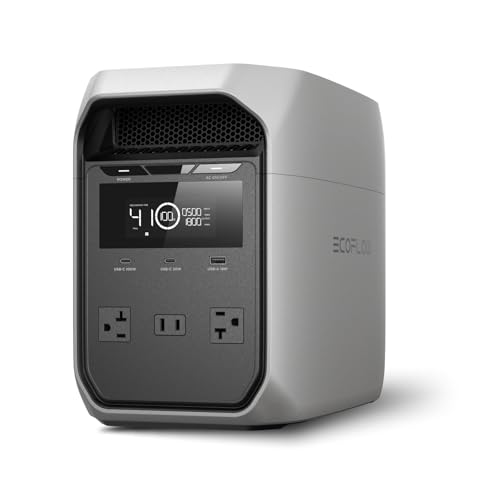
The battery is made of lithium iron phosphate. The user manual details protective features including safeguards against overvoltage, overload, overcurrent, short circuit, and battery temperature issues. It prevents charging when the temperature is outside the recommended range and displays fault messages for thermal or output-related problems. These protections are well-documented and meaningful; however, searches in public certification databases such as UL, ETL, or CSA did not reveal any model-specific listings or related certification records, nor was there a publicly available UN 38.3 transport test summary. No recalls for this particular model were found in the Consumer Product Safety Commission (CPSC) records checked. EcoFlow did recall a different Delta Max 2000 model on October 9, 2025, due to overheating and fire incidents, and issued a firmware update as a corrective measure. Therefore, firmware updates and proper storage as outlined in the manual are important. EcoFlow advises caution when disposing of damaged batteries, recommending against placing an incompletely discharged unit directly into a battery recycling container. The company does not mention a U.S.-based take-back or collection program for this product. While its claims about solar charging capability and long battery life are credible, there is no available product-specific lifecycle assessment or evidence of recycled materials.
This product is ideal for individuals requiring a portable, approximately 1kWh battery to handle short outages, support a home office, power a CPAP machine, go camping, or use in an RV. It is designed to directly power devices through its outlets. The device is particularly convenient for users who prioritize quick recharging via wall outlets and plan to charge laptops and other compatible electronics using the USB-C port. It also suits buyers who are comfortable monitoring the battery percentage, setting the AC timeout correctly, and understanding that the runtime of appliances depends greatly on the load and inverter efficiency.
This device is not suitable for those needing a full-home backup system, direct connection to a breaker panel, or a replacement for properly installed transfer equipment. It should not be used to backfeed a home through an outlet. Additionally, it is not ideal for multi-day refrigerator operation, large resistive heaters, high-power cooking appliances, or continuous heavy-duty tools, as it has a stored energy capacity of approximately 1 kWh before accounting for conversion losses. Households that need to protect medicines or critical equipment should consider the AC timeout setting and confirm device compatibility before depending on the UPS for backup power.
The product utilizes lithium iron phosphate chemistry and features a battery management system designed to monitor temperature and safeguard against overloads and short circuits. While these are important safety features, they do not replace the need for independent, model-specific electrical certifications. A search did not reveal any UL, ETL, or CSA listings, nor any publicly available UN 38.3 transport test reports matching this model. Additionally, there are no ongoing U.S. recalls or regulatory actions associated with this product based on the available sources. Although the manufacturer claims a lifespan of over 3,500 cycles, this has not been independently verified for this specific product. The one-year warranty offered is relatively short compared to the expected battery lifespan. Furthermore, there is no publicly available repair parts program, official service documentation, or designated U.S. battery recycling process. When the battery reaches the end of its life, users should adhere to local lithium battery disposal regulations and avoid discarding damaged batteries in household trash or curbside recycling.
This product is ideal for travelers, campers, remote workers, or emergency kit users who need a portable light source with occasional power output for devices such as phones, laptops, cameras, lights, or other small electronics that stay within a 300W limit. With a 192Wh battery, it is better suited for short-term power needs rather than prolonged operation of appliances. The device is also suitable for users who accept the listed capacity, charging details, protections, and cycle life claims as manufacturer specifications rather than independently verified data.
It is not suitable for connection to home wiring, breaker panels, wall outlets, or any setup that could feed power back into the utility supply. Select equipment that is equipped with compatible, listed transfer hardware and installation instructions designed for this purpose. Additionally, it is not appropriate for high-wattage heating devices such as coffee makers, kettles, hot plates, or space heaters. For individuals relying on CPAP machines, medical devices, or other critical loads, it is recommended to use a system with proven runtime at the actual load and verified UPS or backup switching performance.
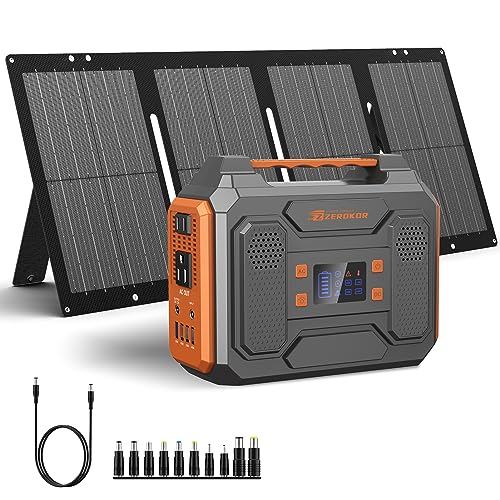
The product utilizes a lithium-ion battery. Its manual advises against disassembling, modifying, exposing it to moisture, or operating it beyond the specified 300W limit. It also mentions that the AC output will be inactive while the device is charging. These are important operational guidelines; however, public documentation does not specify the battery’s cell chemistry, detailed battery management thresholds, low-temperature charging behavior, or include a model-specific UN 38.3 transport test summary. Additionally, no specific electrical safety certification for this model has been found in the publicly available records checked. There are no relevant recalls or regulatory warnings in the U.S. related to this exact product based on the sources reviewed. Using a solar panel can decrease dependence on wall power during use, but it does not eliminate the environmental impact of the battery product. No take-back or recycling program, such as ZeroKor's, has been identified for this product in the U.S. At the end of its life, EPA guidance states that lithium-ion devices should not be disposed of in household trash or curbside recycling, and damaged batteries require specialized handling.
This product is ideal for campers, road-trippers, or renters preparing for outages who require a lightweight, portable power source for phones, USB devices, LED lights, small laptops, or other low-wattage equipment. It is best suited for users who can verify each device’s running and startup wattage, ensure the total load remains below the specified 300W maximum, and view the 280Wh capacity as a manufacturer’s rating rather than a guaranteed measured energy output. The included solar panel can be helpful for slow recharging during daylight hours when quick charging is not necessary.
This product is not suitable for households that require a home backup system, transfer-switch connection, or for powering large appliances such as refrigerators, heating devices, hair dryers, kettles, coffee makers, or equipment with high startup surges. It should not be used as a grid-connected power source or as an alternative to authorized home standby systems. Buyers needing a power solution for medical devices, uninterrupted computer operation, verified battery transportation documentation, independently certified capacity, or certified electrical safety should seek product-specific verification, as such information was not publicly available for this unit.
The safety certification offers a higher level of assurance than a self-issued certification logo. The specific model is listed in SGS’s public certification record for ANSI/CAN/UL 2743, and SGS North America is recognized under OSHA’s NRTL program. The user manual specifies that the device should only be charged within temperatures of 32°F to 113°F and discharged between 14°F to 113°F. It also recommends proper ventilation, indoor dry use only, and advises against disassembly. The manual warns against using damaged batteries, cords, or plugs. Currently, CPSC recall searches have not identified any recalls for this particular product. The battery utilizes lithium iron phosphate chemistry and is rated by Jackery to provide at least 4,000 charge cycles while maintaining a capacity of 70% or more. The standard warranty lasts three years, with an optional two-year extension. The battery pack is not designed to be user-serviceable, which limits repairability. Jackery promotes a trade-in and recycling program in the U.S., but its publicly available information does not specify a model-specific end-of-life shipping or collection process for damaged batteries. While solar charging offers environmental benefits, broad claims about being environmentally friendly are not supported here by a detailed product life-cycle assessment or recycled-content information.
It is ideal for campers, RV owners, mobile workers, and households seeking a portable power source for specific outage needs, such as charging phones, powering lights, routers, laptops, CPAP machines, or refrigerators with known startup requirements. Weighing 23.8 pounds, its size is convenient for travel by car, and its 1,500W AC capacity supports many common appliances. Additionally, it is suitable for users who can operate it indoors, keep it dry, monitor the wattage of connected devices, and connect backup equipment directly rather than attempting to energize household wiring.
This product is not suitable for those requiring full-home backup, automatic transfer to building circuits, or a grid-connected inverter system. It should not be used to backfeed an outlet, connect directly to a service panel without proper transfer equipment, or used as an outdoor weatherproof generator. Additionally, it is not appropriate for mission-critical servers, workstations, medical devices needing zero-transfer UPS performance, or appliances with a startup or running load exceeding 1,500W. Customers considering field battery replacement should be aware that the manual instructs replacing batteries to be performed only by qualified service technicians.
The product features a LiFePO4 battery, with charging recommended between 32°F and 113°F and discharging between 14°F and 113°F. The user manual includes warnings for high and low temperatures, fault codes, guidance on handling overloads, restrictions on dry-use, and instructions to discontinue use if there are any unusual odors, overheating, or damages. However, publicly available documentation does not include a model-specific UN 38.3 transportation test summary or an accessible, verified NRTL certification for the portable power pack. Regarding durability, Jackery claims a lifespan of approximately 4,000 charge cycles while maintaining at least 70% capacity, and offers a five-year warranty. While this reflects good manufacturer support, there are no publicly available repair manuals, spare parts, or independent cycle-life testing reports. Jackery also states that it accepts qualifying end-of-life units through a U.S. recycling program. Damaged lithium batteries should not be disposed of in household trash or curbside recycling.
This product is ideal for buyers seeking a portable, plug-in power source for appliances such as refrigerators, routers, lights, laptops, small cooking devices, camping gear, or RV loads, all within a 2,200W limit. Its independently tested AC capacity provides an accurate estimate of approximately 1.74kWh, accounting for appliance-specific losses. It is also suitable for individuals capable of lifting and securing a 39.5-pound unit, maintaining it in a dry and well-ventilated environment. Additionally, they should be comfortable with the fact that solar panels are optional accessories and not part of the included package.
This product is not suitable for individuals requiring life-support, medical, safety-critical applications, or backup for servers or workstations. The manual clearly states that its switching time is not instantaneous and advises testing for compatibility. Additionally, it should not be directly connected to household circuits, as it does not include or specify a transfer switch. For a setup requiring 240V service, expandable battery capacity, solar input exceeding 400W, operation in wet conditions, or an independently verified electrical listing for the exact model, please choose an alternative system.
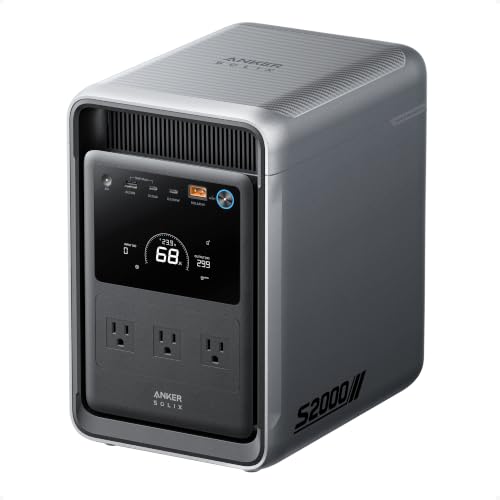
The product utilizes lithium iron phosphate (LiFePO4) cells, a chemistry known for its long cycle life. Anker recommends charging the device only within the temperature range of 32°F to 104°F. Its documentation outlines protections against temperature extremes, overcharging, over-discharge, overvoltage, and overheating. However, no specific UN 38.3 transport certification matching this product was publicly available. While Anker claims compliance with UL standards 1012, 1778, 1973, and 60730, the exact certification details could not be verified in public databases, and there is inconsistent information regarding whether SGS or Intertek issued these certifications. No recalls specific to this product have been identified through the U.S. CPSC recall database. Although Anker has previously issued U.S. recalls for other lithium-ion power banks, any damaged, swollen, hot, or smoking batteries should be handled as hazardous waste according to local regulations. Anker provides a general U.S. recycling mail-back program, but it is advisable to confirm whether this power station is accepted before sending it in.
This portable power station is ideal for campers, road travelers, mobile workers, and households prepared for outages that require a self-contained battery to power essential devices directly—such as lights, networking equipment, laptops, small coolers, or minor kitchen appliances. With a substantial capacity of 1,056Wh and a rated output of 1,800W, it offers significant power in a portable form, while its 28.4-pound weight makes it manageable for vehicle-based use. It is suitable for users who can adhere to the specified temperature, output, and solar-input limits, and who appreciate the convenience of app-based monitoring.
It is not suitable for anyone intending to energize household circuits by plugging into a wall outlet, panel, dryer receptacle, or other makeshift connection. Such methods can cause dangerous backfeeding and necessitate properly chosen transfer equipment and professional installation. Additionally, it is not appropriate for extended multi-day outages without a reliable solar or charging strategy, for critical equipment that cannot handle a transfer time of less than 20 milliseconds, or for motor loads with high startup demands. Do not depend on SurgePad for devices that require stable, tightly regulated voltage.
The safety information provided is adequately detailed regarding operational limits. The manual highlights potential faults such as overload, short-circuit, overtemperature, DC overcurrent, PV overvoltage, and low-temperature charging issues. It advises users to store the unit away from flammable materials, avoid using damaged ports and cables, and seek assistance from qualified service personnel. Additionally, it recommends not using the UPS mode for servers or workstations that require high-performance backup. No specific product recalls or regulatory warnings from the CPSC were found in US sources. The battery employs lithium iron phosphate chemistry, and BLUETTI offers a five-year warranty along with a manufacturer-stated lifespan of over 4,000 cycles to 80% capacity. These figures suggest good durability, but independent cycle testing and repair records were not available. Disposal instructions include taking the battery to recycling centers and caution against depositing a faulty battery in collection bins, though no specific US take-back program is mentioned. Environmental claims regarding a bio-based enclosure pertain to a different, identified product version, not clearly applicable to this dark-gray model.
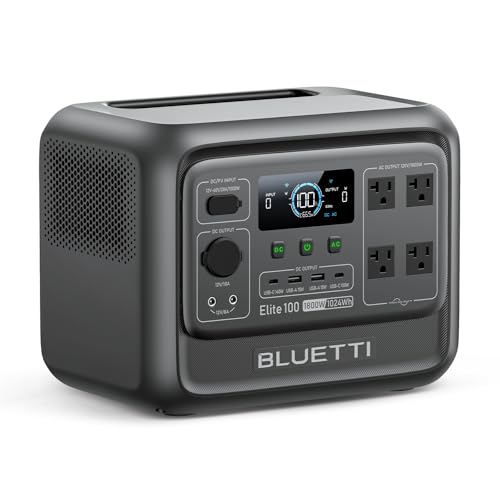
This is ideal for campers, road travelers, renters, or homeowners needing a portable power source for lights, phones, laptops, routers, small kitchen appliances, or a refrigerator during short outages. With a capacity of 1,024Wh and an 1,800W AC power limit, it is designed to handle intermittent loads rather than entire home demands. It is also suitable for indoor use in a dry, well-ventilated area, provided the specified temperature guidelines are followed. Users should connect essential devices directly to the unit rather than trying to connect it to a household electrical panel.
This product is not suitable for individuals intending to energize household circuits, use a wall outlet to feed power back into a building, or replace approved transfer equipment. It should not be used as the sole backup power source for servers, workstations, or other high-performance equipment, as the manual explicitly states it is not designed for these applications. Additionally, avoid using it for continuous loads exceeding 1,800W, in wet or dusty environments, or for charging in cold temperatures below 0°C. It is also not recommended for safety-critical applications where verified electrical certification and capacity information are essential.