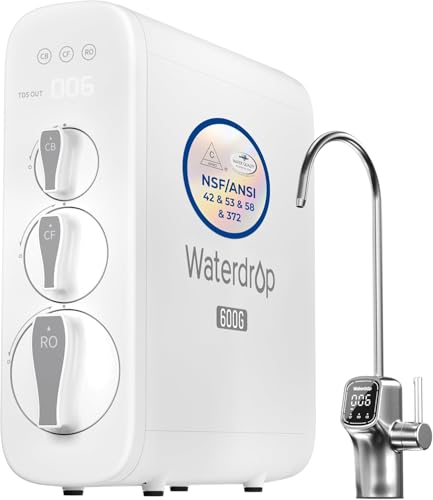
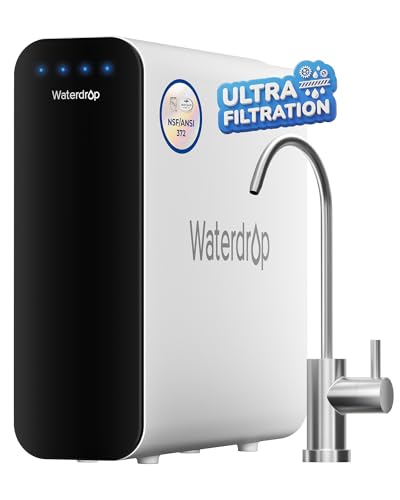
G3 Tankless Reverse Osmosis System
Highly efficient 2:1 pure to drain ratio
Smart LED faucet enhances usability
Tankless design saves space under sink
We compared the top Waterdrop products so you can quickly spot the strongest options for value, features, and everyday performance.
Highly efficient 2:1 pure to drain ratio
Smart LED faucet enhances usability
Tankless design saves space under sink
Provides rapid filtration for immediate use.
Rechargeable design eliminates constant battery buying.
Effectively reduces harmful contaminants like PFAS.
Easy installation and maintenance with tankless design.
Provides high filtration efficiency without using electricity.
Includes a smart panel for convenient monitoring.
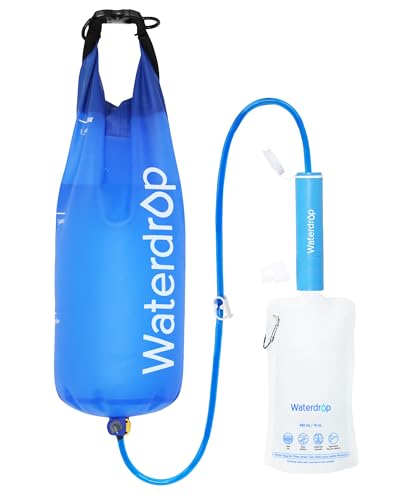
Compact design, perfect for travel and backpacking.
Five-stage filtration ensures safe drinking water.
Easy-to-use gravity system for efficient filtration.
Water filtration systems in this category utilize various treatment methods tailored to specific needs. Under-sink reverse osmosis units push water through a membrane, often producing some concentrate or reject water. Ultrafiltration systems employ fine membranes without generating reject water. Portable gravity filters use a bag and membrane, operating without electricity. The optimal choice depends more on the specific contaminants in your water source, the tested scope of the product, and whether its limitations align with your intended use, rather than just micron size or capacity.
Begin by assessing your water source. For municipal tap water that has undergone treatment, review the local utility report and verify that the product’s claims for contaminant reduction match the listed contaminants. For private well water, obtain results from an EPA-certified or state-licensed drinking water laboratory. Keep in mind that a product capable of reducing dissolved solids, fluoride, cadmium, hexavalent chromium, or selenium is not automatically certified for removing PFAS, lead, arsenic, barium, nitrates, salts, or other specific contaminants. Certification for materials (lead content in components) is different from certification for removal effectiveness; for example, NSF/ANSI/CAN 372 covers lead content, while NSF/ANSI/CAN 61 addresses health effects from materials.
Always look for the product’s exact model in public certification records—not just a seller’s mention of certified components or broad standards. Relevant certifications include NSF Certified Drinking Water Treatment Units listings, the IAPMO R&T Product Listing Directory, and the WQA Gold Seal database. For reverse osmosis systems, NSF/ANSI 58 is pertinent; other standards like NSF/ANSI 42 and NSF/ANSI 53 may address specific treatment claims or structural features, but the model and contaminants claimed for removal must match the certification. A comprehensive performance data sheet should specify tested contaminants, influent and effluent levels, reduction performance, rated capacity, flow rate, pressure, temperature, and any exclusions.
Be cautious of misleading figures. A micron rating of 0.01 or 0.1 describes pore size but does not guarantee complete removal of microbes or chemicals. Labels such as “purifier” do not confirm virus removal unless supported by protocols like NSF P231 or EPA microbiological standards. Stated reverse osmosis recovery ratios reflect water-use claims and do not necessarily account for reject water discharge; verified recovery percentages may not be available. Simply citing NSF approval of components or NSF/ANSI 372 does not guarantee contaminant removal. High gallon capacities can also mask multiple cartridges with different replacement schedules.
Maintenance is essential to ensure safe operation. Regularly check parameters such as pressure, temperature, pH, turbidity, TDS, and follow proper installation, flushing, storage, sanitation, and filter replacement procedures. Using a dedicated filtered water faucet can help prevent confusion between filtered and unfiltered water. Features like clear filter-life indicators and post-replacement flushing help prevent media exhaustion or bacterial growth. Confirm that the filter housing, seals, fittings, and cartridge interfaces are structurally sound and resistant to bypass, not just that they claim media durability.
Important safety reminder: these systems are not designed for emergency purification. Do not rely solely on under-sink or outdoor filters to treat microbiologically unsafe, flood, sewage-contaminated, or unknown-quality water. Outdoor filters typically lack verified virus treatment capabilities, and emergency scenarios may require chemical disinfection per public health guidelines. Additionally, select products based on source testing and certified claims for specific contaminants, especially when used with private well water. Installation limits, cartridge replacement schedules, flushing procedures, and the absence of certified recycling options should also be considered prior to purchase.

The scores below evaluate the provided products based on the category’s standards for health, ecology, and evidence. A higher score signifies greater support in that area, but does not guarantee that the product is suitable for every water source.
This assesses whether the verified reduction claims align with the contaminants identified in a utility report or accredited well-water test. This is crucial because the products offered target different risks: the reverse osmosis system achieves the highest score at 88, while ultrafiltration and gravity-based systems score 70. A higher score indicates that the treatment claims can be accurately matched to the contaminants present in the tested water source.
This measure confirms the reduction of bacteria, protozoa, and viruses, accompanied by explicit warnings regarding usage limits. Merely considering micron size is insufficient. Both the outdoor gravity filter and under-sink ultrafiltration product score 70, whereas the reverse-osmosis system scores 76 due to its more clearly documented warnings and limits. However, none of these should be regarded as a universal emergency purifier based on the provided information.
This pertains to the entire water-contact system rather than any single component. Valid evidence includes certification coverage from NSF/ANSI/CAN 61 or 372, along with public certification records. The reverse osmosis system has a score of 89, backed by IAPMO documentation that includes NSF/ANSI 372; the other two systems score 72 and 70, with available material information but more limited evidence regarding complete product-specific removal or contact.
This assesses the housing, seals, fittings, bags, connections, and cartridge interface during normal operation. It is important because a high-quality filter can be compromised by leaks or unfiltered bypass. The reverse-osmosis system receives a score of 86, with certification verifying the structural integrity of its listed components. In comparison, ultrafiltration and gravity-based systems score 74 and 70, respectively, as they include practical installation or handling instructions but offer less independent traceability.
This assesses whether the instructions for capacity, replacement timing, flushing, storage, and sanitation are detailed enough to prevent media exhaustion or microbial regrowth. The reverse-osmosis system receives a score of 86 and recommends maintenance at six, 12, and 24-month intervals. Ultrafilteration scores 76, providing reminders and guidance on flushing. The gravity filter scores 68, as its capacity and replacement instructions are less consistently explained.
This metric assesses the amount of water used or discharged per gallon treated and whether any tradeoffs are disclosed. The gravity filter receives a score of 94 because it requires no electricity and produces no reverse osmosis concentrate. Ultrafiltration scores 88 and is noted to generate no RO wastewater. The reverse osmosis system scores 83; although its manufacturer claims a 2:1 purified-to-drain ratio that minimizes waste, it still directs concentrate to the drain.
This assesses cartridge lifespan, the environmental impact of materials and packaging, and the availability of reliable recycling or take-back programs. The products utilizing reverse osmosis, ultrafiltration, and gravity filtration receive scores of 75, 74, and 72, respectively. All of these systems depend on disposable or proprietary replacement components, and reviews have found no verified take-back or recycling options within the United States for the corresponding cartridges or filters.
This assessment evaluates whether the claims correctly specify the tested model, contaminant, percentage, conditions, limits, and terminology such as “purifier” or “NSF.” The ultrafiltration product received a score of 69, compared to 58 for the gravity filter and 52 for reverse osmosis. The lower scores indicate that these products make wider-ranging claims that go beyond the available public evidence, including unsupported or ambiguous assertions regarding PFAS, viruses, and other contaminants.
This metric evaluates whether the completed product is listed in an authorized public registry with the specified scope. The reverse-osmosis system ranks highest at 87, as it holds an IAPMO certification that verifies the finished system and its specific reduction capabilities. Ultrafiltration scores 70, and gravity filters score 68; their accompanying reviews did not find comparable model-specific public certifications for the relevant filtration or microbial claims.
This assessment evaluates whether a model-specific performance chart provides challenge conditions, including influent and effluent results, capacity, flow, pressure, temperature, and exclusions. Reverse osmosis achieves a score of 82 based on published laboratory data and operational limits. Both ultrafiltration and gravity systems score 68: ultrafiltration is limited by practical installation constraints, whereas gravity systems do not have a comprehensive public performance sheet and lack clearly defined capacity and source-water restrictions.
The most reliable health certification is the IAPMO-issued certificate confirming NSF/ANSI 58 reduction of TDS, fluoride, cadmium, hexavalent chromium, and selenium. It also verifies compliance with NSF/ANSI 372 for lead content and certifies the safety of materials and structural integrity for the specified prefilters. While reverse osmosis can effectively reduce a wide range of dissolved contaminants, system selection should be based on utility reports or accredited well testing rather than general claims. The manual provides important safety instructions, including procedures for initial use and replacement flushing, alerts for filter replacement based on time or capacity, guidance for storing the unit during long periods of inactivity, and an internal leak warning. It emphasizes that well water requires prefiltration. Ecologically, the stated 2:1 pure-to-drain ratio indicates that one gallon of water is sent to drain for every two gallons produced; however, this ratio is manufacturer-stated and has not been independently verified. Additionally, cartridge replacements generate ongoing plastic waste, and no verified recycling or take-back programs are currently available.
This product is suitable for households that use municipal tap water and have a recent utility report or an accredited test indicating the presence of dissolved contaminants within the system's verified scope, particularly fluoride, cadmium, hexavalent chromium, selenium, or elevated dissolved solids. It is also ideal for kitchens with sufficient under-sink space, a nearby electrical outlet, cold-water plumbing within the specified pressure range, and either a separate faucet hole or willingness to drill one. Buyers should be prepared to replace three proprietary cartridges according to the recommended schedule and to regularly inspect the connections.
This product is not suitable as the only safety measure for untreated surface water, during a water emergency, or in households under a boil-water, do-not-drink, or do-not-use advisory. In such cases, guidance from public health authorities should be followed. Households with private wells should first have their water tested by an accredited laboratory. The manual recommends prefiltration for well water, but the reviewed certification does not confirm complete microbial purification performance. Additionally, this system is not ideal for kitchens lacking an outlet, drain access, sufficient cabinet space, or a practical setup for installing a separate faucet.
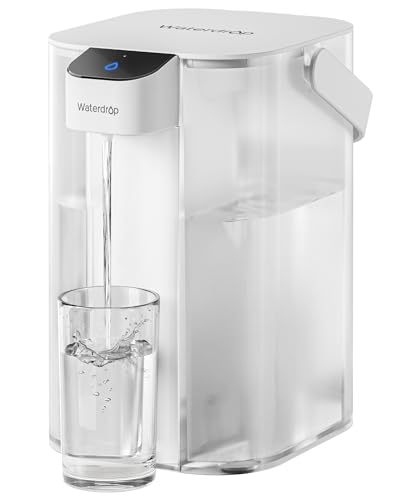
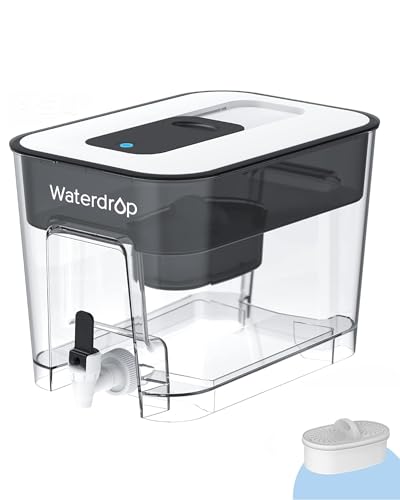
The most reliable health-related evidence comes from product-specific third-party certifications. IAPMO listing records link the finished product and specific cartridges to claims of treating up to 200 gallons for issues such as chlorine, taste and odor, lead, mercury, certain VOCs, and some emerging contaminants. Manufacturers also provide performance sheets that include test concentrations and a warning not to use the filter with microbiologically unsafe or unknown-quality water without proper disinfection. Regarding materials, the evidence is more limited. The product is certified to NSF/ANSI 372 for weighted lead content; however, the available evidence does not confirm full NSF/ANSI 61 certification for all wetted parts. A California Proposition 65 warning appears on the replacement filter documentation but does not specify the substance or exposure level. From an environmental perspective, its long cartridge lifespan can reduce the frequency of replacements and it produces no concentrate-water discharge. The main tradeoffs include a disposable proprietary cartridge and an integrated battery, with no verified recycling or take-back program for the cartridges.
This product is suitable for households using treated municipal tap water that has verified concerns aligning with its certified claims, such as lead, chlorine taste and odor, mercury, or the specified organic contaminants. It is especially convenient for renters, dorm residents, or kitchens unable to install plumbing fixtures, as well as for individuals who prefer a pumped dispenser instead of manually pouring from a traditional pitcher. With a 15-cup tank and a 200-gallon cartridge capacity, it is ideal for daily drinking and cooking, as long as the household adheres to the recommended cleaning and replacement procedures.
This product is not suitable for camping, emergency situations, untreated surface water, private well water without a certified water test, or any water that may be contaminated with harmful microorganisms. It has not been verified to disinfect or eliminate viruses, bacteria, or protozoa. Additionally, it is not appropriate for users whose utility report or well test shows the presence of nitrates, fluoride, hard water, high levels of dissolved solids, or other contaminants outside the reduction capabilities listed. Households requiring treatment for these specific issues should select a filtration system based on the actual test results, rather than relying on a general pitcher filter.
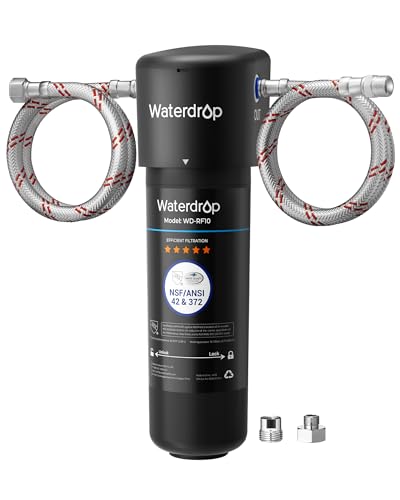
The product utilizes sediment, ultrafiltration, and carbon-block filters, with a claimed ultrafiltration rating of 0.01 microns. Waterdrop promotes compliance with NSF/ANSI 372, which pertains to lead content standards for components in contact with drinking water. However, this certification does not guarantee verified reduction of lead or other contaminants, and the specific finished product was not listed in NSF's public drinking-water treatment database. Additionally, no records of U.S. recalls or Consumer Product Safety Commission incidents related to this product were found during the review. The maintenance instructions provided are beneficial for health, as they specify feed-water limits, follow-up reminders based on either time elapsed or volume filtered, and procedures for flushing after replacing filters. Waterdrop claims that their filtration process does not produce wastewater, unlike reverse osmosis systems that discharge concentrate. The tradeoff is the need to replace three cartridges periodically, ranging from every six to 24 months. No verified manufacturer recycling or take-back program for these cartridges was identified.
This product is suitable for households using municipal tap water who desire a dedicated drinking water faucet, visible filter change reminders, and a filtration system that, according to Waterdrop, produces no wastewater. It is ideal in situations where a recent local water report and, if necessary, targeted water testing do not indicate the presence of contaminants requiring certified reduction claims. The cabinet should be able to fit a unit approximately 15 inches tall, along with tubing and a separate faucet installation. Users are also responsible for following the provided replacement and flushing instructions.
This product is not suitable for untreated outdoor water, emergency water, or private well water unless the water has been properly tested and appropriate pretreatment and disinfection procedures have been implemented. The manual specifies that the intended feed water is municipal tap water and indicates that well water should be prefiltered. It is also not appropriate in situations where utility reports or accredited tests reveal the presence of lead, PFAS, arsenic, nitrate, fluoride, or other health-related contaminants that require a publicly certified, model-specific reduction claim. Households that cannot install a separate faucet for drinking water should consider other options.
The primary health concern lies in the microbial coverage. Waterdrop utilizes a 0.1-micron hollow fiber membrane and claims to reduce bacteria and protozoa; however, the specific product was not found in major U.S. public certification databases. A pore size specification alone does not guarantee overall product performance, including membrane integrity or virus removal. According to CDC guidance, portable filters do not eliminate viruses, so any water potentially contaminated with viruses should undergo additional disinfection steps. The maintenance instructions are practical and important. Regular backwashing with clean water, drying, capping when not in use, and ceasing use if visible damage occurs can help prevent clogging and contamination. The gravity-based design eliminates the need for reject water typical of reverse osmosis systems, and its reusable parts can reduce reliance on disposable bottles. Nevertheless, the filter remains a consumable item, with Waterdrop recommending replacement annually or after filtering 1,400 gallons. No credible manufacturer take-back or recycling options were found. Additionally, no product-specific recalls or regulatory warnings were identified in the sources reviewed.
This product is ideal for campers, hikers, or those assembling an emergency kit who need a compact, non-electric solution for collecting and gravity-filtering freshwater for one person or a small group. It is best suited for situations where the primary concerns are sediment, taste, protozoa, and bacteria from relatively clear backcountry water sources. Users should be able to backwash, dry, protect, and replace the filter as instructed. Additionally, it is suitable for individuals who carry a separate disinfection method when viral contamination is a potential risk.
This product is not suitable as the only treatment for floodwater, sewage-contaminated water, water near heavy human activity, or in situations involving travel and emergencies where viruses may be present. It is also not recommended for use with saltwater and should not be depended upon to remove dissolved chemicals, fuel, pesticides, metals, or unidentified industrial pollutants. Individuals with compromised immune systems, households using private well water, and anyone requiring confirmed contaminant removal should choose a treatment system based on a recent water test or utility report, with certification from an independent certifying agency.