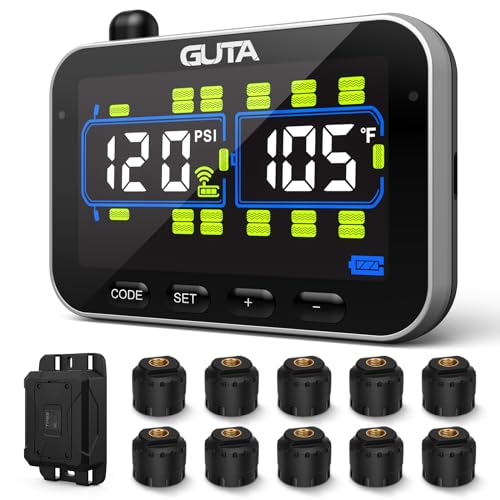
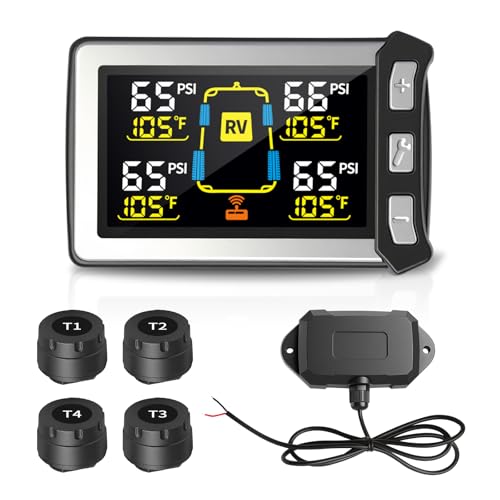
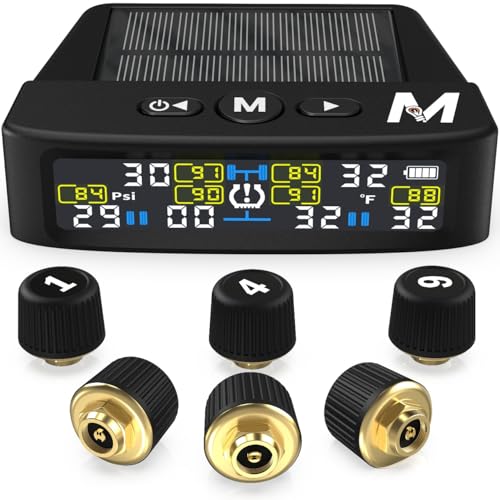
GUTA RV Tire Pressure Monitoring System
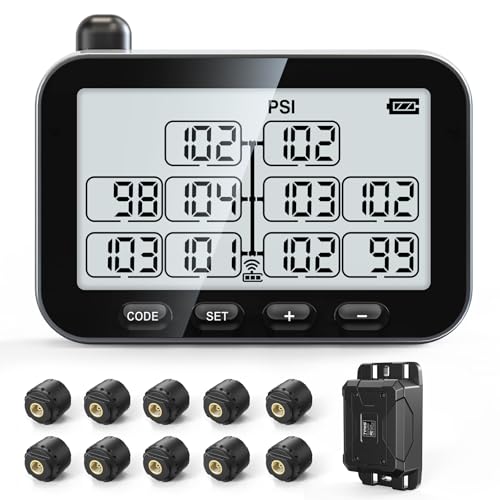
Monitors up to 10 tires simultaneously.
Features a large, easy-to-read display.
Includes a reliable signal booster.
We compared the top Rv Tire Monitoring System products so you can quickly spot the strongest options for value, features, and everyday performance.
Monitors up to 10 tires simultaneously.
Features a large, easy-to-read display.
Includes a reliable signal booster.
Monitors up to three trailers simultaneously.
Offers comprehensive six alert modes.
Long-range signal with included booster.
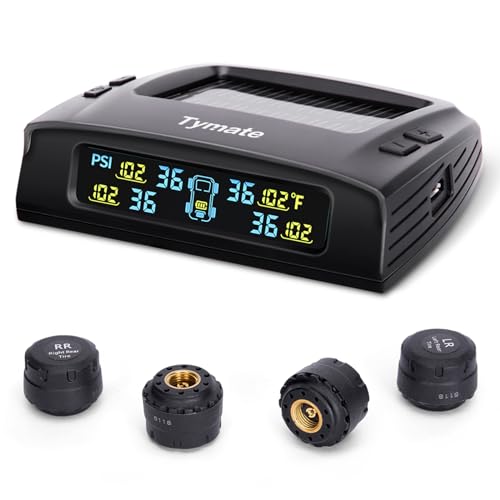
Solar charging enhances convenience and reliability.
Color LCD display offers clear, easy reading.
Six alarm modes ensure comprehensive safety monitoring.
Real-time monitoring enhances driving safety.
Colorful display improves readability and alerts.
Six alarm modes offer comprehensive safety feedback.
Easy-to-read color LCD display.
Long 120ft transmission range.
Monitors up to 87 PSI pressure.
Dual charging options for convenience.
Long-range sensor capability up to 50ft.
Supports multiple vehicles with up to 12 sensors.
Solar charging keeps it energy-efficient.
Auto calibration ensures accurate readings.
Easy-to-read M13 LCD display.
Extended 32-foot range enhances connectivity.
Solar charging reduces the need for batteries.
Six-alarm system ensures comprehensive safety.
Solar charge extends the device's battery life.
Auto calibration ensures accurate pressure readings.
HD color display offers clear, easy viewing.
Eight sensors for comprehensive monitoring coverage.
Real-time alerts for pressure and temperature changes.
Suitable for various vehicles up to 108 PSI.
An RV tire monitoring system utilizes external valve-stem sensors along with a display, repeater, or smartphone app to monitor tire pressure and temperature during travel. Many systems also offer alerts for conditions such as low or high pressure, high temperature, rapid leaks, low sensor battery, or lost signal. While these alerts can prompt you to stop and inspect, they cannot prevent punctures or sudden tire failures and do not replace regular monthly checks of cold tire pressure with a reliable gauge.
Key Factors When Choosing a System:
1. Fitment Verification:
- Confirm the number of tire positions, including those on the tow vehicle, trailer, dual wheels, or multiple trailer configurations.
- Compare the system’s *documented* maximum pressure with your vehicle or trailer’s placard and the tire manufacturer’s cold-pressure and load specifications.
- Be aware that advertised maximum pressures (such as 99, 116, 144, 188, or 199 psi) may conflict with the product manual, which could specify lower limits like 87 psi.
- A broad claim of compatibility with RVs or trucks doesn't guarantee suitability for specific high-pressure tires, valve stems, wheel arrangements, or trailer lengths.
2. System Functionality and Accuracy:
- A reliable system should clearly display pressure, temperature, and provide warnings for leaks, sensor loss, or low batteries, with thresholds and alert details explained in the manual.
- Marketing claims of accuracy, refresh rate, or rapid leak detection are only valid if supported by independent, model-specific testing.
- The strongest evidence comes from ISO/IEC 17025-accredited laboratory reports that specify product, test conditions, pressure and temperature ranges, accuracy, and alarm response.
- While SAE J2657 and NHTSA TPMS testing guidance are useful references, they do not guarantee a product has passed testing.
3. Radio Signal Reliability:
- Beyond a simple distance number, verify the radio’s performance with a model-matched FCC Equipment Authorization record under 47 CFR Part 15, including a visible FCC ID and details of the transmitter and receiver.
- Sensor authorization alone does not validate the entire system (monitor, repeater, display).
- Claims of effective range (e.g., 50 or 100 feet) can be misleading, especially if trailer construction, obstructions, or a repeater affect reception.
- A robust system should alert you when sensors, connections, or receivers fail to report, avoiding silent blind spots.
4. External Sensor Safety and Compatibility:
- Check the valve-stem material, condition, compatibility, sealing instructions, locking hardware, and corrosion protections.
- Follow manufacturer recommendations for leak checks, such as soap-water testing.
- Additional sensor weight or poor fittings can cause pressure loss.
- Weather resistance ratings like IP67 or IP68 are manufacturer claims unless supported by specific testing for ingress, vibration, temperature, corrosion, and road-use.
- Solar or USB charging offers convenience but does not ensure electrical safety; review battery specs, warnings, and UL certifications.
Important Precautions:
- Do not operate a system beyond its confirmed pressure range.
- Do not assume that stated ranges or accuracy are independently verified.
- Never replace regular cold-pressure checks, visual inspections, or the original vehicle TPMS with a monitoring system.
- Larger or obstructed trailer setups may require a repeater.
- External sensors must be fitted carefully, with leak checks and retention checks; some systems have reported rubber-stem failures.
- Keep removable batteries, such as coin cells, out of children's reach and recycle them properly.
In summary, carefully evaluate fitment, verify independent testing, ensure reliable radio communication, and follow safety guidelines when selecting and using an RV tire monitoring system.

These systems can provide an early warning feature; however, the provided scores indicate that demonstrated performance and suitability are more important than simply having an extensive set of features. The top-performing products still typically lack independent, model-specific testing for accuracy, alarm response time, durability, and full radio compliance.
This assesses whether monitoring systems can assist drivers in detecting unsafe under-inflation conditions early enough to take action, while still serving as a supplement to manual inspections. Higher-rated products, like the TireMinder system with a score of 78, integrate proven alert features with clearly defined limitations. Conversely, lower scores typically indicate less comprehensive evidence or more general, less well-supported safety claims.
This is the most critical performance test within the category, assessing reliable pressure and temperature measurements, leak detection, threshold accuracy, and warning response throughout the specified range. The scores provided range from 53 to 70. A higher score indicates more precise alarm logic and stronger support for the advertised functionality. However, none of the evaluated products included an accredited, model-specific report verifying the accuracy and timing of their readings.
This evaluates whether sensors stay connected in the specified towing setup and if clear warnings are issued for lost signals, low battery, or receiver faults. The scores range from 68 to 76. Higher-rated systems provide alerts for signal loss, include boosters, or offer configuration guidance. In contrast, lower-rated systems do not verify towing distance, obstruction effects, or alert timing, increasing the risk of confusing missing data with a normal tire.
External sensors may become loose, damage seals, corrode, or create a leak pathway at the valve stem. Scores for these issues range from 54 to 74. Higher-rated products typically feature components like locking nuts, O-rings, tightening tools, or leak-check instructions. Lower scores indicate missing retention methods or leak testing, unclear information about valve compatibility, or particular concerns such as reported failures of rubber stems.
This metric assesses the compatibility of the system with the buyer's tire count, pressure, trailer length, wheel arrangement, valve stems, and towing setup, all without interfering with or disabling the original TPMS. Scores range from 53 to 76, with higher scores indicating more detailed installation and configuration instructions. Lower scores tend to be linked to conflicting pressure limits, generic universal-fit claims, or ambiguous support for high-pressure tires and long trailers.
Sensors, displays, mounts, and seals need to withstand water, heat, cold, vibrations, debris, and tire servicing. The scores range from 69 to 73; however, none of the supplied products included an independent environmental report specific to their exact models. A higher score indicates a stated rating or more comprehensive maintenance information, but it does not independently verify that an IP67 or IP68 rating will hold up under actual RV road conditions.
This assessment evaluates the safe access to replaceable cells, rechargeable batteries, and solar displays, covering battery specifications, safety warnings, charging instructions, and electrical safety evidence. Scores range from 68 to 70, indicating only minor differences. A higher score signifies more transparent battery or charging information. Regardless of the score, all consumers should consider accessible coin cells a choking hazard and keep them out of children’s reach.
Replaceable sensor batteries and spare parts help avoid discarding a working sensor or display. Product scores range from 69 to 78, with higher-rated items—such as the TireMinder system—noting the use of replaceable CR1632 batteries and serviceable components. Lower scores indicate issues like unclear battery chemistry, lack of information on replacement procedures, or absence of U.S. recycling guidance. Used lithium and coin batteries should be taken to appropriate collection programs rather than disposed of with household trash or curbside recycling.
This assessment evaluates whether the advertised pressure range, accuracy, alert modes, charging, durability, and safety features align with the provided evidence and limitations. Scores range from 48 to 72 points. Products with higher scores recognize that monitoring cannot prevent punctures and differentiate between manufacturer claims and actual test results. Lower-scoring products often have conflicting pressure specifications, unsupported claims about range or accuracy, and broad assertions that are not backed by sufficient documentation.
This assesses whether the specific transmitter and receiver are compatible with U.S. FCC authorization and if significant performance claims are supported by third-party evidence specific to the model. Scores range from 68 to 79. TireMinder stands out because its transmitter lineup has documented FCC authorization; however, none of the products provided comprehensive independent evidence of accuracy and durability. Additionally, an associated sensor filing does not automatically serve as proof for the entire system.
This evaluates the availability of manufacturer contact information, warranty, replacement, and update procedures, as well as public safety action details. Scores range from 68 to 80. Products with higher scores provide more transparent warranty terms, support contact details, information on replacement parts, and service policies. Conversely, lower scores indicate less evidence for consumers that issues such as defects, lost sensors, firmware problems, or safety concerns can be reported and resolved.
The valuable safety information in the available GT20 manual is its limitation statement. It notes that the monitor is not a replacement for regular manual tire inspections, which is consistent with NHTSA recommendations to routinely check tire condition and pressure. The manufacturer also mentions alarms for loss of signal, low battery, pressure, temperature, and rapid leaks. However, independent testing has not verified the accuracy or response times of these alarms under real-road conditions. External sensors and replaceable CR2032 batteries can help prevent the disposal of otherwise functional sensors, reducing material waste. Nevertheless, GUTA does not provide guidance on U.S. recycling practices, details about battery chemistry labeling, or accessible compliance documentation for the coin-cell compartment. Used lithium batteries and rechargeable electronics should not be disposed of in household trash or curbside recycling. No product-specific U.S. recalls, regulatory warnings, or safety notifications were identified in the searches conducted, and no FCC authorization or certified performance reports were found either.
This product is ideal for RV, trailer, or truck owners who need to monitor multiple wheel positions and are willing to set each alarm according to the vehicle's placard and the tire manufacturer's load specifications. It is best suited for a hands-on user who will diligently install the provided external sensors, utilize repeaters when necessary, verify readings with a trusted gauge before traveling, and respond to any warning by stopping safely to inspect the tire. The replaceable sensor cells may also appeal to owners who perform maintenance on their equipment over multiple seasons.
This system is not ideal for individuals who require independently verified reading accuracy, response times, radio compliance documentation, or confirmed water and vibration performance prior to relying on a monitoring solution. Additionally, it is not suitable for users who are unwilling to perform monthly cold-pressure checks, inspect valve stems, or handle coin-cell batteries safely. Owners with pressure demands exceeding 188 PSI, incompatible valve stems, extended towing setups, or a need for documented integration with the vehicle's original TPMS should look for equipment that includes clear fitment and testing documentation.
The primary function of the safety system is to provide early warnings rather than prevent issues. The manufacturer’s documentation includes adjustable pressure limits, temperature alerts, a rapid leak detection warning, low sensor battery indicators, and alerts for missing sensor signals. It also instructs drivers to stop and check the tire when warnings appear. Importantly, the system explicitly states that it cannot prevent punctures, accidents, or replace regular tire inspections. This limitation is significant because the NHTSA highlights TPMS as a tool to help maintain proper tire inflation, not as a substitute for routine tire maintenance. The sensor batteries are specified by the manufacturer as replaceable CR2032 coin cells, allowing for the reuse of sensors rather than discarding them. However, no specific recycling instructions are provided. The EPA recommends that button and coin batteries should not be disposed of in household trash or curbside recycling. Instead, their terminals should be taped or individually placed in bags before being taken to authorized collection points. The manufacturer offers customer support contact information and a two-year warranty, but there is no available independent performance test, environmental testing report, or comprehensive record of radio compliance for the exact product model.
This product is ideal for RV or trailer owners with up to 10 monitored wheel positions who are willing to set each axle's alarm thresholds based on the vehicle’s tire information placard and the tire manufacturer’s load and inflation recommendations. It is most suitable for users with metal valve stems, as they can install the locking nuts, power the repeater, verify sensor seals after installation, and perform regular cold-pressure inspections. Additionally, the multiple trailer profiles feature can benefit owners who switch between a few trailers, provided they carefully verify each sensor assignment before traveling.
This product is not ideal for individuals who require independently verified measurement accuracy, rapid and reliable signal-loss alerts, or documented environmental durability for demanding commercial or remote applications. It is also not suitable for users with rubber valve stems unless the wheel or valve manufacturer confirms compatibility. Additionally, users who are unwilling to monitor for slow leaks after installing external sensors may find it unsuitable. Households with young children should handle replacement CR2032 batteries carefully, as the available documentation does not confirm that the battery compartment and warning labels meet safety standards for this product.
Pressure monitoring systems can alert drivers to a potential low-pressure condition, but they do not serve as a form of preventive maintenance. The National Highway Traffic Safety Administration (NHTSA) recommends checking all tires, including the spare, at least once a month when the tires are cold, using the vehicle’s tire information placard or manual to ensure proper inflation. Similarly, the product's instructions state that it cannot prevent punctures or detect immediate pressure drops. The external sensors are powered by replaceable CR1632 lithium coin cells and come with spare O-rings, which help reduce sensor waste once the battery is exhausted. However, the documentation does not include U.S. recycling guidance, a battery safety certification, or independent verification of environmental and electrical safety standards. These coin cells pose a significant ingestion risk if accessible to children. No specific recalls, regulatory warnings, or certified performance evaluations were found in the publicly available sources reviewed.
This product is designed for owners of modest-pressure trailers, RVs, or towing setups who need a secondary display for monitoring four tire positions. It is ideal for those who are willing to verify compatibility carefully before installation. The system works best when the actual cold tire pressure remains comfortably below the documented 87 psi maximum, when the trailer length allows for a reliable signal without the need for an additional repeater, and when users regularly check their tire pressures with a high-quality gauge each month. The replaceable sensor batteries make it suitable for owners comfortable with performing periodic maintenance.
This device is not suitable for anyone whose tire placard, wheels, valve stems, or tire service requirements have not been verified. Specifically, do not assume the 144 psi rating mentioned in the catalog is confirmed, as the available product documentation states a maximum of 87 psi. It is also not ideal for long towing setups unless a repeater is used and signal performance has been verified. Households with young children should keep spare CR1632 batteries stored safely out of reach. This device is not a replacement for the vehicle’s original monitoring system, routine cold-pressure checks, tire inspections, or professional services for leaks and damage.
Monitoring tire pressure and temperature can assist drivers in detecting developing tire issues, but it should be considered an additional warning system. According to NHTSA, TPMS does not replace regular tire maintenance; tires should be inspected monthly when cold, in accordance with the vehicle or trailer manufacturer's guidelines. The automatic installation feature of this product underscores the importance of proper setup. Any warnings should prompt a safe stop and a manual gauge check, rather than assuming the displayed readings are absolute. The sensors are mounted externally on valve stems and secured with anti-theft nuts. This design requires careful fitting, secure installation, and regular checks for looseness or leaks. While replaceable sensor cells offer a repair advantage, there is inconsistency regarding the battery type used, and the available information does not include U.S. battery-recycling instructions. No product-specific recalls, regulatory warnings, or validated durability and performance reports have been identified, and there is no record of FCC authorization for this specific product based on the available documentation.
This product is ideal for owners of cars, SUVs, pickups, or small RVs and trailers whose cold tire pressure is safely within the manufacturer-recommended range of 0-87 PSI. It provides additional real-time tire pressure readings without the need for hardwired installation. It is best suited for individuals willing to set each tire to the vehicle or trailer manufacturer's specified cold pressure before installing the sensors, regularly inspect the valve stems and seals, and perform monthly pressure checks with a gauge. For long trailers, owners should consider purchasing the separately available repeater, rather than assuming the base kit's range covers the entire length.
This product is not ideally suited for RVs, trailers, or commercial tire setups that require pressures above 87 PSI unless the specific unit's maximum pressure has been confirmed in writing. This is due to a discrepancy between the available materials and the claimed 0-144 PSI pressure range in the marketplace. Additionally, it should not be used as a replacement for an original vehicle TPMS, a calibrated handheld gauge, or regular cold-pressure checks. Customers who need independently verified alarm timing, radio authorization traceable to the specific product, proven water ingress protection, or validated performance on long trailers should choose a product with those specific model-stage certifications.
The primary safety advantage is early warning rather than automatic prevention. The existing manual highlights alerts for issues such as pressure, temperature, rapid leaks, lost sensors, and weak sensor batteries. NHTSA guidance continues to recommend checking tire pressures and responding to TPMS alerts. However, aftermarket systems are not automatically governed by the new-vehicle TPMS performance standards. Additionally, external valve-stem sensors should be checked for leaks after installation and during maintenance, as a separate NHTSA investigation found risks of deflation if a different brand's valve-mounted sensor were to break. While replaceable CR1632 batteries offer an advantage in terms of repairability, available instructions do not provide evidence of compliance for the battery compartment or warnings about child ingestion. U.S. consumer-product regulations require safety measures and warnings for products that use accessible button or coin batteries. Used coin cells should be kept away from children, their terminals should be taped or isolated, and they should be disposed of at an appropriate battery recycling facility or household hazardous waste program rather than in household trash or curbside recycling.
This product is ideal for RV, camper, travel trailer, or fifth-wheel owners seeking an extra layer of warning for externally accessible valve stems. It is designed for those willing to confirm the tire count and pressure range before installation. Best suited for hands-on users who will set alert thresholds based on the vehicle's placard, inspect each sensor for leaks after installation, keep the booster powered, and regularly verify cold tire pressures with a reliable gauge. The replaceable sensor cells also make it suitable for users comfortable maintaining small, battery-powered accessories.
This device is not recommended for owners whose trailer tires have cold pressures exceeding 87 psi unless the seller provides model-specific documentation addressing the conflicting 145 psi claim. It is also not suitable for buyers who require independently verified measurement accuracy, confirmed alarm response times, environmental testing, or certified FCC approval before using a wireless monitor. Households with young children should exercise caution when changing sensor batteries, as the replaceable CR1632 cells are coin batteries that pose a choking hazard. Additionally, this device should not be used to replace, disable, or conceal the original vehicle's TPMS.
Tire-pressure monitoring systems can assist drivers in detecting gradual under-inflation, heat buildup, or leaks. However, they serve as an aid to regular maintenance rather than a substitute for checking tire pressure when the tires are cold. The National Highway Traffic Safety Administration (NHTSA) recommends inspecting tire pressure monthly and before long trips. The manufacturer's instructions also emphasize that manual tire inspections are still necessary. Proper installation of external sensors is crucial, and the marketplace specifically recommends using metal valve stems for stability. The brand offers a two-year quality warranty, and its online store sells additional sensors and a repeater, which can help extend the lifespan of a system that is otherwise functioning properly. However, there is no clear information available regarding the specific battery chemistry used in different models, instructions for sensor-cell replacement, or guidance on proper disposal. The monitor contains a rechargeable lithium-ion battery. The Environmental Protection Agency (EPA) advises against discarding lithium-ion batteries with regular trash or curbside recycling, recommending instead that they be taken to an appropriate battery or electronics recycling facility. No product-specific UL listing or certified performance report was identified.
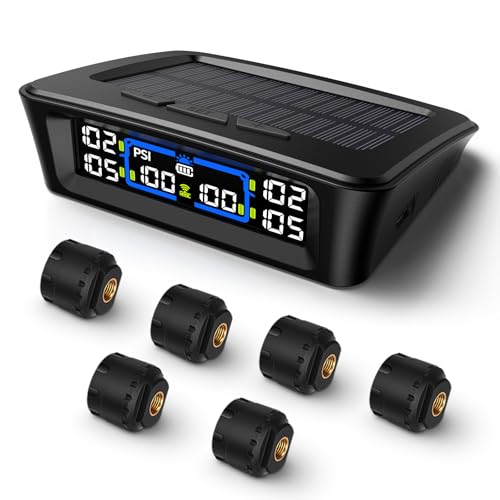
This product is ideal for owners of medium-length RV and trailer setups with metal valve stems. It requires coverage for more than four tires and involves manually verifying each tire's placard pressure before pairing sensors. It is best suited for situations where the target cold pressures are comfortably below the conservative 116 PSI limit, the monitor can be kept visible in the cab, and the owner is committed to regularly checking sensor tightness and tire conditions. The six-sensor configuration available can accommodate a basic tow vehicle and trailer combination while allowing room for future expansion.
This product is not suitable for anyone whose tire placard pressure could reach or exceed 116 PSI, as its own maximum-pressure specifications are inconsistent with that limit. It is also not ideal for very long or signal-obstructed trailer setups unless a compatible repeater is installed and the connection is verified before each trip. Do not use this device as a replacement for regular monthly cold-pressure checks, tread and sidewall inspections, or the vehicle’s original tire-pressure monitoring system. Customers who need verified accuracy, timely alerts, environmental resistance, or electrical certification should request documented proof before relying on this product.
A tire monitor can help drivers detect developing pressure issues, but it should not replace manual cold-pressure checks. The NHTSA recommends using the vehicle or trailer tire information placard to measure tire pressure when the tires are cold. Since this product’s automatic alerts are based on the pressure recorded during setup, starting with an accurate, placard-based pressure is essential. It is important to note that the tire monitor should not replace or disable the vehicle’s original tire-pressure monitoring system. The sensors are said to use replaceable CR1632 lithium coin cells, which can reduce sensor waste compared to sealed disposable units. However, this introduces concerns regarding battery safety and disposal. U.S. consumer guidance advises keeping coin and lithium single-use batteries away from children and disposing of them at specialized recycling centers or household hazardous waste collections, rather than in regular trash or curbside recycling. No specific recalls, regulatory warnings, independent performance reports, or public electrical safety certifications were found in the information reviewed.
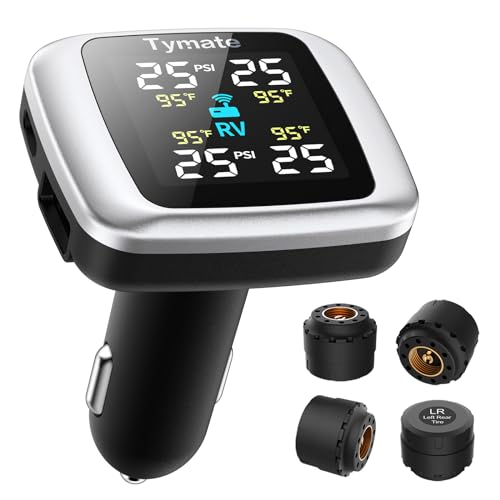
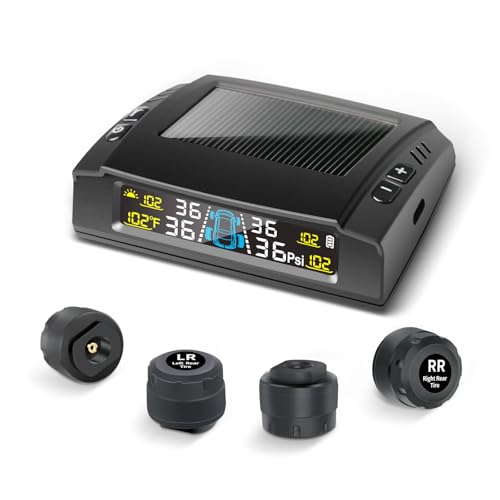
This product is ideal for owners of four-wheel sedans, SUVs, pickups, RVs, or travel trailers under 38 feet in length, with specified cold tire pressures ranging from 0 to 87 psi within the sensor's limits. It is best suited for individuals who are comfortable installing and periodically inspecting four external valve-stem sensors, maintaining the display’s charge during low solar exposure, and responding quickly to alerts. It should serve as an additional safety feature, complementing regular cold-pressure checks as indicated on the vehicle or trailer's placard.
This system is not suitable for trailers with more than four monitored tires, dual-wheel configurations requiring extra sensors, or tires that need cold pressures above 87 psi. Owners towing trailers longer than 38 feet should not rely solely on the system for reception and should instead use the recommended booster and perform a real-world signal check. Additionally, it is not ideal for buyers needing certified proof of alert timing, weatherproofing, measurement precision, or charging safety. households with young children should handle replacement CR1632 batteries carefully, as coin batteries pose a choking hazard.
The practical safety benefit of the system is to provide early alerts for changes in tire pressure and temperature, rather than guaranteeing prevention of flats or blowouts. The NHTSA recommends that drivers treat TPMS warnings as an indication to inspect the tires promptly and highlights that TPMS does not replace regular maintenance or proper cold-pressure checks. While Marcala highlights features such as six alert alarms, live readings, and an IP67 sensor rating, there is no independent verification available regarding the product’s response time, accuracy, radio signal reliability, or durability in various environmental conditions. Marcala claims that the sensors are replaceable and offers a lifetime replacement policy, which could help reduce waste by reusing a functional display. However, the information reviewed does not specify the chemical composition of the sensor batteries, nor does it provide details about a user-accessible safety design for the battery compartment or instructions for U.S. recycling procedures. This is significant because coin and lithium batteries should not be disposed of in household trash or curbside recycling. No specific public recall notices or safety warnings for Marcala products were found in the sources reviewed, nor was there any clear indication of FCC certification for the product.
This product is ideal for owner-operated RVs or trailers equipped with up to six accessible, compatible valve stems and maximum cold inflation pressures of 144 PSI or less. It is especially suitable for drivers seeking an extra in-cabin display to monitor pressure and temperature fluctuations during trips. Users who want to install and regularly inspect external cap sensors, while continuing to rely on a reliable gauge for monthly cold-pressure checks, will find this product beneficial. Additionally, the solar and USB charging options cater to those who prefer a display that can be maintained independently of dedicated vehicle wiring.
This product is not an adequate replacement for a vehicle's original tire-pressure monitoring system, particularly in cases where installation would disable, interfere with, or complicate the original system. Customers with metal valve-stem restrictions, hard-to-access dual-wheel valves, pressures exceeding 144 PSI, trailers longer than the specified range, or those requiring documented fleet-grade alert timing should choose a product that includes clear fitment and testing documentation. Additionally, it is not suitable for households that need well-documented coin-cell protections and proper battery disposal instructions.
Maintaining proper tire pressure is an essential safety practice. The National Highway Traffic Safety Administration (NHTSA) recommends that drivers monitor TPMS warnings and refer to the vehicle’s tire information placard for the recommended cold inflation pressure. This product may provide earlier alerts through its manufacturer-stated pressure, temperature, rapid-loss, and missing-signal notifications. However, it should not be considered proof that a tire is safe, as there has been no independent testing for model-specific accuracy or response to alarms. Additionally, external valve sensors require correct tightening and regular inspections, since a faulty cap-style sensor can itself pose a leak risk. The manual indicates that the product uses replaceable CR1632 lithium coin cells, which can help reduce unnecessary sensor disposal. However, it does not provide specific recycling instructions for the U.S. The Environmental Protection Agency (EPA) advises that lithium coin cells should not be disposed of in household trash or curbside recycling. Terminals should be protected before sending the cells for specialized recycling or household hazardous waste disposal. No certifications such as FCC approval, UL listing, or compliance documentation for the button-cell compartment have been identified for this product.
This product is ideal for owners of four-tire sedans, small trailers, campers, or RVs whose recommended tire pressure is comfortably below the maximum published limit of 87 psi. It is suitable for users willing to install external valve sensors, check them regularly for tightness and proper sealing, replace the CR1632 batteries as needed, and rely on a reliable manual tire gauge before travel. Its dashboard display and manufacturer-claimed signal loss warning provide added awareness, especially during shorter towing trips, and are particularly beneficial for those seeking a dedicated four-wheel monitoring solution.
This device is not suitable for trailers or RV wheels that require more than 87 psi of cold pressure, as the manual's published guidelines conflict with the higher recommended pressure and instead specify a lower minimum. Additionally, it is not ideal for tow setups longer than 38 feet unless the user installs a booster and is aware that no independent range testing has been conducted. Buyers who require independently verified measurement accuracy, quick alert response, waterproofing, vibration resistance, FCC certification, or documented electrical certification should choose equipment that offers these verified features.
A key safety principle is early detection of abnormal pressure or temperature readings. The National Highway Traffic Safety Administration (NHTSA) still recommends regular tire inspections, including checking inflation pressure, tread condition, and for visible damage. While external monitoring devices can support these checks, they cannot detect every tire failure and should not be solely relied upon. External valve-stem devices also require periodic inspections to ensure they are not loose, corroded, obstructed, or leaking. NHTSA has examined another aftermarket system after reports of sensor breakage linked to tire deflation, which highlights a design risk in this product category. However, this investigation does not pertain to the specific product in question. The product information indicates that each sensor is powered by a replaceable CR1632 coin cell, which can help reduce electronic waste. However, there are no specific recycling instructions, details about the battery chemistry, or evidence showing compliance with U.S. requirements for coin-cell accessibility and warnings. Used coin cells and rechargeable display batteries should be kept away from children and disposed of through proper collection channels for batteries or electronics, rather than household trash or curbside recycling.
This system is ideal for owners who need to monitor up to eight tire positions on a relatively low-pressure trailer, camper, RV, or towing setup, with recommended cold pressures not exceeding 108 PSI. It is best suited for users who are comfortable setting each alarm according to the vehicle's placard and tire manufacturer's load recommendations, checking sensor connections and valve stems during regular maintenance, and using a calibrated hand gauge for cold-pressure checks. Replaceable sensor cells are beneficial for those willing to perform ongoing system maintenance.
This product is not suitable for tires with a recommended cold pressure exceeding 108 PSI, which includes many high-pressure commercial and heavy-duty tires. It is also not ideal for situations where reliable long-distance monitoring, quick leak detection, or proven pressure accuracy is essential, as these features have not been independently verified for this product. Households with young children should exercise caution, as the replaceable CR1632 coin cells need to be stored securely and disposed of promptly. Additionally, do not use it to replace or disable the original vehicle TPMS.