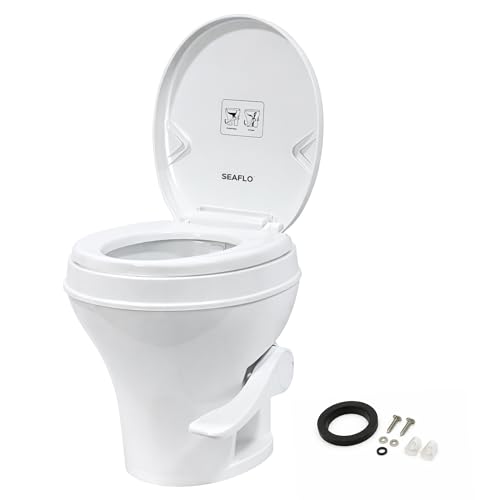
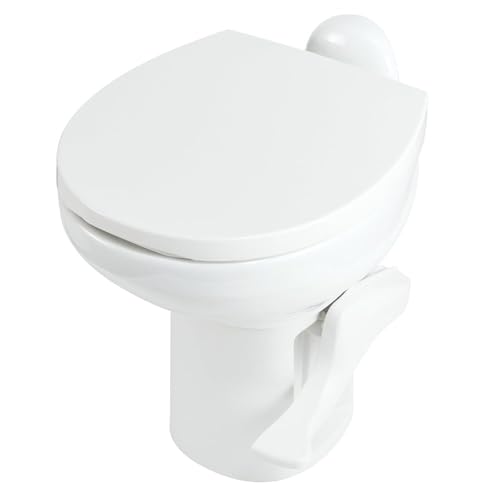
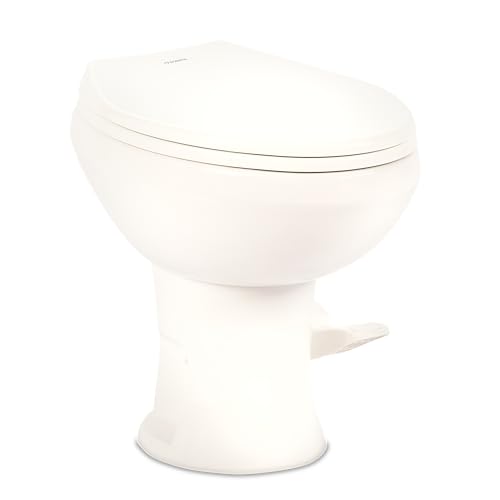
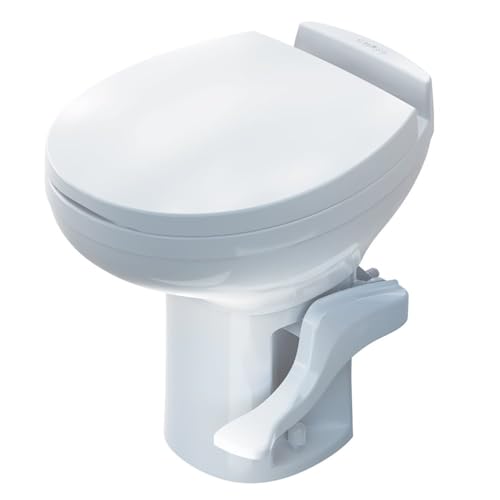
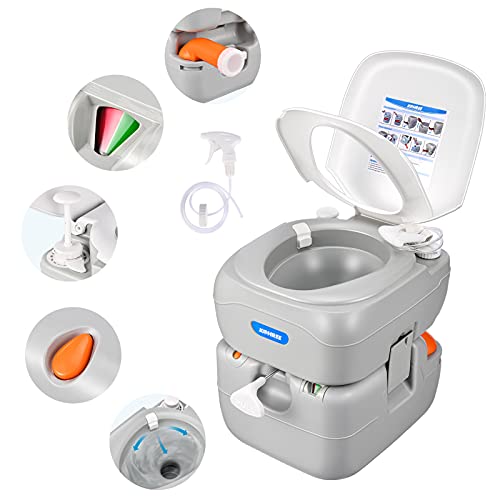
Kohree RV Toilet with Soft Close Seat
Soft close seat prevents slamming noise.
Efficient gravity flush saves water.
Universal fit suits most RVs and campers.
We compared the top Rv Toilets products so you can quickly spot the strongest options for value, features, and everyday performance.
Soft close seat prevents slamming noise.
Efficient gravity flush saves water.
Universal fit suits most RVs and campers.
Easy installation with universal fit design.
Comfortable chair height for residential feel.
Soft-close seat prevents slamming noise.
Easy to install and maintain.
Comfortable high profile design.
Reliable and efficient flushing system.
Soft-close seat prevents slamming noise.
Foot pedal ensures easy, hands-free operation.
4-year warranty offers long-term reliability.
Efficient water-saving flush system.
Comfortable and sturdy high-profile design.
Easy installation and maintenance process.
Easy to install and maintain.
Comfortable seat height for users.
Efficient water-saving flush mechanism.
No plumbing or water needed for use.
Compact design ideal for limited spaces.
Odor-free operation thanks to dry flush system.
Comfortable residential-style 18" chair height.
Soft-close seat for quieter operation.
Universal fit with easy 2-bolt mount.
Elongated ceramic bowl for added comfort.
Efficient flush conserves water effectively.
Easy-close lid prevents slamming noise.
Space-saving design fits in small RVs.
Easy to clean and maintain.
Durable build ensures long-lasting use.
RV toilets generally fall into two practical categories. Permanent models use a gravity-flush system connected directly to the RV's freshwater supply, floor flange, and black-water holding tank. Portable models have a separate waste tank that can be removed for emptying. Dry-flush models seal waste into disposable bags and may operate using rechargeable batteries. The best choice depends primarily on the vehicle’s plumbing setup and waste disposal options at the campsite—not just on factors like bowl shape, height, capacity, or a “universal fit” claim.
For permanent toilets, it’s essential to verify compatibility by checking dimensions, bolt pattern, flange condition, outlet alignment, water inlet, clearances, seal arrangements, and installation requirements against the specific model’s manual and technical drawings. Even if a product claims to fit most RVs, it may still require adapters, replacement flanges, specific water connections, or additional rear clearance. Proper installation, gasket sealing, torque specifications, water pressure, leak testing, and winterization are critical to preventing leaks and containing sewage and water safely.
For portable toilets, focus on capacity (for fresh water and waste), maximum user load, stability on level surfaces, condition of sealing rings, and ease of transporting and emptying waste tanks. A larger capacity doesn’t eliminate the need for safe handling or proper disposal. Dry-flush toilets require attention to battery life and charging, sealing cycle effectiveness, refill film and coagulant needs, bag handling, and waste disposal procedures. While they eliminate flushing water, they often increase reliance on single-use consumables.
Performance claims such as “leak-proof,” “odorless,” “clog-free,” “360-degree rinse,” “water-saving,” “universal fit,” or “high capacity” should be viewed skeptically unless independently verified. For instance, water-per-flush figures should be exact and model-specific; in tested samples, only one manufacturer provided a one-pint (16 oz) flush figure and a 50 mL rinse volume, with no independent confirmation. Advertised tank volumes may not reflect usable capacity, and adjustable or unspecified flush volumes make direct comparison difficult. Load limits are not substitutes for thorough, independent static, cyclic, impact, or stability testing.
Reliable supporting documentation includes detailed installation manuals, parts diagrams, records of replacement seals, and third-party test reports that specify the model tested, testing methods, laboratories involved, dates, success criteria, and results. For plumbing products, look for certifications such as traceable IAPMO, NSF/ANSI 24, or relevant ASME/CSA standards. For electrical dry-flush systems, verify UL, Intertek ETL, or CSA listings, as well as battery and end-product certifications like UL 2054, IEC 62133-2, UL 62368-1, or UL 60335-1. Also, review CPSC recall records and SaferProducts.gov incident reports—don’t rely solely on positive search results as proof of safety.
In reviews, buyers should anticipate routine maintenance tasks such as inspecting seals, valves, pedals, and flanges—leaks often result from improper installation, mineral buildup, freezing, or worn seals. Permanent toilets require a compatible RV holding tank and approved waste disposal methods. Portable and dry-flush units need careful emptying or bag handling; disposal procedures vary. Several products lack independent verification of leak resistance, load capacity, flushing performance, vibration resilience, or durability. For example, one dry-flush model has conflicting load limits and no traceable electrical certification; another’s marketing conflicts with its catalog identity; and a portable model warns that releasing pressure when full can cause contaminated-water overflow.
Always verify specific configurations and follow the manufacturer’s instructions before use, rather than relying solely on marketing claims.

The scores provided are based on documented design and evidence, rather than popularity or cost. A high score indicates that the evaluated material offers more robust support for the topic; however, it does not imply that the product is without risk or has been independently tested across all relevant aspects.
This assesses exposure to fecal waste, splashes, odors, and residues during use, emptying, and cleaning processes. Features such as foot pedals, retained bowl water, controlled tank emptying, and sealed bags can reduce these risks, but many reviews provided limited independent testing of splash, odor, or contamination. Devices with higher scores reached up to 85, while lower-rated ones generally scored around 70–73, often where claims or handling procedures were less thoroughly documented.
This includes tanks, valves, seals, joints, and floor connections during operation, transportation, and emptying. Fixed toilets rely on flange seals, valve condition, torque settings, mineral buildup removal, and winterization procedures. Portable units depend on latches, slide valves, spouts, and sealing rings. The scores ranged from 62 to 90, with higher scores indicating an independent plumbing certification, comprehensive leak testing, and availability of service parts—though this does not guarantee completely leak-free operation.
This metric evaluates resistance to tipping, cracking, collapsing, sharp edges, and failure of seats or pedals under the specified load. While a published load limit is helpful, it does not replace independent testing for static, cyclic, impact, or stability performance. The products evaluated scored between 68 and 75 in this area. The most comprehensive documentation included a clearly stated maximum load and detailed mounting instructions. However, many products lacked specific load or stability data for their exact models.
This primarily pertains to rechargeable dry-flush toilets and includes aspects such as the battery, charger, wiring, moisture protection, and overcharge safeguards. Manual gravity and pump toilets received scores between 96 and 100, as they lack electrical components and do not require charging near the bathroom. In contrast, the rechargeable model received a score of 68 due to the absence of UL, ETL, CSA, or verifiable certification records for the battery and charger.
This assesses whether specifications such as dimensions, rough-in, bolt pattern, water connection, flange, seals, clearances, and installation limits are accurately provided. Accurate specifications are important because improper fit can lead to sewage leaks or water damage. Scores ranged from 66 to 92, with higher-scoring products offering detailed manuals, precise torque values, leak testing procedures, and independent plumbing certifications. Conversely, lower-scoring products made general fit claims without providing detailed drawings or compatibility information.
This assessment includes factors such as bowl-rinse coverage, discharge, valve operation, clog resistance, flush volume, and cleaning effort. Achieving a high score requires demonstrable evidence of performance for the specific model and clear instructions for approved cleaning agents, rather than just claims like “powerful,” “full rinse,” or “no clog.” The scores assigned ranged from 67 to 83. Since most products did not have independent flush or durability testing reports, higher scores should be interpreted as indicative of relative evidence quality rather than definitive proof.
This assesses whether the toilet complies with legal wastewater disposal standards and avoids unsupported claims regarding chemicals, septic safety, or disposal methods. Permanent toilets typically drain into holding tanks, while portable and dry-flush units require controlled emptying procedures or bag disposal. The scores ranged from 68 to 77. Higher scores were awarded to reviews that provided clear instructions on approved disposal facilities, toilet tissue usage, winterization procedures, or chemical restrictions. Conversely, lower scores were given to reviews that mentioned unidentified additives or lacked comprehensive disposal guidance.
This assessment accounts for verified water consumption, practical usable capacity, disposable bags, chemicals, and replacement cartridges. Although a waterless toilet may generate waste in the form of film and coagulants, a large tank might not accurately reflect its usable capacity. The scores ranged from 69 to 76. The most clearly provided data was a manufacturer-stated one pint per flush; other claims related to water saving or low rinsing were not independently verified.
This metric assesses the transparency regarding the use of key materials such as plastics, metals, batteries, seals, and replaceable wear parts, along with information on repair and disposal options. Products that receive higher scores, up to 80, typically provide detailed parts lists for components like seals, valves, pedals, seats, or mounting hardware. Lower scores indicate ambiguous or inconsistent material descriptions and lack of records for replacement parts. While replaceability can contribute to a longer service life, it does not necessarily guarantee recyclability or a comprehensive end-of-life management plan.
This assessment evaluates whether claims such as leak-proof, odorless, universal-fit, water-saving, antimicrobial, biodegradable, or high-capacity are specific and substantiated for the particular product. Scores ranged from 51 to 82. Products with higher scores confirmed their claims and provided manuals or documentation, while those with lower scores featured conflicting specifications, unsupported environmental or performance claims, or marketing statements that extended beyond the available evidence.
This indicates the presence of traceable certification, comprehensive test reports, and no unresolved recalls or regulatory issues. The scores provided ranged from 68 to 90. More robust examples included recognized certifications such as IAPMO, NSF/ANSI 24, or other plumbing approvals, along with detailed documentation specifying exact models. It is important to note that the absence of a recalled product does not guarantee safety. Additionally, manufacturer testing that lacks publicly available methods, laboratory details, testing dates, and passing criteria is less reliable than independently verified evidence.
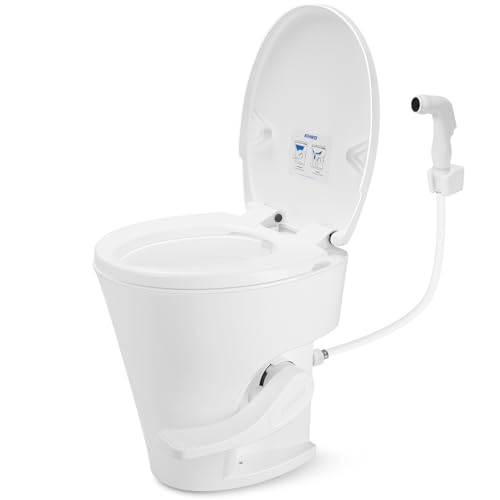
The product operates mechanically rather than being battery-powered, so there is no need to evaluate chargers, battery packs, or electrical moisture ratings. The manufacturer highlights features such as a pedal flush, gravity discharge, a deeper bowl, a sprayer, and a soft-close seat. However, there are no independent reports available on hygiene, leaks, durability, or flush performance. A search of CPSC recall resources as of August 16, 2026, did not reveal any specific recalls or warnings related to this product. The catalog mentions polypropylene as the material used, but a detailed bill of materials, repair instructions, and information on replacement seals could not be found. No chemical treatments are listed as included. Wastewater from RVs must still be disposed of at an approved sewer or dump station. The EPA advises against using chemicals that may harm septic systems, including certain deodorizers for holding tanks, and recommends flushing only human waste and toilet paper.
This product is suitable for RV owners replacing a traditional floor-mounted gravity toilet, provided they have already measured the existing floor space, mounting pattern, waste connection, and water connection. It is particularly ideal for adults who prefer a seat height of 18.5 inches as specified by the manufacturer and favor a foot-operated flush instead of a hand lever. Additionally, it can be used for DIY replacement projects, but only if the installer confirms compatibility and inspects the seal and flange connection after installation.
This product is not suitable for installations where the bolt spacing, flange design, clearance around the bowl, water inlet, or height restrictions are unknown. Additionally, it is not ideal for users who require a verified occupant weight rating, third-party structural testing, published valve-cycle testing, or easily accessible replacement parts. Households seeking proven low-water performance or reliable clog resistance should not assume the manufacturer's claims of water savings and clog resistance are independently verified.
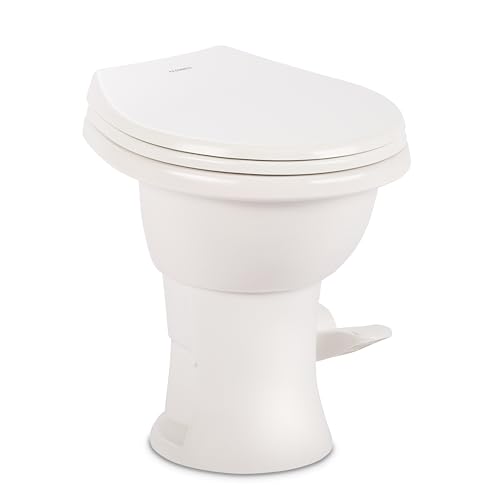
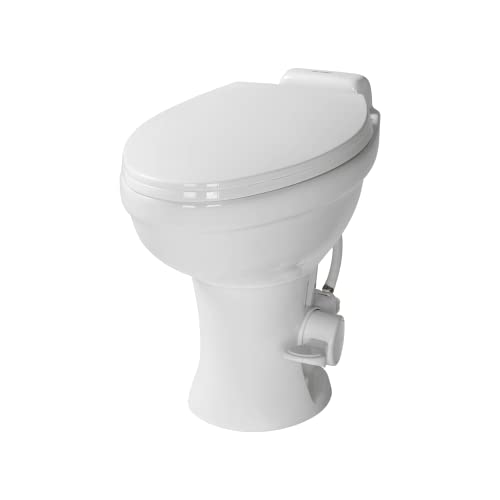
The most effective health protections rely on proper mechanical and installation procedures. Dometic advises users to keep approximately one inch of water in the bowl to prevent odors from the holding tank, limit flushing to human waste and quick-dissolving toilet paper, and to check for leaks after installation. The company also warns against using chlorine, harsh drain cleaners, automotive antifreeze, or exposing the toilet to freezing temperatures, as these can damage seals and the water valve. Since the toilet operates without power, it does not pose electrical or moisture hazards related to chargers, batteries, or electrical components. The material information provided is notably detailed for this type of product, with several wear parts identified as replaceable. The manual recommends using non-toxic propylene glycol antifreeze for winterization. It does not include chemical treatments, and any optional deodorizer for the holding tank should be chosen and disposed of carefully. EPA guidelines specify that RV wastewater should only be disposed of at authorized facilities and warn that tank additives may interfere with wastewater treatment. One retailer has issued a Proposition 65 warning, although the specific chemical and exposure route were not identified in the reviewed manufacturer documentation.
This product is ideal for RV owners replacing a compatible gravity toilet that connects directly over a holding tank, particularly where there is a 7.625-inch or larger rough-in and a standard two-bolt floor flange already installed. It is also suitable for those who prefer a residential-height, round ceramic bowl while continuing to use a mechanical, non-electric flush system. The best candidates are buyers who are willing to measure wall clearance, flange placement, and water line routing prior to installation, and who are prepared to winterize and maintain seals according to the provided instructions.
This product is not suitable for installations that require a self-contained portable toilet, dry toilet, macerating toilet, or a toilet connected via a long horizontal drain line similar to household plumbing. Additionally, it is not appropriate where the floor flange, rear clearance, supply connection, or bolt layout do not comply with the specifications outlined in the manual, unless the installer is able to make the necessary modifications to ensure compatibility. Customers seeking independently verified data on load capacity, durability, water usage per flush, leak cycle, or rinse coverage should look for products with those reports available. Proper winterization is also necessary when installing in freezing conditions.
The product does not require an electrical power source, charger, or battery, thereby eliminating fire and shock risks associated with electrically operated toilets. Its foot pedal design may help reduce hand contact during flushing, while the manufacturer’s manual advises users to keep water in the bowl to serve as an odor barrier. The manual also warns that freezing temperatures can damage the water valve and lead to leaks. It recommends using a non-abrasive bowl cleaner and permits rubbing alcohol for stubborn stains, but cautions against the use of automotive ethylene glycol antifreeze in freshwater systems. SEAFLO provides an exploded diagram and replacement instructions for various wear parts, including seals, valves, pedal components, and nozzles. This supports repair efforts, although the manufacturer does not publish a full material composition or recycling instructions. The toilet does not include any treatment chemicals; waste must be disposed of in the RV’s holding tank or at appropriate waste disposal facilities. EPA guidance indicates that using unsuitable additives in holding tanks can damage septic systems and pollute water resources. No recalls or Consumer Product Safety Commission warnings related to this product have been found in public records.
This product is ideal for RV or travel trailer owners replacing a compatible gravity-flush floor toilet. Before placing an order, owners should verify the flange, drain opening, water inlet, and available bathroom space. It is especially suitable for those who value features such as a hands-free pedal, an elongated bowl, and a residential-height seat. Additionally, it is suitable for owners willing to perform the recommended leak tests, periodically clean the ball seal, maintain water in the bowl for odor control, and properly winterize the water valve in freezing temperatures.
This product is not intended for permanent household bathroom installations that require locally code-approved residential plumbing fixtures or independently certified plumbing validation. It is also not suitable for buyers who need documented weight limits, verified stability data, measured flush volumes, or independently tested resistance to leaks and vibrations. Avoid using this setup if the existing RV floor flange, outlet opening, water connection, or floor support cannot be confirmed. Additionally, proper winterization is essential, making it unsuitable for unheated vehicles stored below freezing temperatures without regular maintenance.
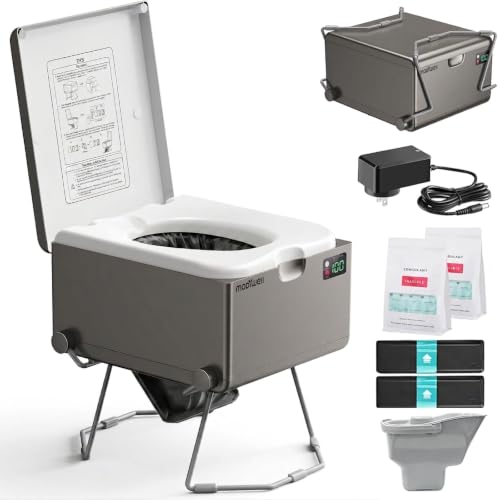
The primary hygiene principle is based on physical separation. The manufacturer recommends that users add a polymer absorbent prior to use and perform a sealing cycle afterward. It also cautions that sealing may fail if the battery level drops below 25 percent and advises stopping use if thick smoke or unusual noises occur. These guidelines serve as operational safety measures but do not replace the need for independent electrical, seal-cycle, or leak tests. During operation, water usage is avoided; however, this results in the need for a bag and absorbent for each use. Modiwell states that its refill film complies with the EN 13432 standard for industrial compostability, but also notes that this standard alone does not satisfy California’s compostability requirements. No corresponding ASTM or BPI certification records were found. The manufacturer recommends following local solid waste disposal regulations, which is especially important because disposal of human waste—particularly from RVs and marine environments—is location-specific. No relevant CPSC recalls or public safety warnings were identified in the available records.
This product is ideal for solo travelers or small households in need of a compact, temporary toilet in areas without plumbing or reliable water supply, such as vans, roadside work vehicles, cabins, or emergency kits. It is best suited for users who can operate the controls, lift and replace film rolls, keep the unit level, use the included charger, and verify local waste disposal options before traveling. Its foldable design and no-plumbing setup make it particularly useful in situations where storage space and access for installation are limited.
This product is not suitable for permanent installation in a residential bathroom, nor is it appropriate where plumbing code compliance, traditional sewer connections, or independently certified electrical components are necessary. It is also not ideal for buyers who cannot handle bagged human waste, need to avoid disposable consumables, require documented high-capacity seating performance, or expect waterproof usage. Households with children or pets should be aware of the fine absorbent powder, which the manufacturer advises should not be ingested. Additionally, boaters must comply with relevant vessel sewage and marina regulations.
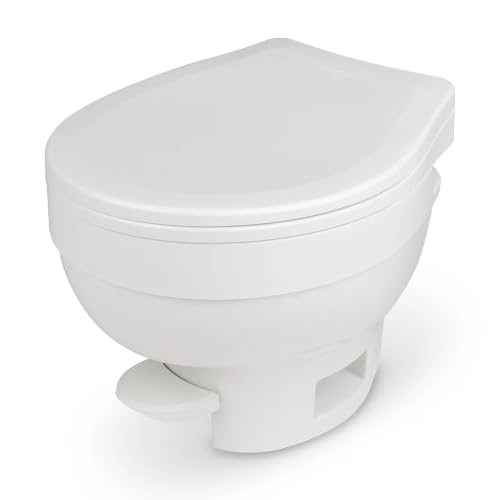
The key health-related features include a foot-operated water fill and flush mechanism, a flush-ball seal that retains water in the bowl to help block odors from the holding tank, and instructions to only use human waste and quickly dissolving toilet tissue. Dometic advises against using bleach, harsh chemicals, drain openers, solvents, wipes, diapers, and other foreign objects, as these can damage seals or cause clogs. Owners are also instructed to check the toilet for leaks after installation and are provided with repair parts for various wear items. Dometic specifies that the bowl is made of vitreous ceramic and mentions that the product contains polypropylene, ABS, nitrile rubber, and foam components. While the packaging should be recycled when possible, there is no specific recycling route or recycled-content information for the product itself. The toilet contains no chemical treatments. Any deodorizer or cleaner used separately should be carefully inspected, as EPA guidance indicates that some holding-tank chemicals can harm septic systems and pollute water if waste is improperly disposed of. No product recalls, safety warnings, independent certification listings, or comprehensive third-party performance reports were found.
This product is ideal for RV owners replacing a toilet installed over an existing holding tank, provided they have a compatible two-bolt floor flange, a minimum 7.625-inch rough-in measurement, a 3-inch discharge opening, and enough space for a 19-inch-deep elongated bowl. It is especially suitable for users who favor an 18-inch chair-height seat and a porcelain bowl, but prefer a non-powered toilet. Additionally, it is suitable for owners willing to adhere to the specified mounting torque, water pressure limits, cleaning guidelines, winterizing procedures, and leak inspection process.
This system is not intended for new installations requiring a standard horizontal household drain setup, as the manufacturer specifies that this mechanical-seal toilet must discharge directly into a holding tank. It is also incompatible with flanges that have a four-bolt pattern unless a separate universal mounting kit is used. Additionally, it should not be used where the rough-in dimensions, wall clearances, water flow, pressure, or 3-inch flanges do not align with the specifications in the manual. Buyers who require independently verified water usage, durable high-cycle valves, occupant-load testing, or certified flush performance should not rely solely on manufacturer claims as a substitute for official records.
The documented design features a foot-operated gravity flush, a water-retaining bowl seal, an anti-splash rim, and instructions for cleaning the bowl and inspecting the valve, seal, supply line, connections, and base. These are effective measures for contamination control; however, there is no independent testing data available for rinse coverage, clog resistance, odor control, or leak resistance. The manufacturer’s manual also includes a California Proposition 65 warning about unspecified chemicals that may cause cancer or reproductive harm, but it does not specify the chemical substances, their doses, or exposure pathways. The toilet is made from HDPE and PP plastics with a metal floor flange. However, there is limited information on end-of-life disposal options or the availability of replacement parts. No treatment chemicals are provided; waste must still be directed to an appropriate holding tank and properly pumped out or disposed of according to regulations. EPA guidance advises RV and boat owners that some holding-tank chemicals can negatively impact septic systems and water resources. A recall from the CPSC was identified for certain SereneLife pool models, but this recall does not pertain to this specific toilet product.
This product is ideal for owners replacing or installing a compact, floor-mounted toilet in an RV, trailer, or boat, who can verify the existing plumbing setup before installation. The purchaser should have a compatible floor opening, a 1/2-inch water connection, enough clearance behind the flange center, and a method to shut off and drain the water supply for winter storage. It is best suited for individuals comfortable inspecting the flush seal, water connections, and base regularly, rather than expecting a maintenance-free unit.
This product is not ideal for installers who require independently certified plumbing compatibility, published pressure test results, or verified performance documentation for permanent residential installations. It is also not suitable in situations where water pressure cannot be maintained below the manual’s 58 psi warning, where exposure to freezing conditions is expected without full winterization, or where a specific Proposition 65 exposure disclosure is necessary. For those needing easily accessible documentation of replacement parts, it is recommended to choose a product with a readily available parts catalog.